01The method
An Engineering Approach to Marketing
What do you do when the problem moves between the tools?
In briefDefine the commercial outcome before you choose the metric.
Now live on Amazon
Paid Advertising, SEO, and Lessons from Building Hustle Marketers
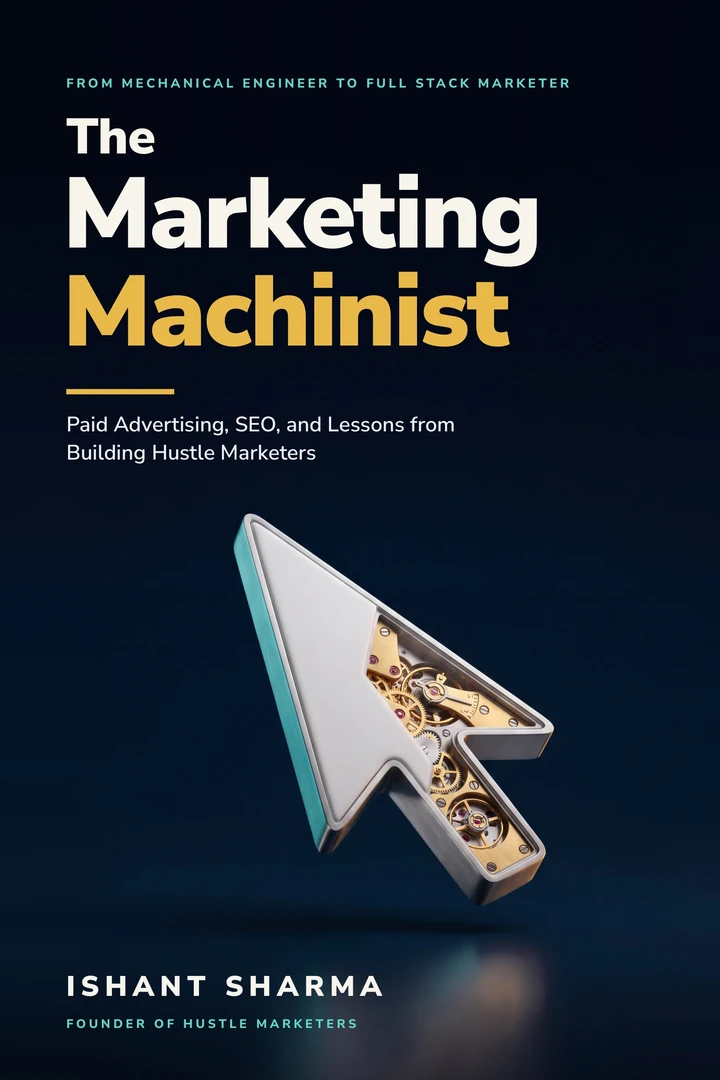
Why can an ad report look healthy while the business still struggles to grow? This book shows how to connect paid advertising, SEO and measurement with the decisions a business actually has to make.
Pick your country below to open your local Amazon store. See all stores.

By Ishant Sharma, founder of Hustle Marketers.
Google Ads, Meta Ads and SEO specialist since 2013.
01The big idea
Every platform reports on its own part of the journey. The problems that hold growth back often sit in the gaps between them.
Why can an ad report look healthy while the business still struggles to grow?
Campaign Stock
A campaign sends shoppers to a product that is out of stock.
Form Customer
A form counts an inquiry that never becomes a customer.
Page Search
A useful service page stays hard to find.
Return Margin
A strong reported return hides shipping costs, refunds and a thin margin.
The Marketing Machinist helps you ask better questions, explain your decisions and direct your next dollar toward the constraint that matters most.
02The framework
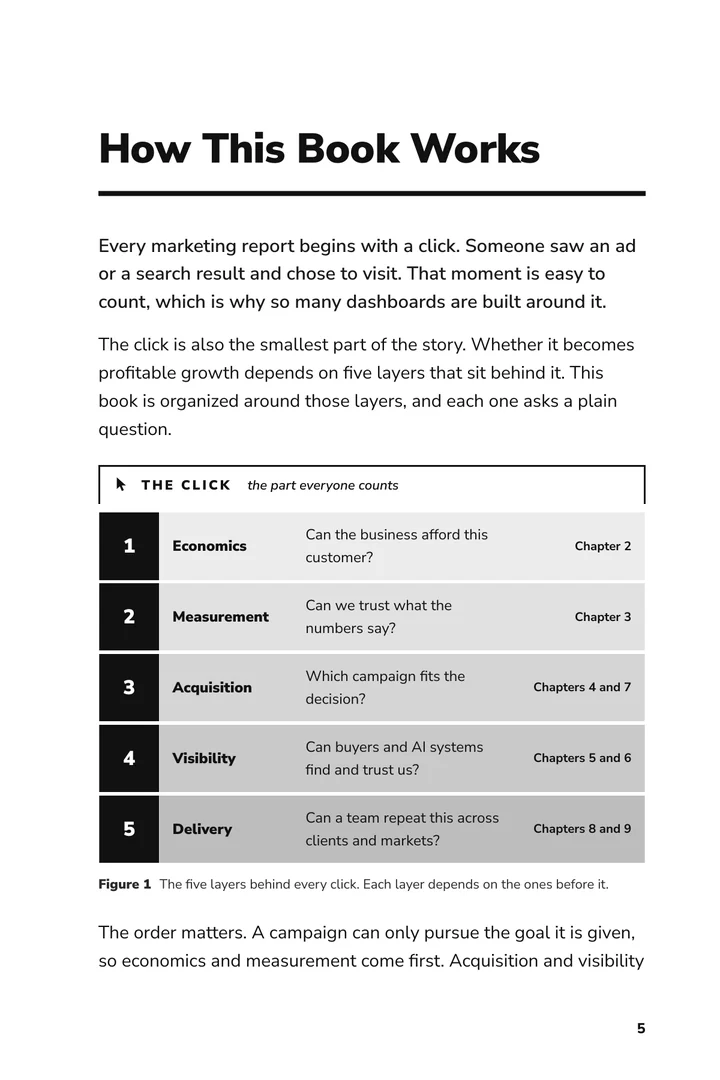
The click is easy to count, which is why so many dashboards are built around it. It is also the smallest part of the story. Each layer asks one plain question.
Can the business afford this customer?
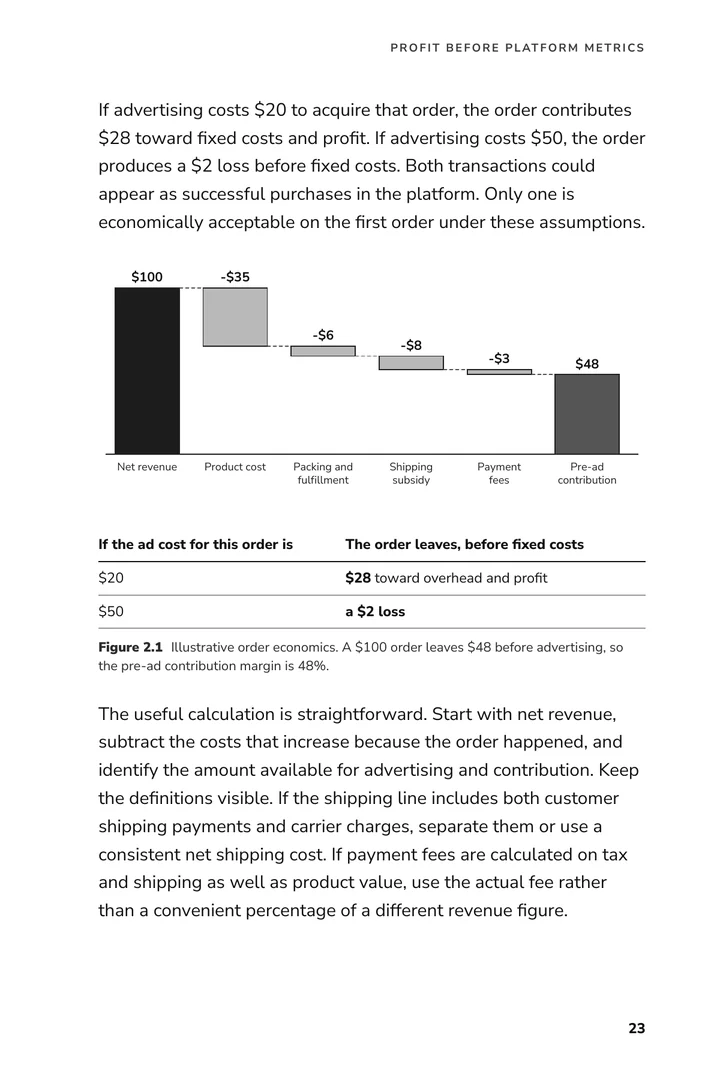
Work out break-even ROAS and contribution margin before you set a bid target.
Chapter 2Can we trust what the numbers say?
Test conversion tracking so each ad platform learns from the right signal.
Chapter 3Which campaign fits the decision?
Choose between Search, Shopping, Performance Max and Microsoft Advertising for the decision in front of you.
Chapters 4 and 7Can buyers and AI systems find and trust us?
Build SEO around real buyer questions, and see what credible visibility in AI search requires.
Chapters 5 and 6Can a team repeat this across clients and markets?
Run reporting, client communication and delivery across markets and time zones.
Chapters 8 and 9The order matters. A campaign can only pursue the goal it is given, so economics and measurement come first.
03What the book says
Eleven chapters, each built around one question. Every chapter closes with a short recap and one action to take next.
What do you do when the problem moves between the tools?
In briefDefine the commercial outcome before you choose the metric.
How much can this business afford to pay for a customer?
In briefBreak-even ROAS is a floor, not a target.
What exactly is the system learning from?
In briefDefine every conversion in business language before you touch a tag.
Which campaign type fits the decision the business is trying to make?
In briefFeed accuracy and stock are part of the account. Fix eligibility before bids.
Which buyer question does each page answer?
In briefTechnical SEO earns eligibility. Useful, accurate pages earn the visit.
What would make an AI system, or a careful reader, trust your work?
In briefKnown, mentioned, cited and recommended are four different outcomes. Record them separately.
Does the promise in the ad survive the journey to the sale?
In briefEstablish the business total first. Then divide the credit.
How does good work survive time zones, handovers and a growing team?
In briefGive every decision an owner, an approval route and a way to verify it.
Can the client make a better decision after reading what you send?
In briefExplain the decision, the evidence and the uncertainty in every update.
What does this result actually prove, and what should it make you ask next?
In briefEvery result needs a definition, a period, a source and a limit.
What should happen first, and what can wait?
In briefTurn observations into decisions and choose the next constraint.
04What the book has
Each chapter ends with a short recap and one action. The checklist and the glossary at the back are designed to be used with an account open in front of you.
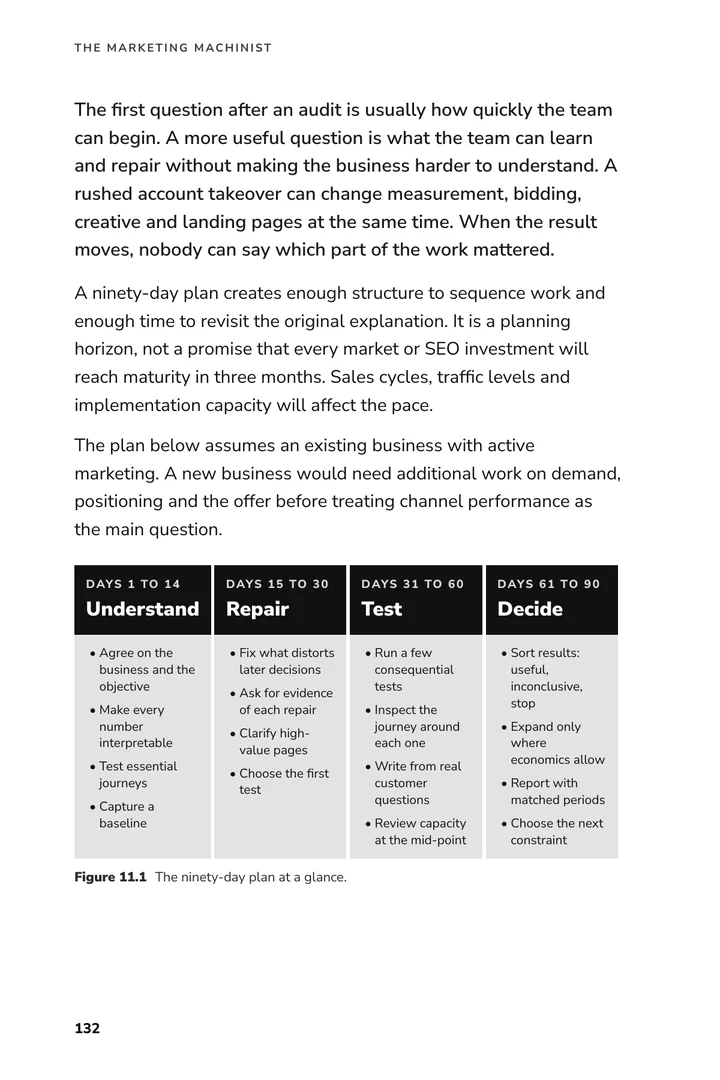
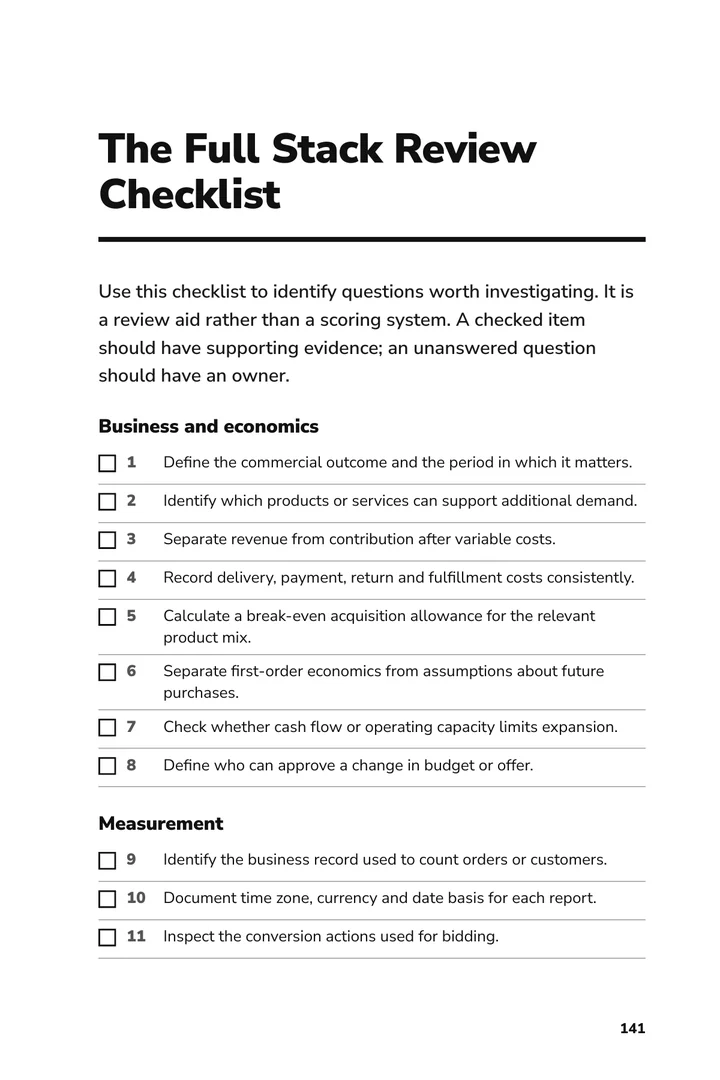
The last chapter turns the method into a sequence, so you know what should happen first and what can wait.
05How the evidence is labeled
Every example in the book carries one of three labels, so you can see what a number does and does not prove.
A teaching device with invented numbers.
A real account and a stated period, taken from a case study on the Hustle Marketers website.
One person’s account of working with Hustle Marketers.
The three are never mixed, and none of them is a forecast for your business.

06The author
Ishant Sharma is a Google Ads, Meta Ads and SEO specialist and the founder and CEO of Hustle Marketers. He has run paid search since 2013 and has managed over $90 million in ad spend.
His rule stays simple: revenue first, strong structure second, scaling third.
Starts running Google Ads. The next seven years go into helping brands grow through paid search worldwide.
Founds Hustle Marketers. Clients had begun calling the team hustlers because they never stopped pushing for results, and the name stayed.
The first three client video reviews go live. There are now more than 20.
First Clutch recognition, followed by more Clutch awards the next year.
Hustle Marketers becomes a Google Partner and Microsoft Advertising Partner.
Six Clutch awards, and two books published: The Marketing Machinist and The Orders Are Coming In.
Today the agency works with ecommerce brands, local service businesses, software companies and other agencies in more than 20 countries, and reports more than $780 million in trackable client sales across 2,500+ brands.
07Who it is for
A practical guide for ecommerce brands, lead generation businesses and marketing agencies.
See whether ad spend is building profit, and know which question to ask your team or agency next.
Connect campaign decisions to margin, tracking and the customer journey, and explain them clearly.
Run reporting and delivery that clients can act on, across accounts, markets and time zones.
08Get the book
The Kindle edition is on every Amazon Kindle store below. The paperback is on Amazon in the United States, the United Kingdom and Canada.
Not your store? Pick your country below.
09More books
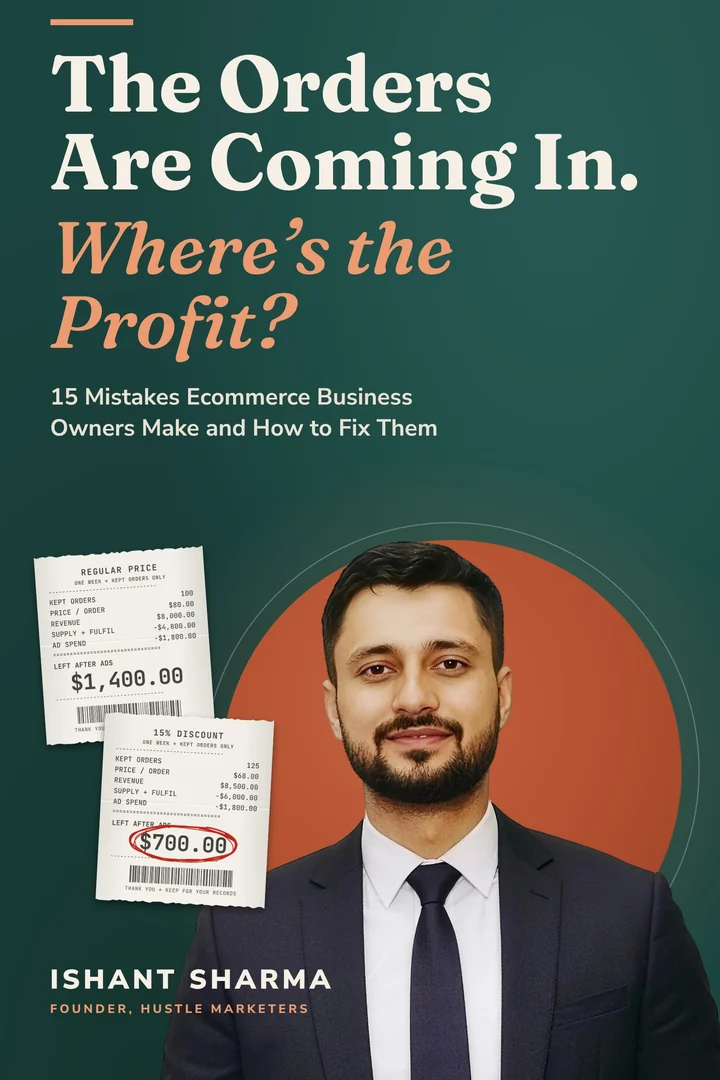
Kindle and paperback
15 Mistakes Ecommerce Business Owners Make and How to Fix Them
The orders are coming in, so why is there less money in the bank? A practical guide to 15 profit mistakes ecommerce business owners make, and how to fix each one with numbers you can check yourself.
10Questions
Short answers about the book, the formats and where to get it.
It is written for business owners, marketing leads and agency practitioners who already run paid advertising or SEO and want to connect that work to profit.
It is organized around five layers that sit behind every click: economics, measurement, acquisition, visibility and delivery. Each layer answers one plain question about the business.
No. The chapters build on each other, so you can read it cover to cover. You can also start with the chapters that match your problem, or use the review checklist and the glossary as working tools with an account open in front of you.
No. Every example is labeled as an illustration, a published case record or a client review. The three are never mixed, and none of them is a forecast for your business.
The paperback is 158 pages. It has 11 chapters, 20 figures and tables, an 80-point review checklist, a glossary and a ninety-day operating plan.
Yes. The Kindle edition is on Amazon India. The paperback is printed outside India, so it ships from Amazon US where international delivery is available.
The Kindle edition is on every Amazon Kindle store listed on this page. The paperback is on Amazon in the United States, the United Kingdom and Canada.
11Now live on Amazon
Kindle edition worldwide. Paperback on Amazon US, UK and Canada.