Shoe Ads That Went Viral and Why They Worked

Ishant
Published on November 1, 2026
Ishant
Shoe ads have evolved from simple product displays to creative, emotional, and sometimes quirky campaigns that capture our attention. Today, a great shoe ad doesn’t just sell footwear, it tells a story, evokes emotions, and creates a connection with the audience. But what makes a shoe ad go viral? Are these the efforts of a digital marketing agency or the right ads strategy? Why do some shoe commercials drive massive sales while others fade into darkness?
In this blog, we’ll explore the top 10 shoe ads that went viral, breaking down why they worked so well. Whether you’re a marketer, a sneaker enthusiast, or just someone who loves a good ad, this list will give you insights into what makes these campaigns stand out. Also, we’ll share tips on how you can apply these shoe advertising strategies to your own Google Ads for shoe ads campaigns.
Let’s lace up and get started!
Summarize this article with:
Key Observations
- Most of the 10 viral shoe ads below won on emotion, identity or timing, not on product specs.
- At Google Search Central Live in Bengaluru on October 30, 2026, one example on screen was a running shoe review built on lab tests, scores and pros.
- That review showed measured results, such as 74.9% energy return at the heel, and scored the shoe low for daily running, so buyers could see who it was not for.
- The same proof makes stronger shoe ad hooks than adjectives: a test clip, a measured spec or a “best for” score.
- Put the verdict, fit guidance and pros and cons near the buy button, so the proof from the ad is still visible after the click.
Which Shoe Ads Went Viral? 10 Examples and Why They Worked
1. Nike: “You Can’t Stop Us”
Why It Went Viral
Nike’s “You Can’t Stop Us” ad is a masterclass in emotional storytelling in shoe ads. The ad features a split-screen format showing athletes from diverse backgrounds overcoming challenges. It’s not just about shoes, it’s about resilience, unity, and the human spirit.
- Emotional Connection: The ad taps into universal themes of perseverance and equality.
- Visual Appeal: The seamless transitions between athletes are visually stunning.
- Timing: Released during the pandemic, it resonated with people facing their own struggles.
What to borrow for your shoe ads: One visual device, the split screen, carried the whole message. Pick one format idea your audience will remember and build the ad around it.
2. Adidas: “Original Is Never Finished”
Why It Went Viral
Adidas took a bold approach by blending classic and modern elements. The ad features iconic figures like Muhammad Ali and Snoop Dogg, remixed with contemporary artists.
- Nostalgia Factor: Using legendary personalities created an emotional hook.
- Music: The remix of Frank Sinatra’s “My Way” added a fresh yet familiar vibe.
- Brand Identity: It reinforced Adidas’ commitment to originality.
What to borrow for your shoe ads: Pairing a familiar song and famous faces with new artists made the ad feel known before viewers knew why. Borrowed familiarity is a fast hook.
3. Allbirds: “The World’s Most Comfortable Shoe”
Why It Went Viral
Allbirds focused on simplicity and authenticity. Their ad showcased the shoe’s comfort with real people walking, running, and living their lives.
- Minimalism: The ad was clean, straightforward, and relatable.
- Sustainability: Highlighting eco-friendly materials appealed to environmentally conscious consumers.
- Customer-Centric: It felt like a recommendation from a friend, not a corporate ad.
What to borrow for your shoe ads: Ordinary people wearing the shoe, plus a named material, made the comfort claim believable. Show the product in use instead of describing it.
4. Skechers: “Dad Bod” Campaign
Why It Went Viral
Skechers took a humorous approach by celebrating the “dad bod” with their relaxed-fit shoes. Featuring celebrities like Tony Romo, the ad was lighthearted and relatable.
- Humor: The ad made people laugh, which is always a win.
- Relatability: It tapped into a common body image trend.
- Celebrity Endorsement: Tony Romo’s charm added credibility and appeal.
What to borrow for your shoe ads: Humor lowers the guard for a comfort product. Keep the joke about the customer’s life, not about the brand.
5. Puma: “She Moves Us”
Why It Went Viral:
Puma’s “She Moves Us” campaign celebrated female athletes and their journeys. The ad featured stars like Megan Thee Stallion and highlighted empowerment and diversity.
- Empowerment: It resonated with women globally.
- Diversity: The inclusion of athletes from different backgrounds made it inclusive.
- Authenticity: Real stories of struggle and success connected with viewers.
What to borrow for your shoe ads: Real athletes and their stories gave the ad weight. Build your audience targeting around the group the ad speaks to.
6. Vans: “This Is Off The Wall”
Why It Went Viral:
Vans’ ad celebrated individuality and creativity, showcasing skaters, artists, and musicians who embody the brand’s rebellious spirit.
- Brand Identity: It stayed true to Vans’ core values.
- Youth Appeal: The ad resonated with Gen Z and millennials.
- Creativity: The visuals were bold and unconventional.
What to borrow for your shoe ads: Raw, documentary-style footage of the people who already wear the brand suits buyers who value authenticity over polish.
7. Reebok: “25,915 Days”
Why It Went Viral:
Reebok’s ad focused on the average human lifespan (25,915 days) and encouraged people to make every day count. It was motivational and thought-provoking.
- Emotional Hook: The concept of limited time struck a chord.
- Call to Action: It inspired viewers to take action and live actively.
- Minimalist Design: The simplicity made the message powerful.
What to borrow for your shoe ads: One striking number carried the whole ad. If you have a real figure from testing or customers, lead with it.
8. Crocs: “Come As You Are”
Why It Went Viral:
Crocs embraced their quirky, polarizing image with an ad that celebrated individuality. The tagline “Come As You Are” encouraged people to be themselves.
- Authenticity: The ad owned Crocs’ unique identity.
- Inclusivity: It appealed to a wide audience.
- Celebrity Endorsement: Featuring Post Malone added star power.
What to borrow for your shoe ads: Crocs leaned into what people already said about the shoe. A polarizing design can become the hook instead of a problem to hide.
9. New Balance: “We Got Now”
Why It Went Viral:
New Balance’s ad featured young athletes and cultural icons, emphasizing the present moment. It was energetic, youthful, and full of life.
- Youth Appeal: The ad connected with younger audiences.
- Cultural Relevance: It tapped into current trends and movements.
- High Energy: The fast-paced visuals kept viewers engaged.
What to borrow for your shoe ads: Fast cuts and current culture hold younger viewers, but this style dates quickly, so plan to refresh the creative often.
10. Clarks: “The Art of Walking”
Why It Went Viral:
Clarks took a poetic approach, showcasing the beauty of walking in everyday life. The ad was calming, artistic, and reflective.
- Emotional Resonance: It reminded viewers of the simple joys of life.
- Artistic Appeal: The visuals were stunning and unique.
- Relatability: Everyone walks, making the ad universally relatable.
What to borrow for your shoe ads: A calm, slow ad stands out in a fast feed. Contrast with whatever surrounds your ad is a hook in itself.
Why Do Some Shoe Ads Go Viral? 5 Patterns
When it comes to crafting a shoe ad that racks up millions of views and shares, understanding the psychology behind impactful advertisements is crucial. Here are the five golden rules all viral shoe ads tend to follow.
- Emotional Connection Is Key
Great shoe ads tap into emotions, whether it’s humor, inspiration, or nostalgia. When viewers feel something, they are far more likely to engage with and remember the content.
Take Nike’s “You Can’t Stop Us” campaign, for example. Released during the pandemic, this ad featured split-screen footage of athletes from all walks of life, combined with a universally inspiring message about resilience during challenging times. The ad was both timely and emotional, creating a connection with viewers globally.
Why It Worked:
When people were feeling uncertain and disconnected, Nike reminded them of humanity’s collective strength. It wasn’t just a message about shoes, it was about perseverance.
Lesson: Use emotional storytelling in shoe ads to create a bond with your audience. They’ll associate your brand with deeper, positive feelings that go beyond just your product. You may choose a reputable pay per click management company to plan such campaigns for you.
- Authenticity Resonates
Today’s consumers can spot a fake from miles away. They value real stories, diverse perspectives, and brands that are willing to show vulnerability or authenticity.
Consider Vans’ “Off the Wall” campaign. Instead of traditional polished ads, Vans uploaded raw, documentary-style content featuring skaters, artists, and musicians who embodied the free-spirited ethos of the brand. It wasn’t sales-y or overproduced, it felt genuine, which is why it resonated with their audience.
Why It Worked:
Vans stayed true to its roots, championing individuality and creativity, things its core customers care deeply about.
Lesson: Stay authentic to your brand identity in footwear marketing. People want to see your story, not a version you think will sell well.
- Visual Appeal Grabs Attention
We live in a world saturated with content, so ads only have a few seconds to capture attention. Stunning visuals and creative formats are crucial when it comes to standing out.
Adidas’ “Impossible Is Nothing” campaign is a perfect example of this. Featuring athlete-specific visuals tailored to their unique stories (such as Muhammad Ali custom imagery or Haile Gebrselassie’s legendary marathon finishes), the campaign was visually striking.
Another standout? Balenciaga’s collaboration with Crocs, featuring hoodies paired with platform Crocs in provocative, unexpected runway shoots that became instant social media gold.
Why They Worked:
Both campaigns used disruptive visual storytelling to make people stop scrolling. Adidas inspired wonder, while Balenciaga and Crocs shocked and engaged.
Lesson: Invest in bold visuals or creative execution. Whether that’s eye-catching colors, surprising designs, or ultramodern aesthetics, capture and hold your audience’s attention for conversion rate optimization.
- Timing Matters More Than Ever
The timing of an ad can make or break its success. By aligning a campaign with cultural moments, brands can maximize impact and relevance.
For example, Reebok’s “25,915 Days” campaign reminded viewers of the value of each day in their lives (based on the idea that the average person lives 25,915 days). This was timed around the New Year, a moment when people typically reflect on their goals and life choices.
On the other hand, Nike’s aforementioned “You Can’t Stop Us” campaign struck a chord because it was released during the height of COVID-19. Its message of collective resilience was exactly what people needed to hear at that moment.
Why They Worked:
Both ads leveraged cultural and emotional timing to feel hyper-relevant while amplifying their core message.
Lesson: Pay attention to what is happening in the world around your audience. Tying your campaign to a current event, season, or trend can make it far more impactful.
- Inclusivity Expands Reach
Ads that celebrate diversity and inclusivity resonate with broader audiences, reinforcing a brand’s values while gaining traction in today’s social landscape.
Adidas’ collaboration with Beyoncé’s Ivy Park or Converse’s “All the Stories Are True” campaign took inclusivity to another level. These ads didn’t just feature diverse models but embraced different body types, ethnicities, and life experiences.
Why They Worked:
They showed viewers from all walks of life wearing the product and looking amazing, encouraging both relatability and aspiration.
Lesson: Inclusive campaigns build a sense of belonging, which can drive higher engagement rates and loyalty.
What Can Shoe Brands Learn From These Ads?
When we analyze why these shoe ads succeeded, a few big lessons emerge. It’s not just about great visuals or celebrity endorsements in shoe ads; it’s about forging connections.
Here’s how you can apply these takeaways to your own Google Ads for shoe ads:
- Always Prioritize Storytelling: People connect with stories, not objects. Share the why behind your product.
- Use Audience Insights: Understand your customers’ emotions and values to craft ads that truly resonate.
- Invest in Creativity: Whether it’s through bold visuals or innovative formats, creativity is what ultimately earns attention.
- Stay Relevant: Don’t miss opportunities to tie your message to what’s happening in the world.
- Be Inclusive: Represent as many perspectives as possible to build trust and connect with different demographics.
What Did Google Show About Shoe Content at Search Central Live 2026?
Google’s Search Central Live event came to Bengaluru on October 30, 2026, and our team was in the room. One example on screen was a running shoe review page for the Nike Alphafly 3, and almost everything on it came from testing rather than marketing copy.
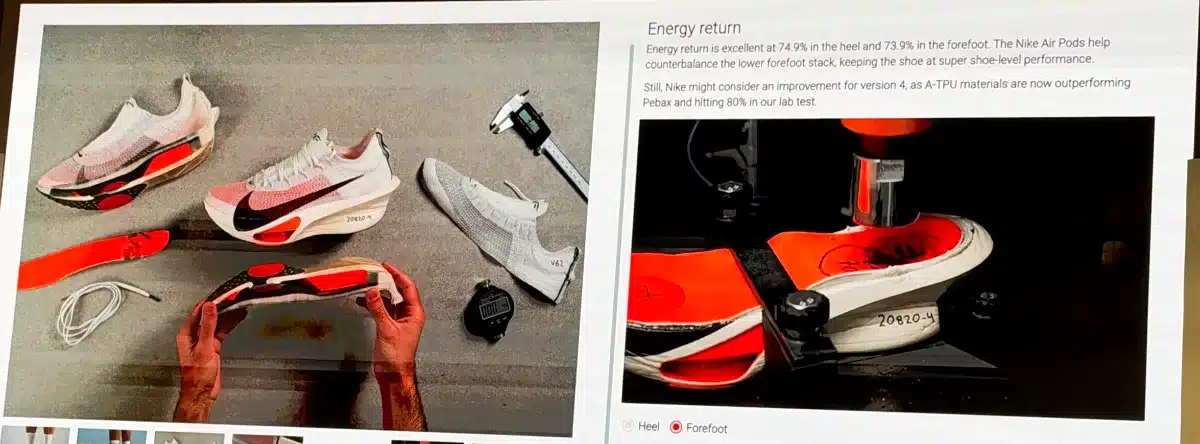
The review showed the shoe taken apart on a bench next to measuring tools, then a lab rig measuring energy return. The result was given in plain numbers: 74.9% at the heel and 73.9% at the forefoot, compared against 403 other running shoes the publisher had tested. It even suggested what the next version could improve.
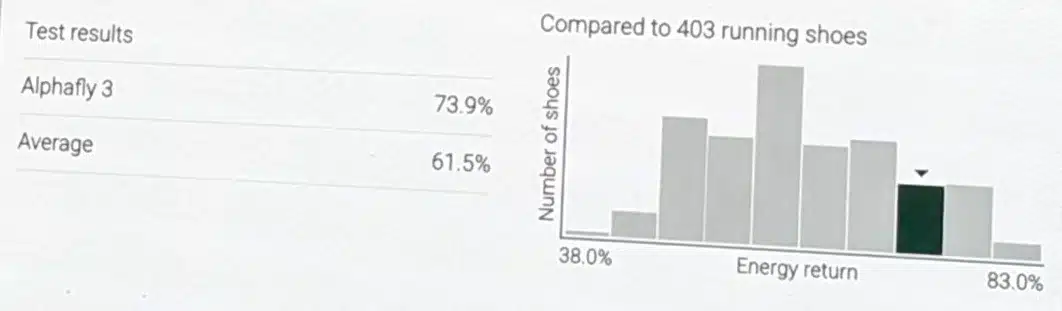
The test results panel put that number in context. The Alphafly 3 measured 73.9% at the forefoot against an average of 61.5%, and a histogram of all 403 shoes, ranging from 38% to 83%, showed exactly where it sat. A buyer does not need to know what energy return means to see that this shoe is near the top.
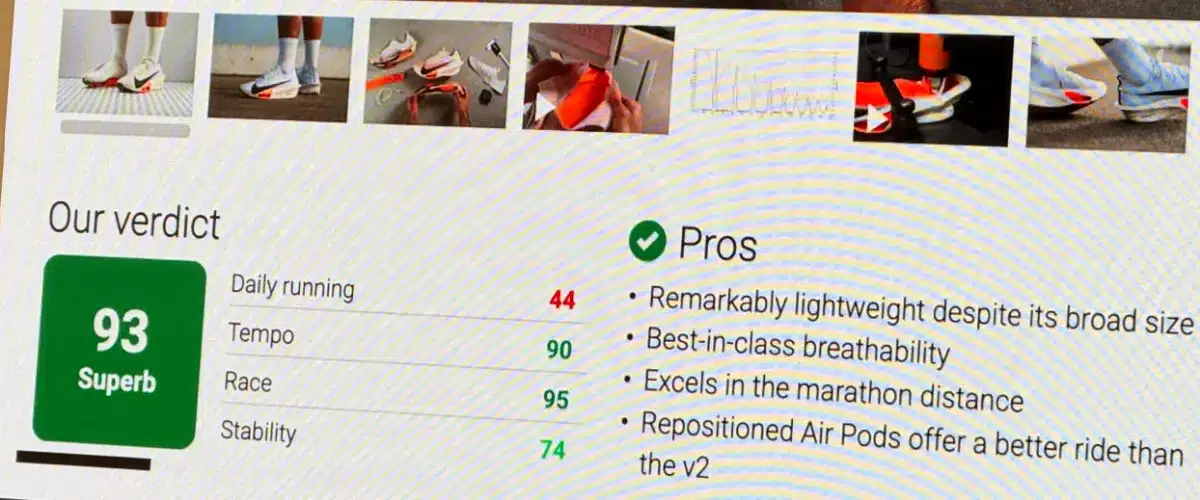
The second half of the page turned that testing into a buying decision: an overall verdict of 93 (“Superb”), separate scores for race (95), tempo (90), stability (74) and daily running (44), a short list of pros, and photo and video thumbnails of the shoe in use. The low daily running score matters as much as the high race score, because it tells a buyer who the shoe is not for.
This matches Google’s published advice on writing high quality reviews, which asks for quantitative measurements, evidence such as visuals from your own use, benefits and drawbacks, and what sets a product apart from competitors. For shoe brands the lesson goes beyond SEO: the proof that earns trust on a review page is also the strongest material you have for ads and product pages.
This table shows each proof element from the review and where it can work in your own marketing:
| Proof element on the slide | Why it builds trust | How to use it in shoe ads | How to use it on the product page |
|---|---|---|---|
| Lab photos and a measured result (74.9% heel energy return) | Shows the claim was tested, not just written | Open a video ad on the test, or use the measured spec as a headline | Show the result next to the price, with a line on how it was measured |
| Comparison against 403 tested shoes | A number means more with something to compare it to | Compare against your own previous model or range, never against a rival you have not tested | Add a comparison chart of your own models |
| Overall verdict plus use case scores | Honest about where the shoe is weak | Split ads by use case, such as race day and daily training audiences | Add a “best for” and “not ideal for” box near the buy button |
| Short pros list | Easy to scan in seconds | Turn each pro into a headline or Meta headline variant | Put pros and cons under the buy box |
| Photo and video thumbnails of the shoe in use | Shows real wear, not only studio shots | Use on-foot clips and customer try-on videos | Add a short video near the product images |
How Do You Turn Product Proof Into Shoe Ads That Convert?
Start with one measured fact about the shoe, put it in the first line or the first two seconds of the ad, and send the click to a page that shows the same proof. Proof only helps when it is real, so use figures from your own testing, your manufacturer’s spec sheet or verified customer reviews, and never borrow another site’s test results as your own.
What should you say when advertising shoes?
Say what the buyer can check: a test, a spec, a fit detail or a use case. These examples follow Google Ads limits of 30 characters for headlines and 90 for descriptions:
| Platform | Ad element | Example | Characters | Use only if |
|---|---|---|---|---|
| Google Ads | Headline | Lab Tested Running Shoes | 24 | You test your shoes and show the results on the landing page |
| Google Ads | Headline | See Our Energy Return Test | 26 | The test result or video is on the landing page |
| Google Ads | Headline | Weighed, Measured, Tested | 25 | Weight and specs are listed on the product page |
| Google Ads | Headline | Size Guide For Every Model | 26 | Each product page has a size and fit guide |
| Google Ads | Description | Every pair is tested before launch. See weight, cushioning and fit results before you buy. | 90 | Your testing covers those three things |
| Meta Ads | Primary text, first line | We put this racing shoe on a test rig. Here is what the foam did. | 65 | You have your own test footage |
| Meta Ads | Headline | Tested, Not Just Claimed | 24 | The ad links to a page that shows the test |
Keep every claim to what the landing page proves. Words like “best” or “most comfortable” with nothing behind them weaken trust and can cause problems with ad review.
How should running shoe ads use test data?
Running shoe buyers compare specs before they buy, so running shoe ads work best when they answer the comparison questions directly:
- Use case first: say whether the shoe is for racing, tempo runs or daily miles, as the review did with its separate scores.
- One spec per ad: weight, stack height, drop or energy return, whichever you have measured.
- Version changes: tell past buyers what changed from the last model in retargeting ads.
- Fit: say whether the shoe runs true to size and which widths it comes in.
How do you put the proof into Google Shopping and Performance Max?
Google Shopping and Performance Max read your product feed, so the proof needs to live there too. The product_highlight attribute takes short bullet points of up to 150 characters each, with 4 to 6 recommended, and Google says these can help products appear in AI Mode in Search. Keep the main product image clean, because Merchant Center image rules do not allow promotional text, watermarks or overlays on it. Our guides to supplemental feeds in Google Shopping and Shopping annotations and badges cover the setup.
What works for shoe ads on Meta?
- Test clip hooks: open on the shoe being cut, pressed or weighed, then show it on foot.
- Try-on videos: real customers walking or running in the shoe, filmed on a phone.
- Verdict carousel: one card each for the score, the pros, the “best for” use and the size range.
- Retargeting: answer the last doubt, such as fit, returns or how this model compares with the one they viewed.
Running ads for a footwear brand? We will review your Google Ads, Shopping feed and product pages, and show you where proof is missing and where spend is leaking. Get Free Audit Worth $500
What Should a Shoe Landing Page Show Above the Fold?
A shoe landing page should show the verdict, the price, the size selector and the main proof point before the shopper scrolls, so the claim that earned the click is still in view. Use this checklist for product pages that receive ad traffic:
- “Best for” box: one line on who the shoe suits and one on who it does not, next to the price.
- Fit guidance at the size selector: true to size or not, available widths and a link to the size guide.
- Proof with method: weight, drop, stack height or test results, with a line on how they were measured.
- Pros and cons: three or four of each, written for the buyer, not copied from the spec sheet.
- Real wear visuals: on-foot photos and a short video near the main images.
- Reviews that mention fit: highlight reviews that answer sizing and comfort questions.
- Shipping and returns near the button: worry about getting the wrong size is a common reason to hesitate, so make returns easy to find.
If your ads already get clicks but the product pages do not convert, our conversion rate optimization services start with exactly this kind of review. For a product-led ecommerce example, see our MiKi Jewellery Google Ads case study.
Is a Viral Shoe Ad Luck or Strategy?
While it’s tempting to think some shoe brands simply struck gold with these ads, the truth is that virality is almost always intentional. By combining emotional storytelling, authenticity, stunning imagery, strategic timing, and inclusivity, these brands created campaigns that continue to stand the test of time.
If you’re a marketer or brand looking to create your own viral shoe ad, start by asking, “Why should people care about this?” Because once you answer that, your story will naturally find its way into the hearts and minds of your audience. The next thing you need to do is to hire top digital marketing agency for outstanding shoe ads planning.
What Are 2026’s Viral Shoe Campaigns Doing Differently?
The viral shoe ads of 2026 follow the same emotional playbook as the classics, but with one clear shift: many of the biggest hits no longer center on a celebrity face at all. Short-form, creator-style, and faceless content now drives a huge share of viral reach, because the story and the product do the talking instead of a spokesperson. Brands are leaning into user-generated looks, close-up product craftsmanship, and sound-led trends that travel fast across platforms.
That’s why the lessons here extend well beyond footwear. The same principles power the rise of faceless digital marketing, where brands build attention and sales without a personality out front, relying on strong hooks, clear storytelling, and consistent posting. If a shoe ad can go viral without a famous face, so can almost any product, as long as the emotional core is real.
Want shoe ads built on proof, not adjectives? We manage Google Ads, Microsoft Ads and Meta Ads for ecommerce brands, month to month, and the ad account stays in your name. Get Free Audit Worth $500
Frequently Asked Questions
What makes a shoe ad go viral?
Which brands have the most viral shoe ads?
How do shoe brands use storytelling in ads?
Can small brands create viral shoe ads?
How do you advertise shoes online?
How do you write an advertisement for shoes?
Should running shoe ads use lab test data?
What images work best for shoe ads?
How much does it cost to run Google Ads for a shoe brand?