Judaica Ecommerce SEO Case Study: 31% More Organic Clicks, 10.6K Free Listing Clicks and AI Search Visibility

Ishant
Published : September 25, 2026 at 1:54 pm
Updated : September 25, 2026 at 2:15 pm
Ishant
This Judaica ecommerce SEO case study covers a long-established, family-owned Judaica retailer in New York. The store sells seforim and English Jewish books, tallis and tefillin, mezuzos, menorahs, kiddush cups, Shabbos and Yom Tov items, holiday departments, gifts, children’s products and Jewish music. It runs physical showrooms and a national online store that ships across the US and worldwide.
Hustle Marketers works on the store’s SEO, website structure, content, Google Merchant Center product feed, free listings and AI search visibility. We keep the store’s name out of this page. The review the client left for us on Clutch is anonymous too, and the numbers speak for themselves.
Every performance figure below comes from a screenshot of the client’s accounts or our tracking tools: Google Search Console, Google Merchant Center, Google Analytics 4 and Semrush AI Visibility, plus a live Google AI Mode result. Each one is labeled with its date range, and the section on what the numbers do not show explains where seasonality and reporting changes affect the comparison.
Judaica Ecommerce SEO Case Study at a Glance
| Detail | Information |
|---|---|
| Client | Family-owned Judaica and Jewish books retailer (name withheld) |
| Location | New York, with physical showrooms and a national online store |
| Company size | 11 to 50 employees (as listed on the client’s Clutch review) |
| Catalog | Seforim, English Jewish books, tallis and tefillin, mezuzos, menorahs, kiddush cups, Shabbos and Yom Tov items, holiday departments, gifts, children’s items, Jewish music |
| Buyer | Observant and traditional Jewish families, schools, shuls and gift buyers. Demand follows the Jewish calendar |
| Work covered | Website restructure, SEO, blog content, Merchant Center product feed, free listings, AI feed attributes, AI search visibility |
| Client rating | 5.0 out of 5 on Clutch for quality, schedule, cost and willingness to refer |
| Data sources | Google Search Console, Google Merchant Center, GA4, Semrush AI Visibility, Google AI Mode |
Results Summary
| Metric | Before | After | Change | Source and window |
|---|---|---|---|---|
| Organic clicks from Google Search | 9.96K | 13.1K | Up about 31% | Search Console, last 28 days vs previous 28 days, late September 2026 |
| Search impressions | 335K | 442K | Up about 32% | Search Console, same window |
| Average position | 9.8 | 8.0 | 1.8 places higher | Search Console, same window |
| Average CTR | 3% | 3% | Held steady while impressions grew | Search Console, same window |
| Free listing clicks to the online store (organic) | About 7.75K | 10.59K | Up 36.6% | Merchant Center, Aug 28 to Sep 24, 2026 vs previous period |
| Product clicks, ads and organic combined | About 7.77K | 11.41K | Up 46.8%, includes paid Shopping clicks | Merchant Center, same window |
| AI assistant sessions | 89 | 467 | 5.2x as reported, about 2.6x per day like for like | GA4, Jun 27 to Sep 24, 2026 vs Mar 28 to Jun 25, 2026 |
| Engaged AI assistant sessions | 54 | 308 | Up 470% as reported, about 2.8x per day like for like | GA4, same window |
| AI assistant engagement rate | 60.67% | 65.95% | Up 5.3 points | GA4, same window |
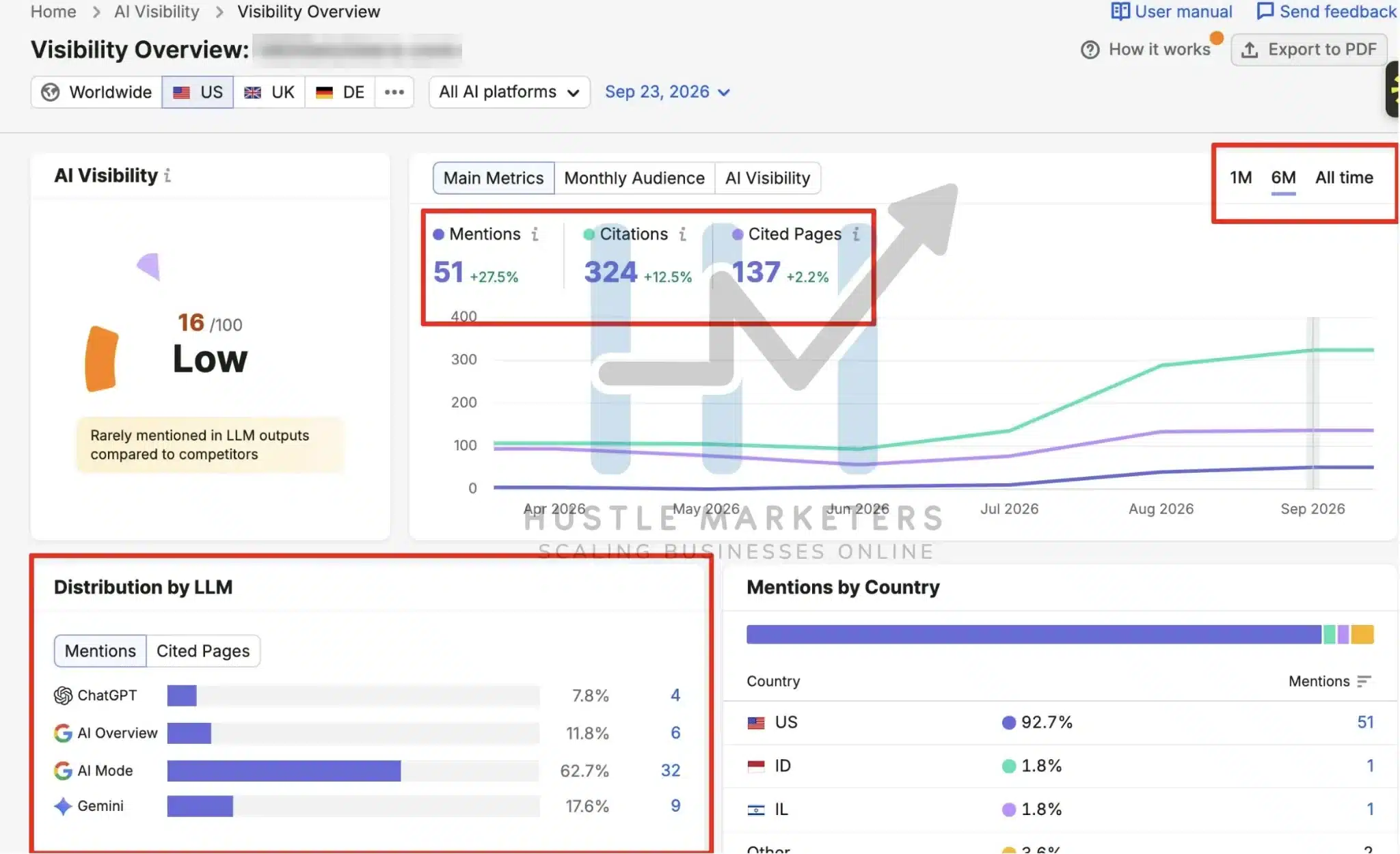
| AI mentions (US) | Close to zero in April to June | 51 | Up from near zero, and 27.5% above Semrush’s previous period | Semrush AI Visibility, 6 month view, September 23, 2026 |
| AI citations (US) | About 100 in April to June | 324 | Roughly 3x in six months | Semrush AI Visibility, same view |
| Google AI Mode, “best judaica store in new york” | Not tracked | Listed first under “The Megastores (Best Overall Selection)” | Store website cited as a source | Live AI Mode check, September 2026 |
The “before” figures for Merchant Center are worked out from the percentage change Google shows next to each metric, so they are rounded.
Why Is SEO for a Judaica Store Different From Other Ecommerce SEO?
A Judaica store looks like any other online shop from the outside: categories, product pages, a cart. The way people search for it is very different, and most generic ecommerce SEO advice misses these five things.
Demand runs on the Jewish calendar, not the Gregorian one
Jewish holidays move by 10 to 20 days against the Gregorian calendar each year. A sales pattern copied from last year’s dates will be early or late. In 2026 Rosh Hashanah began on September 11, Yom Kippur on September 20 and Sukkot on September 25, all inside a four week stretch. A store that is not ready by early August is late for three holidays at once.
One product has three or four spellings
Hebrew words reach English through different transliterations. Ashkenazi families often write Succos, Shabbos and tallis. Others write Sukkot, Shabbat and tallit. Some shoppers type the English word instead, such as Passover for Pesach. If a product title only carries one spelling, the store is invisible to everyone who types another. We cover this in the keyword table further down.
Buyers go quiet every week
The daily lines in both the Search Console and Merchant Center screenshots below show a repeating weekly dip. For a store whose core customers keep Shabbos, that is expected. Many buyers are offline from Friday evening to Saturday night, and again on Yom Tov. It changes when to publish, when to update the feed and how to read a day by day report.
Shoppers need exact answers before they buy
Will this lulav bag fit a full set with hadassim and aravos? Which nusach is this machzor? Does this mezuzah case fit a 12 cm scroll? Is the text Hebrew only or Hebrew and English? A generic product description does not answer these. Search engines and AI assistants now look for exactly these answers, which is why the product data matters as much as the page copy.
Publishers and marketplaces sell the same titles
Many seforim and Jewish books are sold by the publisher, by marketplaces and by several Judaica stores at once, often with the same title and the same cover. Winning those searches depends on clean product data, strong category pages and trust signals, not on having a unique product.
What Did We Do for This Judaica Store?
The work ran on four tracks at the same time: the website, the content, the product feed and AI visibility. Each one supports the others. A clean feed helps AI answers, strong category pages help free listings, and both help the store rank in normal search.
Restructured the website around departments and holidays
Clutch’s project summary for the client’s review says the team “restructured and shaped the client’s website”. The structure now follows how a Jewish family shops: by department (books, seforim, Judaica, garments, gifts, children, media) and by holiday. Holiday hubs for Pesach, Sukkot, Chanukah, Purim, Shavuos, the High Holidays and the Three Weeks stay live all year. That way each hub keeps its links and rankings between seasons instead of being rebuilt every time.
Built content that answers real buyer questions
We write blog content around the questions shoppers ask before they buy, and link each piece into the matching category or holiday hub. This helps normal rankings, and it gives AI assistants clear, quotable answers to cite. If you are planning holiday content for your own store, our Passover marketing strategies guide shows how we plan around one holiday.
Optimized the product feed for free listings
Free listings are Google’s organic product results. They cost nothing per click. Google says they can appear on Google Search, Google Maps, Gemini, YouTube, the Shopping tab, Google Images and Google Lens (Google Merchant Center Help). The feed work focused on:
- Fixing disapprovals and data mismatches first, because a product that is not approved cannot show in free listings or Shopping ads.
- Writing titles in the order a shopper searches: the product, the key detail, then the spelling most people type.
- Using product types that mirror the site’s departments and holiday hubs, so Google understands where each item belongs.
- Keeping price and availability in sync with the site, which matters most in the weeks before a holiday when stock moves fast.
The full method is in our product feed optimization guide and our breakdown of the Google product data specification. If your own products get no free listing impressions at all, start with why free listings get no impressions.
Added AI feed attributes through a supplemental data source
In May 2026 Google added six conversational attributes to Merchant Center: question_and_answer, document_link, related_product, item_group_title, variant_option and popularity_rank. Google describes them as helping “AI systems and conversational agents better understand your products’ specific nuances” (reported by Search Engine Roundtable). They sit alongside established fields such as product_highlight and product_detail.
We add these through a supplemental data source, so the main feed from the store platform stays untouched. For a Judaica store they fit naturally:
| Attribute | How it helps a Judaica store | Example |
|---|---|---|
| question_and_answer | Answers the question a shopper asks before buying | “Does this case fit a 12 cm mezuzah scroll?” |
| related_product | Connects items that are bought together | Lulav and esrog set linked to a lulav bag and an esrog box |
| variant_option | Explains what differs between sizes and styles | Tallis sizes, machzor nusach, siddur print size |
| item_group_title | Names the product family clearly | A menorah range sold in several finishes |
| popularity_rank | Tells Google which items sell best | Ranked from the store’s own sales data |
| product_detail | Holds the facts and the other spellings | Language: Hebrew and English. Also known as: Succos, Sukkot |
Our Google Merchant Center AI attributes guide covers the specs, limits and formatting mistakes that silently break this data. You can check your own feed columns with our free feed attribute mapper.
What Results Did the Store See?
Organic search: about 31% more clicks in 28 days
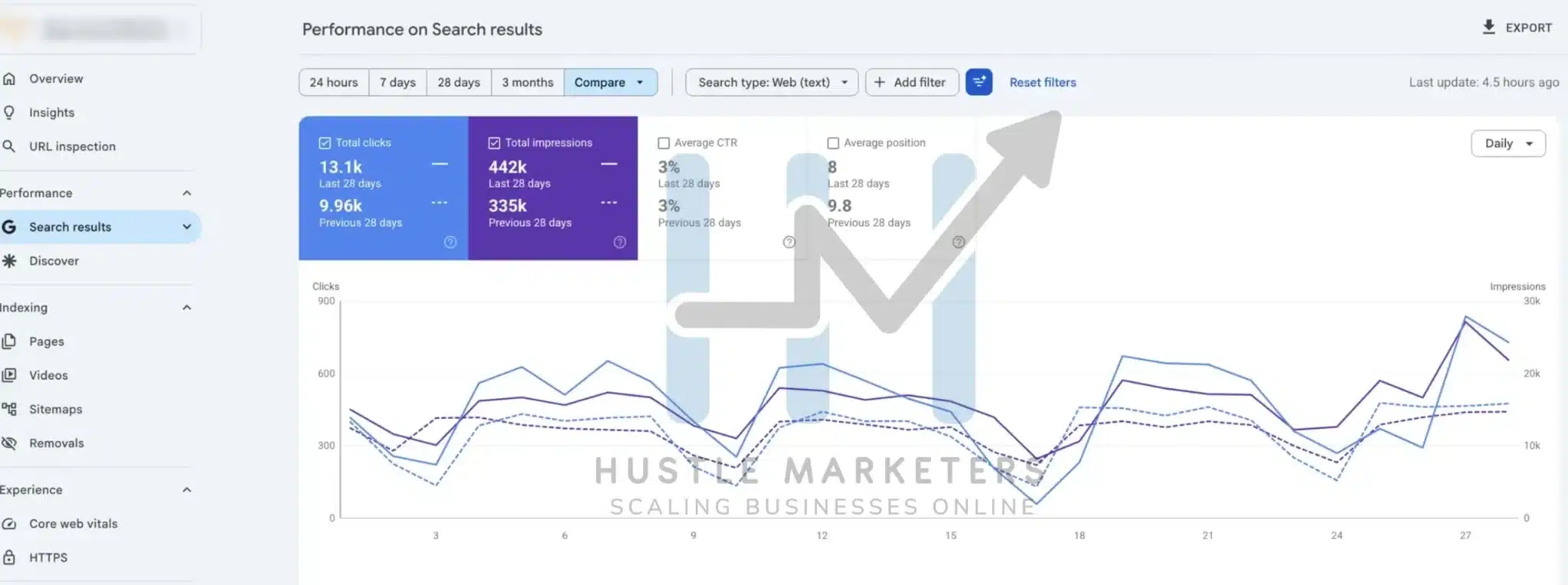
Clicks rose from 9.96K to 13.1K and impressions from 335K to 442K. Average position moved from 9.8 to 8.0 while impressions grew. More impressions can come from more demand, so the position change is the better sign that pages rank higher, though a seasonal shift toward branded searches can also move this number. CTR held at 3% while impressions grew by about a third, so the extra visibility turned into extra visits at the same rate.
Google’s Search Console Help says its generative AI performance report “includes data from the Web search type in the Performance report” (Search Console Help). In other words, AI Overviews and AI Mode activity sits inside these search totals, not in a separate bucket.
Free listings: 10.59K organic clicks from Google’s product results
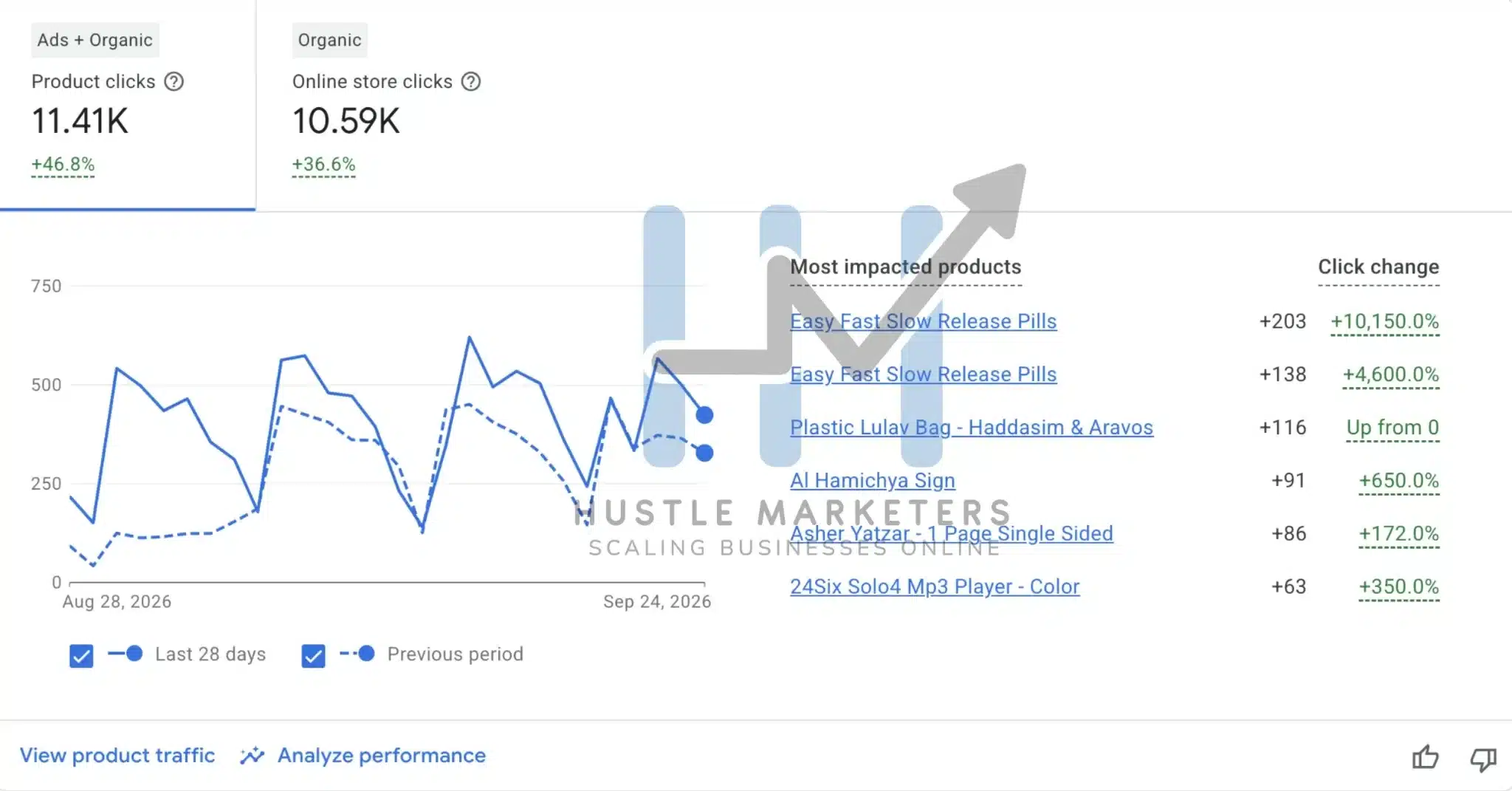
Organic online store clicks from free listings reached 10.59K, up 36.6%. Product clicks across ads and organic reached 11.41K, up 46.8%. Most of the store’s product click volume from Google came through the free, organic side. That is traffic the store did not pay for per click.
The products that gained the most clicks tell the story of the season, and of the feed:
| Product (as named in the feed) | What it is | Clicks before | Clicks after | Change |
|---|---|---|---|---|
| Easy Fast Slow Release Pills (listing 1) | Yom Kippur fasting aid | 2 | 205 | +203 |
| Easy Fast Slow Release Pills (listing 2) | Same product, second listing | 3 | 141 | +138 |
| Plastic Lulav Bag, Haddasim and Aravos | Sukkot, holds the lulav, hadassim and aravos | 0 | 116 | Up from 0 |
| Al Hamichya Sign | Bracha sign, sold all year | 14 | 105 | +91 |
| Asher Yatzar, 1 Page Single Sided | Bracha sign, sold all year | 50 | 136 | +86 |
| 24Six Solo4 MP3 Player, Color | Kosher MP3 player, sold all year | 18 | 81 | +63 |
Before and after clicks are worked out from Google’s click change and percentage figures. Two points stand out. The lulav bag went from zero clicks to 116 in the four weeks before Sukkot, which shows the listing was live and approved when demand arrived. And three of the six top gainers are everyday items rather than holiday products, although back-to-school buying may play a part for the bracha signs.
Not sure how free listings differ from paid Shopping ads? Read free Google Shopping listings vs paid Shopping ads and our full guide to free listings in Google Merchant Center.
AI assistant traffic: 467 sessions in 90 days, mostly from ChatGPT
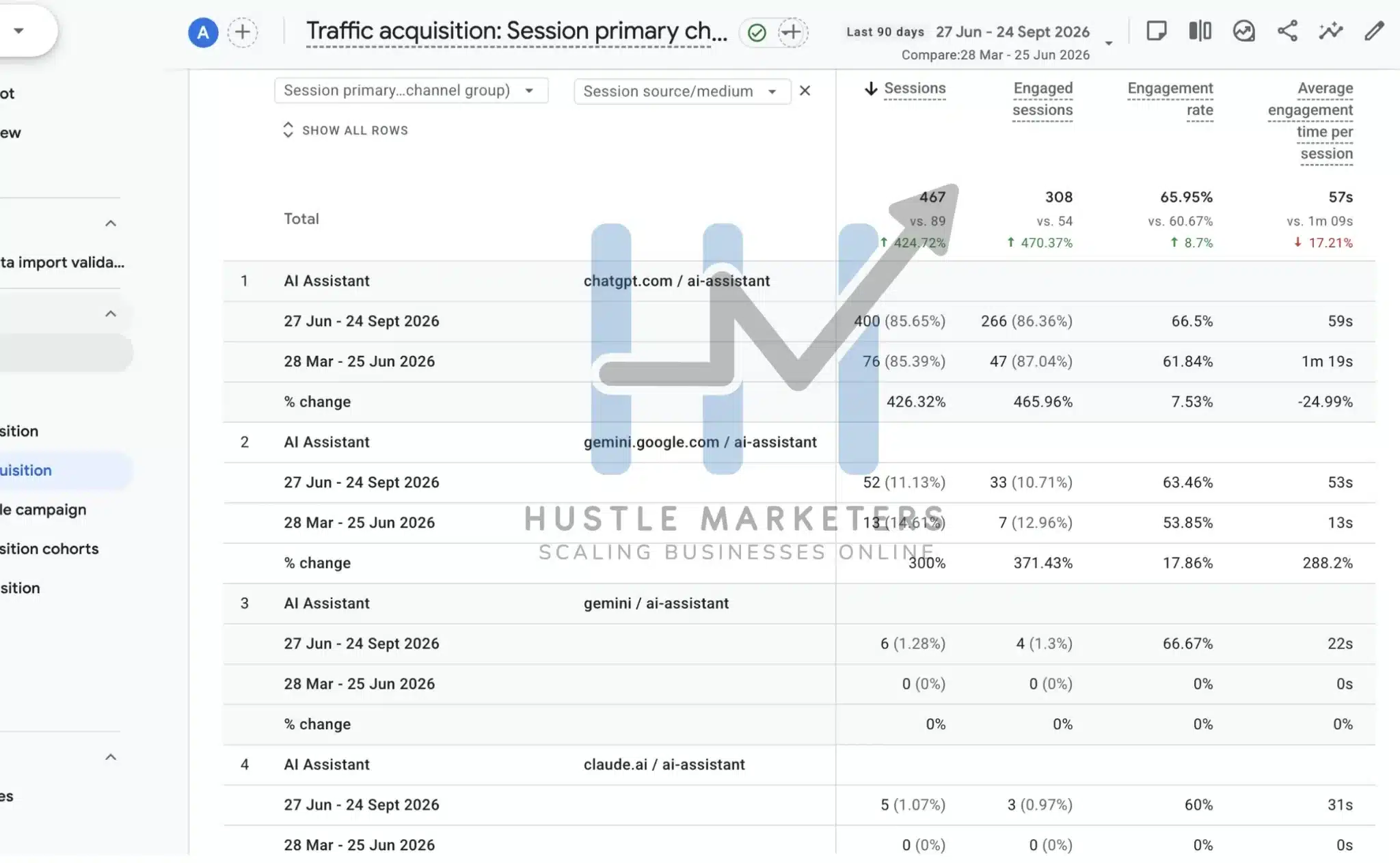
| Source | Sessions before | Sessions after | Engaged sessions after | Engagement rate after |
|---|---|---|---|---|
| chatgpt.com | 76 | 400 | 266 | 66.5% |
| gemini.google.com | 13 | 52 | 33 | 63.46% |
| gemini | 0 | 6 | 4 | 66.67% |
| claude.ai | 0 | 5 | 3 | 60% |
| Other AI assistants (rows below the screenshot) | 0 | 4 | 2 | Not shown |
| Total AI Assistant channel | 89 | 467 | 308 | 65.95% |
ChatGPT sent 400 of the 467 sessions. Gemini traffic grew from 13 to 58 sessions across its two sources, and Claude sessions went from 0 to 5 in the AI Assistant channel. These visitors engage well: 65.95% of AI assistant sessions were engaged sessions, up from 60.67%. Average engagement time dropped from 1m 09s to 57s, which is worth watching as the channel grows.
GA4 reports this as a 424.72% increase. Read the note on what the numbers do not show before quoting that figure. The like for like growth is closer to 2.6x per day, which is still strong.
AI visibility: 51 mentions and 324 citations in Semrush
Semrush defines a mention as a prompt where the brand appears in the AI answer, and a citation as an AI response that cites the domain as a source (Semrush Knowledge Base). For this store in the US:
- Mentions: 51, up 27.5% on the previous period. Close to zero from April to June.
- Citations: 324, up 12.5% on the previous period. Around 100 from April to June, so roughly three times higher in six months.
- Cited pages: 137, up 2.2%. More of the site’s pages are being used as sources.
| AI platform | Mentions | Share of mentions |
|---|---|---|
| Google AI Mode | 32 | 62.7% |
| Gemini | 9 | 17.6% |
| Google AI Overviews | 6 | 11.8% |
| ChatGPT | 4 | 7.8% |
Google’s own AI surfaces account for 47 of the 51 mentions. That matters for the feed story below, because AI Mode’s shopping answers and Gemini can draw on Google’s Shopping Graph and free listings. Meanwhile ChatGPT sends the most sessions in GA4. Mentions and clicks do not always come from the same place, which is why we track both. Our guide to AI visibility, citations and mentions explains the difference in detail.
Google AI Mode: listed first for “best judaica store in new york”
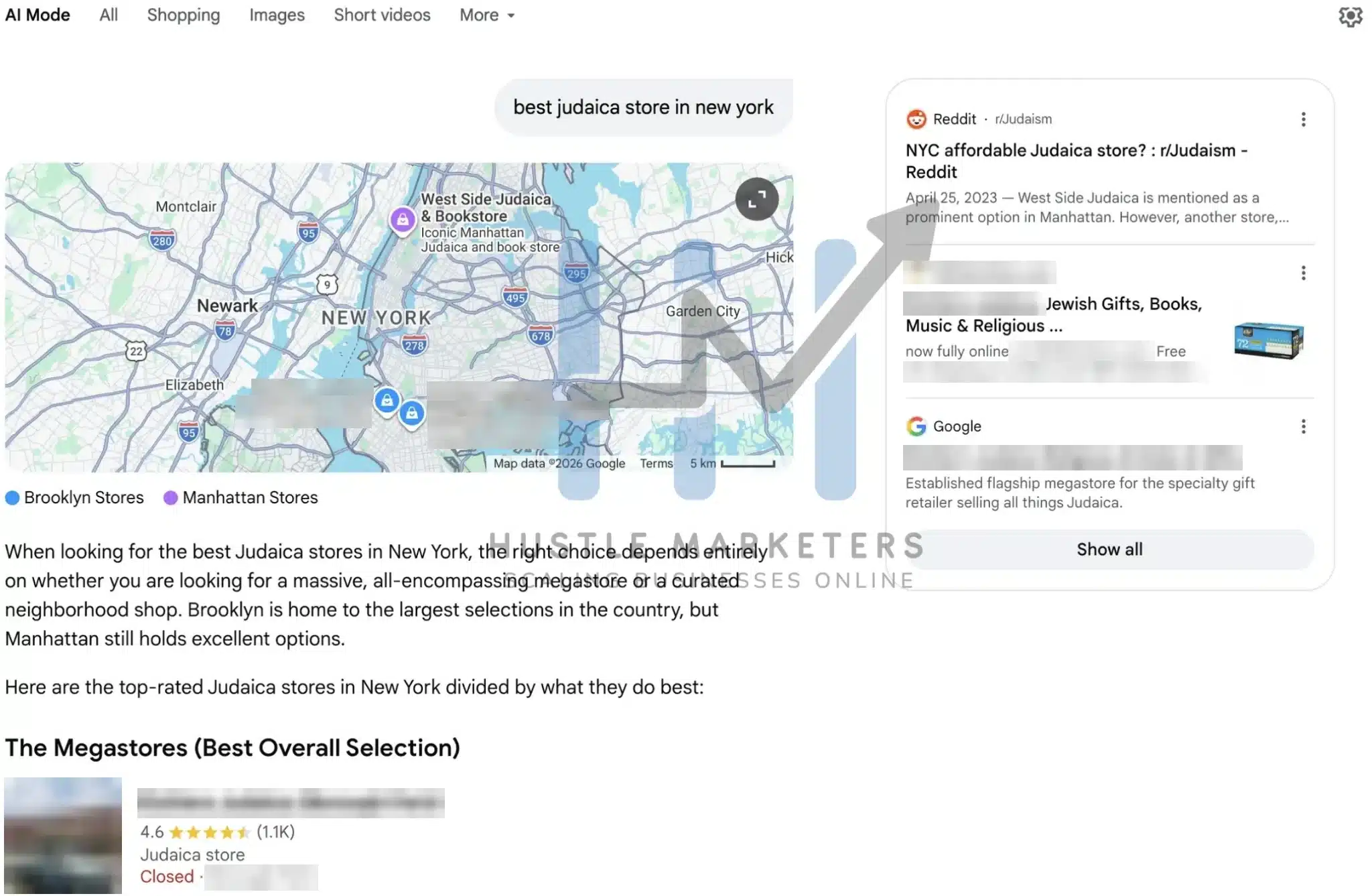
For the query “best judaica store in new york”, Google AI Mode groups stores by what they do best and lists this client first under “The Megastores (Best Overall Selection)”, with its 4.6 star rating from about 1,100 reviews. The first three sources shown were a Reddit thread in r/Judaism about affordable NYC Judaica stores, the store’s own website and a Google Maps listing for the store.
That mix is the lesson for any Judaica store. In this answer the sources came from the store’s site, community discussion and the business listing with its reviews. A store that only works on its website is covering one of the three.
How Does a Product Feed Help AI Visibility?
Most stores think of the Merchant Center feed as something for Shopping ads. It now does much more. Google said in May 2025 that “our new AI Mode shopping experience brings together Gemini capabilities with our Shopping Graph”, and that the Shopping Graph held more than 50 billion product listings, with more than 2 billion refreshed every hour (Google blog). Your feed is one of the ways your products get into that graph.
| Surface | What it draws on | Where the clicks show up |
|---|---|---|
| Google AI Mode | Gemini plus the Shopping Graph, web pages and Business Profile data | Search Console (web search) and GA4 Organic Search |
| Google AI Overviews | Google’s index and product data | Search Console (web search) and GA4 Organic Search |
| Free listings on Search, Shopping tab, Images, Lens, YouTube, Maps | Your Merchant Center feed | Merchant Center organic report |
| Gemini app | Google lists Gemini as a free listings surface | GA4 AI Assistant channel (gemini.google.com) |
| ChatGPT | Its own search and shopping retrieval, plus OpenAI’s merchant product feed program | GA4 AI Assistant channel (chatgpt.com) |
| Claude | Web search retrieval | GA4 AI Assistant channel (claude.ai) |
Three practical points come out of this table:
- A clean, approved feed is the most direct way to get products into Google’s shopping data. Disapproved products cannot appear in free listings or Shopping ads.
- Conversational attributes give Google the detail a long, specific question needs, such as “lulav bag that fits hadassim and aravos”. Google decides whether and how to use them, so they are an input, not a guarantee.
- ChatGPT runs a separate system. OpenAI publishes its own product feed specification for merchants, and it is not the same as Merchant Center.
For the full picture on how online stores get found in ChatGPT, Gemini and AI Mode, read our guide to AI SEO for ecommerce. If you want us to run it for you, see our AI SEO agency service.
Which Keywords Should a Judaica Store Target?
The biggest keyword problem in this niche is spelling. The table below shows the variants we plan for, and where each one belongs. The store’s own style goes in the title. The other spellings go into product_detail, the description, category copy and FAQs, so every searcher finds the same product without the title turning into a list.
| Common store spelling | Other spellings shoppers type | Where to use the variants |
|---|---|---|
| Succos | Sukkot, Sukkos, Succot | Holiday hub copy, product_detail, FAQs |
| Chanukah | Hanukkah, Hanukah | Menorah and candle titles, holiday hub H1 and copy |
| Tallis | Tallit, Talis | Garment titles and category copy |
| Mezuzah, Mezuzos | Mezuza, Mezuzot, mezuzahs | Case and scroll titles, product_detail |
| Shabbos | Shabbat, Sabbath | Candlestick, kiddush cup and challah board copy |
| Yarmulke | Kippah, Kippa, Kipa | Garment titles and category copy |
| Seforim | Sefarim, Sforim, Hebrew books | Book department copy and product_type |
| Esrog | Etrog | Lulav and esrog set titles, esrog box copy |
| Haggados, Pesach | Haggadah, Haggadot, Passover | Pesach hub and product titles |
| Tzitzis | Tzitzit | Garment titles and category copy |
Beyond spelling, these are the buyer intent searches a Judaica store should map to pages:
| Search type | Examples | Best page or channel |
|---|---|---|
| Store and local | judaica store, judaica store near me, best judaica store in new york | Homepage, Google Business Profile, reviews |
| Holiday products | lulav and etrog set, sukkah decorations, chanukah menorah, seder plate | Holiday hubs and product feed |
| Gifts | bar mitzvah gifts, jewish wedding gifts, jewish gifts | Gift category pages and gift guides |
| Ritual items | mezuzah case, tallit bag, kiddush cup, havdalah set | Category pages and product feed |
| Books | jewish books online, machzor, siddur, haggadah | Book and seforim departments, feed with publisher details |
| Questions | how to choose a mezuzah case, what size tallis, what is in a lulav set | Blog guides and question_and_answer feed data |
When Should a Judaica Store Prepare for Each Jewish Holiday?
These are the Diaspora dates for the coming year, from Hebcal, with the 2027 High Holidays taken from Hebcal’s 2027 to 2028 calendar. Each holiday starts at sunset on the first date. The ready-by date is our working rule: pages updated and seasonal products live and approved in the feed six to eight weeks ahead, so Google has time to crawl, approve and rank them.
| Holiday | Dates | Products that move | Feed and pages ready by |
|---|---|---|---|
| Sukkot to Simchat Torah | Sep 25 to Oct 4, 2026 | Lulav and esrog sets, lulav bags, esrog boxes, sukkah decorations, Simchas Torah flags | Early August |
| Chanukah | Dec 4 to Dec 12, 2026 | Menorahs, candles and oil, dreidels, gifts, children’s books | Mid October |
| Purim | Mar 22 to Mar 23, 2027 | Megillahs, mishloach manos items, costumes | Late January |
| Pesach | Apr 21 to Apr 29, 2027 | Seder plates, haggados, matzah covers, Pesach kitchen items | Late February |
| Shavuos | Jun 10 to Jun 12, 2027 | Books, learning sets, gifts | Mid April |
| Rosh Hashanah and Yom Kippur | Oct 1 to Oct 3 and Oct 10 to Oct 11, 2027 | Machzorim, shofars, honey dishes, Yom Kippur items | Mid August |
What Do the Numbers Not Show?
A case study is only useful if you can trust it. These are the limits of the data above, stated plainly.
- Seasonality. The 28 day windows in Search Console and Merchant Center include Rosh Hashanah and Yom Kippur and cover the run-up to Sukkot, so part of the growth is holiday demand. The better average position, the everyday products among the top gainers and the six month climb in AI citations point to more than seasonality, but none of them fully rules it out.
- GA4’s AI Assistant channel is new. Google rolled it out in mid May 2026, and it does not relabel older sessions. The earlier GA4 window starts on March 28, so its first six weeks or so count AI visits under Referral instead. Counting only the days the channel existed (from May 13 to June 25, 44 days), daily AI assistant sessions went from about 2 to about 5, roughly 2.6x. That is the fairer comparison, though it still includes the holiday season and wider growth in AI referrals. The 424.72% in the report overstates it.
- GA4 does not count Google Search’s AI features as AI Assistant traffic. Clicks from AI Mode and AI Overviews arrive as Organic Search, so the AI Assistant channel understates total AI driven traffic. Visits from the Gemini app are counted.
- The AI visibility score is still low. Semrush scores the store 16 out of 100, rated Low and “rarely mentioned in LLM outputs compared to competitors”. Mentions have grown from almost nothing, but there is a lot of room left. That is the next stage of the work, not a finished result.
- Do not add the reports together. Search Console, Merchant Center and GA4 measure different things and overlap in places, so we report them side by side, not as one total.
- No revenue figures. The client has not released sales data for publication, so this page reports traffic and visibility only.
What Did the Client Say?
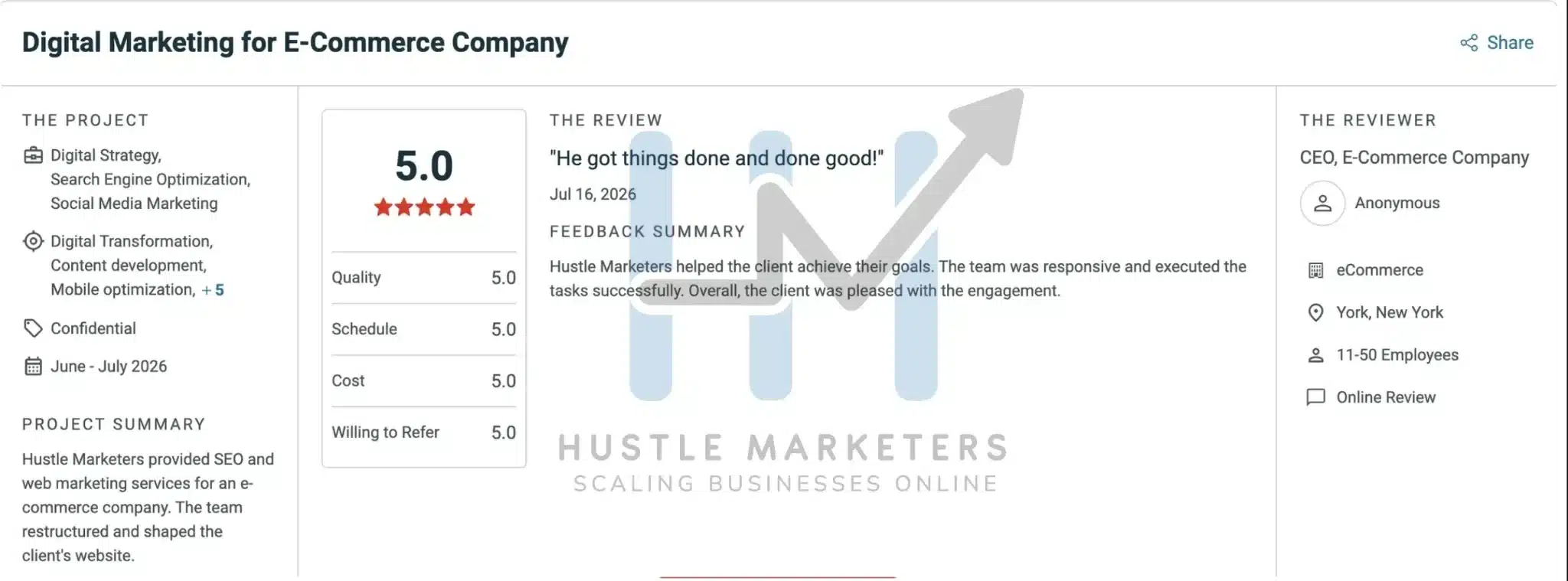
The client’s CEO reviewed Hustle Marketers on Clutch on July 16, 2026, under the title “He got things done and done good!”. Clutch’s summary reads: “Hustle Marketers helped the client achieve their goals. The team was responsive and executed the tasks successfully. Overall, the client was pleased with the engagement.”
| Clutch rating | Score |
|---|---|
| Overall | 5.0 |
| Quality | 5.0 |
| Schedule | 5.0 |
| Cost | 5.0 |
| Willing to refer | 5.0 |
Where Are the Next Gains for This Store?
- Raise the AI visibility score from 16. Keep adding conversational attributes to best sellers and holiday items, and track results in Merchant Center’s AI performance insights report, covered in our AI attributes guide, alongside Semrush.
- Get ready for Chanukah. Chanukah starts at sunset on Friday, December 4, 2026. Menorah, candle and gift listings need to be approved and ranking by mid October.
- Grow the community signal. The AI Mode answer cited Reddit’s r/Judaism. Genuine customer discussion and fresh reviews feed the same answers.
- Measure AI Mode directly. Search Console’s generative AI report shows impressions in AI Overviews and AI Mode, which fills the gap GA4 leaves.
If you want to track the same signals for your own brand, our guide on how to track brand visibility in AI search walks through the setup.
Why Choose Hustle Marketers for Judaica and Jewish Ecommerce Marketing?
This account is run by Ishant Sharma, founder of Hustle Marketers, who has worked in digital marketing since 2013 as a Google Ads, Microsoft Ads and SEO specialist. Here is what makes the difference in this niche:
- We plan by the Jewish calendar. Feeds, pages and campaigns are timed to the holidays, and we work around Shabbos and Yom Tov.
- We know the language. Transliteration variants, nusach differences and the difference between seforim and English books are part of how we write titles and pages.
- Feed, SEO and AI visibility under one roof. Free listings, organic search and AI answers all read the same product data, so one team handles all three.
- Honest reporting. We show the real screenshots and tell you what the numbers do and do not prove, as this page does.
Read more about our work as a Jewish marketing agency, and about what we do for businesses as a Jewish marketing agency in New York. For the wider service, see our SEO agency page, and for paid Shopping, our ecommerce PPC management service. You can also run through our ecommerce SEO checklist on your own store.
Related Ecommerce Case Studies
- Australian pet ecommerce brand: organic clicks up 56%. Another store where SEO and product pages were worked together.
- Rec Hall: organic clicks up 117% with nearly double the ranking keywords. SEO and AI visibility growth on a local business.
- Online pet supply store: SEO and AEO growth to AED 6.5M+ in revenue.
- Magento store: $14.3M in lifetime sales through SEO.
- Getting a store live on Google Shopping by fixing Merchant Center.
- Building block toy brand: from $0 to 8.5x ROAS in 60 days.
Frequently Asked Questions
What does SEO for a Judaica store involve?
It covers the same basics as any ecommerce SEO, such as site structure, category pages, product pages and technical health. On top of that it needs holiday hubs that stay live all year, titles and copy that handle transliteration variants like Sukkot and Succos, a product feed for free listings, and content that answers the exact questions observant buyers ask before they order.
Do Google free listings cost anything?
No. Free listings are Google’s organic product results and there is no cost per click. Google says they can appear on Google Search, Google Maps, Gemini, YouTube, the Shopping tab, Google Images and Google Lens. You need an approved product feed in Google Merchant Center.
How does a product feed help a store appear in Google AI Mode and ChatGPT?
Google’s AI Mode shopping answers use its Shopping Graph, and your Merchant Center feed is one of the ways your products get into it. ChatGPT is separate. It uses its own retrieval and OpenAI runs its own merchant product feed program, so a Google feed does not submit your products to ChatGPT.
What are AI feed attributes in Google Merchant Center?
They are optional product fields Google added in May 2026 to help AI systems understand product details: question_and_answer, document_link, related_product, item_group_title, variant_option and popularity_rank. You supply the data, and Google decides whether and how to use it.
Should product titles say Sukkot or Succos?
Use the spelling most of your buyers type in the title, and cover the other spellings in product_detail, the description, category copy and FAQs. That way the title stays readable and every searcher can still find the product.
Why does traffic dip every week for a Judaica store?
Many customers keep Shabbos and are offline from Friday evening to Saturday night, and again on Yom Tov. The weekly dip shows clearly in both Search Console and Merchant Center. Plan feed updates, publishing and ad schedules around it.
How do you measure AI assistant traffic in GA4?
GA4 added an AI Assistant default channel group in mid May 2026 that picks up visits from assistants such as ChatGPT, Gemini and Claude. It does not relabel older data, and clicks from Google AI Mode and AI Overviews still count as Organic Search, so pair it with Search Console and an AI visibility tool.
How much of this growth is seasonal?
Some of it. The 28 day comparisons include Rosh Hashanah and Yom Kippur. The better average position in Search Console, the everyday products among the top gainers in Merchant Center, and the six month climb in AI citations point to more than holiday demand, but they do not fully rule it out.
When should a Judaica store prepare for Chanukah 2026?
Chanukah starts at sunset on Friday, December 4, 2026. Aim to have menorah, candle and gift listings approved in the feed, and holiday pages updated, by mid October so Google has time to crawl and rank them.
Why is the store not named in this case study?
We keep the client’s name private. Their Clutch review is anonymous as well. All the data shown comes from their own accounts, with names and domains blurred in the screenshots.
Want the Same Results for Your Jewish Business?
Whether you run a Judaica store, a Jewish bookshop, a kosher food brand or another business that serves the Jewish community, we can look at your search rankings, product feed and AI visibility and show you where the gaps are. Claim your free $500 audit and tell us which holiday you want to be ready for first.
Summarise this case study with: