Map Pack SEO: How to Rank in Google’s Local Pack and AI Answers

Ishant
Published on November 11, 2026
Ishant
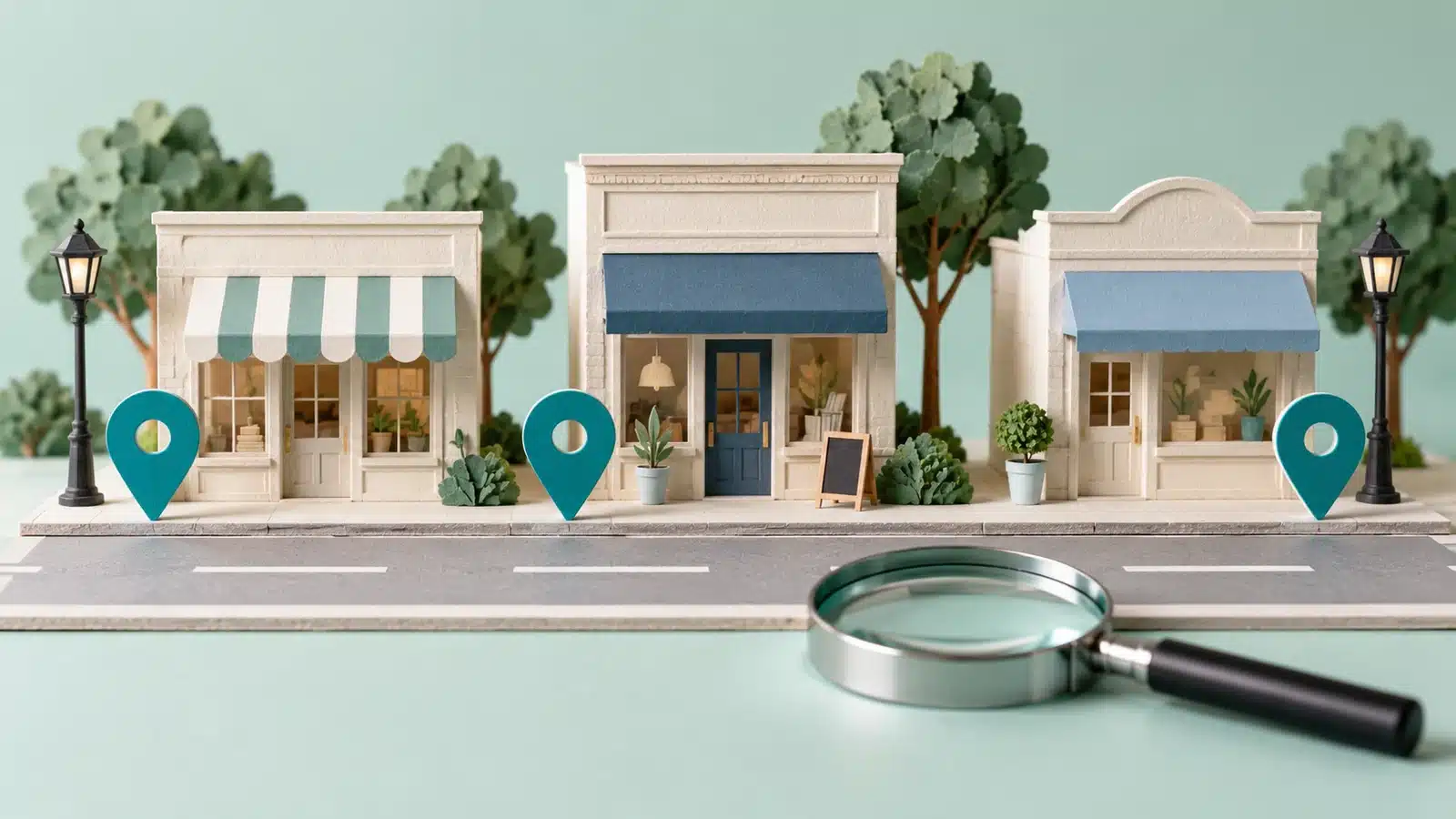
Map pack SEO is the work of getting a business into the three local results Google shows with a map for searches like “plumber near me” or “dentist in Plano.” Most guides stop at setting up a Google Business Profile. This one explains how Google actually chooses those three businesses, which factors you can move, how to measure rankings properly, and what changed in 2025 and 2026.
Summarize this article with:
Quick Answer: How do you rank in Google’s map pack?
You rank in the map pack by matching the search (primary category, services, landing page), being close to the searcher, and being well known (reviews, ratings and links). Google says local results are mainly based on relevance, distance and popularity. Distance sets your ceiling, so track rankings with a geo-grid. Keep listings accurate everywhere, since AI answers use them.
Key Observations
- Proximity sets the ceiling. Measure rankings with a geo-grid at a fixed time, not one search from your office.
- Primary category leads. It tops the 2026 Whitespark expert rankings, ahead of proximity.
- The free pack is getting smaller. Sponsored pins, Local Services Ads and AI local packs take space, so a steady ranking can still bring fewer calls.
- AI assistants use different data. ChatGPT leans on Bing and Yelp data, while Google’s AI features use Search and Business Profile data.
- Review rules tightened in 2026. Google’s policy now bans staff review quotas, and Sterling Sky reports a surge in review posting blocks.
Google’s three ranking areas, and what each one means for you:
| Google’s factor | What it means | Main levers |
|---|---|---|
| Relevance | How well the profile matches the search | Primary category, services, landing page |
| Distance | How far you are from the searcher | Your real address (mostly fixed) |
| Prominence | How well known the business is | Reviews, rating, links, mentions |
Not sure why a competitor outranks you on Maps? We run a geo-grid, check your profile, categories and reviews, and show what is holding you back. Get Free Audit Worth $500
If you have not set up or cleaned up your profile yet, start with our step-by-step guide on how to optimize your Google Business Profile. This article assumes the basics are done and focuses on ranking.
What is the Google map pack (local 3-pack)?
The Google map pack, also called the local pack or local 3-pack, is the block of three business listings and a map that Google shows for searches with local intent. Tapping “More places” opens the full Local Finder list. Google cut the pack from seven results to three on August 7, 2015, according to Search Engine Land, which is why every position matters.
The pack appears for explicit local searches (“electrician in Austin”), “near me” searches and implicit ones where Google assumes local intent (“emergency plumber”). In 2026 it often sits with sponsored listings, and on some US mobile searches Google shows a smaller AI local pack instead. Both are covered later in this guide.
How does Google choose the 3 businesses in the map pack?
Google chooses map pack results from three areas: relevance, distance and prominence. Its help page on local ranking currently says “Local results are mainly based on relevance, distance, and popularity,” and keeps Relevance, Distance and Prominence as its section headings. It also states: “There’s no way to request or pay for a better local ranking on Google.”
Google keeps the details private (“We do our best to keep the search algorithm details confidential”), so the weights below come from expert surveys and published tests, not Google. A widely cited source is the Whitespark Local Search Ranking Factors 2026 survey of 47 local SEO experts, published November 6, 2025.
What does “relevance” mean for the map pack?
Relevance is how well your profile matches the search. Google defines it as “how well a Business Profile matches what someone is searching for.” In practice that is driven by your primary category, your additional categories and services, and the page your profile links to. The Whitespark survey ranks the primary category as the number one local pack factor.
How much does distance matter?
Distance matters more than almost anything else. Google says “Distance refers to how far each business is from the customer who’s searching,” and when a searcher does not share their location, “Google uses what it knows about their location.” Experts rank proximity to the point of search as factor number two. Google’s November 2021 local update, which the industry calls “Vicinity,” tightened the proximity effect further.
What counts as prominence or popularity?
Prominence is how well known your business is. Google names two inputs directly: “how many websites link to your business and how many reviews you have,” and adds that “More reviews and positive ratings can help your business’s local ranking.” Google’s ranking factor section does not name citations, posts or photos. The same page suggests adding photos, but presents them as a way to show customers what you offer, not as a ranking input. That is worth remembering when someone sells them as ranking factors.
What Google’s ranking page does and does not say:
- Named: category match, distance, links to your business, number of reviews and positive ratings.
- Required: accurate business information, or the profile “might not show up for relevant searches.”
- Not named as ranking factors: posts, citations, description keywords or engagement. Photos appear only as a tip for showing customers what you offer.
- Ruled out: paying or asking Google for a better local ranking.
Does being open right now change your ranking?
Yes. Google’s Search Liaison confirmed in December 2023 that openness “recently became a stronger signal for non-navigational queries,” as reported by Search Engine Land. In the 2026 survey, “Business is Open at Time of Search” is the number five pack factor, and Whitespark’s Darren Shaw has described rankings slipping as a business approaches closing time.
Do not fake your hours to exploit this. Google said it “wouldn’t recommend businesses do this,” and its guidelines ask you to “Provide your regular customer-facing hours of operation.” Accurate hours, including special holiday hours, are the safe win. For restaurants, the same holiday hours belong in your Restaurant schema, which our restaurant schema guide shows how to keep in step with your Business Profile. If the restaurant runs Toast, menu price and stock changes made on the POS also update in Toast Local, Toast’s diner app, as our guide to Toast POS explains.
Why do map pack rankings change from one street to the next?
Map pack rankings change by location because Google measures distance from each searcher, not from a fixed city center. A plumber can rank first for someone two blocks away and not appear at all for someone five miles away. Time of day, the exact wording of the search, and filters that hide similar businesses at the same address also change what each person sees.
Can you rank in the map pack in a city where you have no address?
Rarely, and usually only on the edge closest to you. Local Search Forum threads going back years, including this 2025 discussion, describe businesses that rank well near their address but cannot hold the pack across a whole city. In an older 2018 thread, Joy Hawkins called the 3-pack in a city you are not located in “extremely difficult” and pointed to organic service area pages instead. Our guide to location pages SEO shows how to build them.
How do you track map pack rankings with a geo-grid?
A geo-grid tool checks your ranking from many points arranged around your business, then shows the results as a colored map. It replaces the misleading single search from your own office. To get comparable results:
- Center the grid on your verified address.
- Match the grid size to your real trade area.
- Track 3 to 5 core keywords that customers use.
- Scan at the same day and time each week, because openness changes rankings.
- Never compare grids across different tools, since “5×5” can mean different point counts.
How do you read a geo-grid report?
Most tools report three numbers. Using Local Falcon’s definitions: ARP averages your rank where you appear in the top 20, ATRP averages across every grid point, including points where you rank outside the top 20, and SoLV (Share of Local Voice) is the share of points where you are in the top three. These patterns are the ones we see most:
| Pattern you see | What it usually means | What to do |
|---|---|---|
| Green center, red ring close in | Tight proximity ceiling on a competitive term | Target long-tail terms and organic pages |
| Green on one side only | Competitors clustered on the other side | Compare their grids and profiles |
| Red everywhere, even the center | Filtered, suspended or wrong category | Run the “not showing” checklist below |
| Grid changes by hour | Openness effect near closing time | Check hours; scan at a fixed time |
| Good ARP, poor ATRP | Strong core, weak reach | Work on reviews, links and relevance |
| Whole grid shifts suddenly | Map pin moved or address anchor changed | Check the pin and recent edits |
Can you still trust geo-grid and rank tracker data in 2026?
Yes, as a trend line, but not as an exact score. Practitioners in 2026 keep finding that tracker results and real searches disagree, as the threads below show. Use a grid to spot direction, then check it against calls and leads.
In a June 2026 Local Search Forum thread on tools versus human results, Whitespark replied that “there is no single set of rankings.” In a November 2026 thread on proximity, Sterling Sky’s Joy Hawkins said incognito checks have become very inaccurate lately. Another thread asks whether geo-grid trackers are next on Google’s hitlist.
How to read tracker data in 2026:
- Scan at the same time of day, with the same keyword, grid size and spacing.
- Compare the trend across several scans, not one scan against the last.
- Spot-check a few grid points from a real phone in that area.
- When the tool disagrees with real searches, trust your calls and leads for the same weeks.
What can you control in map pack rankings, and what can’t you?
You can control your categories, services, hours, reviews, landing page and links. You cannot control proximity, and you can change your address or name only by actually moving or rebranding. Spend effort where it moves results:
| Factor (Whitespark 2026 rank) | Can you control it? | What to do |
|---|---|---|
| Primary category (1) | Yes | Choose the category that best describes the core business |
| Proximity to searcher (2) | No | Accept it; use organic pages for wider areas |
| Keywords in business name (3) | Partly | Only through a real rebrand, never by stuffing |
| Address in city of search (4) | Partly | Only by having a real location there |
| Open at time of search (5) | Partly | Keep real hours accurate, including holidays |
| High Google rating (6) | Yes | Deliver well and ask every customer for a review |
| Additional categories (8) | Yes | Add only categories that truly apply |
| Number of Google reviews with text (9) | Yes | Steady, compliant review requests |
| Map pin placement (10) | Yes | Check the pin monthly for unwanted edits |
| Review recency (11) | Yes | Keep requests flowing every week |
| Spam removal (19) | Partly | Report fake listings with evidence |
Ranks from the Whitespark Local Search Ranking Factors 2026 expert survey, not Google data.
How do categories and services affect map pack rankings?
Your primary category is the single strongest relevance signal you control, so it should describe the core of the business, not the most competitive keyword. Google’s profile guidelines ask you to “Use as few categories as possible to describe your overall core business.”
Practitioner reports show how much the primary category matters. In a 2023 Local Search Forum case, a sushi restaurant whose primary category was changed to Japanese steakhouse dropped out of the pack for “sushi.” Joy Hawkins of Sterling Sky said in a 2022 forum reply that category changes show up within roughly 24 to 48 hours, and members report that changing the primary category can trigger re-verification, so plan changes carefully and avoid repeated edits.
Services matter too. Sterling Sky’s 2022 retest found that adding Google’s predefined services improved rankings for related keywords, sometimes within 24 to 72 hours. Predefined services also appear as a new factor in the 2026 survey.
Should you put keywords in your business name?
Only if the keyword is genuinely part of your legal or real-world business name. Keywords in the business name still rank as the number three pack factor in the 2026 survey, but Google’s guidelines say “Including unnecessary information in your business name isn’t permitted” and it can lead to suspension. The name “should reflect your business’s real-world name, as used consistently on your storefront.”
The ranking benefit is also smaller than it was. BrightLocal’s study after the 2021 Vicinity update found listings with keyword-spam names fell 5.5 places on average, while names with no keywords rose 4.1 places. If you want a keyword name, do it properly: register the name, change your signage, website and citations, then update the profile.
How do reviews affect map pack rankings?
Reviews affect map pack rankings through their number, rating and recency. Google says “More reviews and positive ratings can help your business’s local ranking,” and the 2026 expert survey ranks rating (6), number of reviews with text (9), recency (11) and a steady flow of new reviews (14) among the top factors. Reviews also shape which business people choose: BrightLocal’s 2026 consumer survey found 74% of US consumers surveyed seek reviews written in the last three months.
Do keywords in reviews or in your replies help rankings?
Keywords customers write naturally in reviews seem to help a little. Keywords you add to your own replies do not. In the 2026 survey, “keywords in native Google reviews” ranks 36th, while “keywords in owner responses to reviews” ranks 182nd out of 187. Reply to every review because customers expect it, but write for people, not for keywords.
Which review tactics can get your profile restricted?
Google’s review policy bans paid reviews, incentives such as “payment, discounts, free goods and/or services,” and review gating, where you “selectively solicit positive reviews.” In spring 2026 the policy added bans on staff review quotas and on asking staff to collect reviews that name a staff member. It also bars pressuring customers to review “while on the premises.”
Enforcement is real. Sterling Sky documented in September 2026 legitimate businesses whose review posting was turned off, commonly for 30 days, in a small sample of five businesses watched over about 60 days, and linked the blocks to in-store review requests, counter QR codes and repeated bursts of reviews. In the US, the FTC’s rule on fake reviews has applied since October 2024, with civil penalties of up to $53,088 per violation cited in its December 2025 warning letters.
A compliant review routine for 2026:
- Ask every customer, not only the happy ones
- Send the request after the visit, by link or QR code
- Offer nothing in return, and never anything to change a negative review
- No staff quotas and no requests to name staff
- No reviews from staff, family or partner businesses
- Keep the pace steady rather than running short bursts
- Reply to every review in your own words
Does your website affect map pack rankings?
Yes. The page your profile links to, its title tag and the services pages behind it all feed relevance. The 2026 survey lists “keywords in GBP landing page title tag” as factor 17 and NAP on the page that matches the profile as factor 15.
Sterling Sky’s landing page test found that pointing a practitioner listing at a relevant practice page instead of the homepage improved its rankings for the tracked terms, in a test on two listings at one law firm. Sterling Sky still says the homepage suits most businesses, and since February 2025 it recommends a relevant page that is not already ranking organically.
There is a useful finding for owners worried about algorithm updates. Sterling Sky reported in September 2026 that local businesses hit hard by the December 2025 core update can still hold top local pack positions, so an organic drop does not automatically drag your Maps ranking down with it.
Do links and citations still help you rank in the map pack?
Links still help, and Google names them directly as part of prominence. Experts weight them less for the pack than for organic results, though. Whitespark’s 2026 weightings give links a smaller share for the local pack than for local organic rankings, and give citations a bigger role in AI search visibility than in the local pack. Our guide to local link building covers which links are worth the effort.
Avoid paid press releases and guest posts with keyword anchors. Google’s spam policies list “links with optimized anchor text in articles, guest posts, or press releases distributed on other sites” as link spam.
Do clicks and engagement affect Google Maps rankings?
Probably to some degree, but nobody outside Google can prove how much. Experts rank “Click-Through Rate from Local Pack/Maps Search Results” 13th in the 2026 survey, and engagement signals gained weight. Google does not list engagement on its ranking help page.
What is clear is the risk of faking it. Services that sell automated searches break Google’s spam policies, which list “sending automated queries to Google” as spam, and simulated visits or “map check-ins” carry the same risk. Earn real clicks with a strong rating, accurate hours, good photos and a clear category instead.
Can a service area business rank without showing its address?
Yes, but proximity still applies. Google’s guidelines say “If you’re a service-area business, you should hide your business address from customers,” and your service area “shouldn’t extend farther than about 2 hours of driving time.” Hiding the address is the rule for service area businesses.
Two points confuse many owners:
- Service areas do not move rankings. A long Local Search Forum debate between leading practitioners ended with agreement that the listed areas do not change where you rank.
- Your ranking center is still an address. Practitioners report that a hidden-address profile ranks around its verification address, so a move or a pin change can shift your whole grid.
The 2026 survey also lists showing an address when you are a service area business, service areas over two hours of driving, and overlapping service areas across locations as negative factors.
What should you do when competitors use keyword-stuffed names or fake listings?
Report them with evidence, but expect a slow process with mixed results. “Removal of spam listings through spam fighting” is factor 19 in the 2026 survey; removing a fake competitor can lift you without any change to your own profile. Follow these steps:
- Collect evidence: photos of signage, state business registration, the competitor’s own website.
- Suggest an edit on Maps to correct the name.
- Use the Business Redressal Complaint Form for fraud in “the name, phone number, or URL of a business,” which is all the form covers.
- Follow up with your case ID in the Google Business Profile Community if nothing changes.
- Stop after a few attempts and put the time back into your own profile.
Whitespark’s 2025 tier list estimates success at roughly 20%, and Local Search Forum members report edits being reverted. Keep your reports to the clearest cases.
Why is my business not showing in the map pack?
When a business does not show in the map pack at all, the cause is usually a profile problem, a filter or the way you are checking. Work through this list:
- Is the profile verified and not suspended?
- Does it appear when you search the exact business name?
- Is the primary category correct for the search you are checking?
- Are the hours accurate, and were you open when you checked?
- Are you checking from a geo-grid rather than your own office?
- Does a same-category business share your address? Google may filter one of you.
- Are there duplicate listings for your business?
- Is the map pin in the right place?
- Did a recent name, address or category edit trigger re-verification?
- Are spam listings or ads pushing the organic pack below the fold?
How are ads and AI changing the map pack in 2026?
Ads and AI are taking a growing share of the space where the free pack used to sit. That does not make map pack SEO less valuable, but it changes where the clicks go and what a top-three ranking is worth on each query.
Are there ads in the Google map pack (3-pack)?
Yes. Google’s local ads documentation describes ads in the places list “clearly marked as ‘Sponsored'” and ads shown as pins on Google Maps. Sterling Sky’s State of Local SEO 2026 report tracked local pack ads on about 1% of mobile reports in early 2025 and almost 22% by December 2025, with Local Services Ads on 31% of tracked queries by November 2025.
Local Services Ads are also changing. Google started moving them into Google Ads in August 2026 as a Performance Max pay-per-lead campaign type, starting with selected US home and storefront services, according to PPC Land. For competitive local terms, the best plan is often both: rank organically and run local ads. Our guide to Local Services Ads explains how they work.
PPC Land reported in August 2026 that the first phase of the Local Services Ads move had begun. Google’s help page lists the next phases: in late 2026, broader groups including service-area businesses without storefronts; in 2027, non-US accounts and all remaining categories. The ads keep their places on Search and Maps, but old reports do not carry over, so save them first.
Are AI Overviews and AI Mode replacing the local pack?
Not for local-intent searches, at least for AI Overviews. A Whitespark study of 540 queries in May 2025 found local packs on 93% of local-intent searches and AI Overviews on 15%. The reverse held for informational searches, and across all 540 queries AI Overviews appeared on 68% and local packs on 39%. The AI answers section below covers how assistants pick local businesses.
AI is still reshaping the pack. In September 2026, Sterling Sky reported AI local packs on roughly 8% of keywords and rising (Places Scout data), seen only on mobile in the US so far, often showing one or two businesses. Many versions of the AI pack drop the call button. Google also launched Ask Maps in March 2026. Robby Stein, Google’s VP of Product for Search, said in October 2025 that AI Mode runs Google searches as a tool, so the review and website work in this guide feeds it too.
Why are calls dropping when your map pack ranking hasn’t changed?
Calls can fall while your rank holds because more of the results page now sits above the free pack. AI Overviews, AI local packs, sponsored pins and Local Services Ads compete for the tap, and on a phone they can push the pack below the fold.
A Local Search Forum member raised this in October 2026: clicks and calls dropped while the average map pack position held. A forum moderator replied that “it’s a mix of AI overviews/AI local packs and more Ads.”
| What you see | Likely cause | How to check |
|---|---|---|
| Rank steady, calls down on mobile | An AI local pack without a call button, or ads above the pack | Search your main terms on a phone nearby and screenshot the page |
| Average rank steady, calls down | The average hides grid points lost at the edges | Compare each grid point with your last scan |
| Calls down at certain hours | You show as closed then, which can lower your ranking | Run the grid inside and outside opening hours |
| Profile calls down, total calls steady | Callers use the number on your site or ads | Compare profile calls with your call tracking |
If the screenshots show ads above you, a local ads or Local Services Ads budget can win back that space. If they show an AI pack, see how local businesses show up in AI answers.
What is Google’s automated price check call, and should you allow it?
It is a call Google places to your business when a customer asks Google to check prices or availability for them. Allow it if someone reliably answers your phone in opening hours, and keep prices current on your profile and website. If the calls disrupt staff, switch them off.
Google’s help page on automated calls says Google may call to confirm pricing and availability, book appointments or check wait times. In the US, it works in every state except Indiana, Louisiana, Minnesota, Montana and Nebraska.
To turn it off, open your Business Profile and choose More, Business Profile settings, then Advanced settings. Under Google automated calls and text messages, turn off the options you don’t want, such as Bookings and inquiries from customers.
Leaving it on does not guarantee a call. In a May 2026 Local Search Forum thread, a member tested “Have AI check prices” for water heater repair in Silver Spring, Maryland. Only the two biggest companies got a call, and Google’s email said it couldn’t contact the rest.
What changed in local search from late 2023 to 2026?
| Date | Change | What it means |
|---|---|---|
| Dec 2023 | Openness confirmed as a stronger signal | Accurate hours affect rankings |
| Jul 2024 | Chat and call history removed | Use your own call tracking |
| Nov to Dec 2025 | Q&A API ended; Q&A replaced by an AI “Ask” feature | Seeding your own Q&A no longer works |
| Dec 2025 | Pack ads on about 22% of tracked mobile reports | Fewer free positions above the fold |
| Mar 2026 | Ask Maps launched in the US and India | AI recommendations from Maps data |
| Spring 2026 | Review policy adds staff review quotas and staff-name requests | Review programs need a compliance check |
| Aug 2026 | Local Services Ads begin moving into Google Ads | New setup and reporting for LSAs |
| Sep 2026 | Review posting blocks reported more often | Avoid review bursts |
Sources: Search Engine Land, PPC Land, Sterling Sky, and the sources linked above.
Competing with sponsored pins and LSAs? Hustle Marketers runs local SEO and Google Ads together, so organic and paid local results support each other. Get Free Audit Worth $500
How do local businesses show up in AI answers like ChatGPT, Gemini and AI Mode?
AI assistants build local answers from business profiles, review sites and web pages, and each one leans on different sources. Google’s AI Mode and Gemini draw on Google Search and Maps data. ChatGPT uses search providers such as Bing plus licensed Yelp data. Accurate, matching listings everywhere matter more than any AI trick.
In BrightLocal’s August 2026 study of 60,970 checks across AI Overviews, AI Mode and ChatGPT, Google Business Profile was the most cited source, at about 28.6% of citations in its data table. Yelp was ChatGPT’s top source, appearing in 80% of its answers. About 93% of cited domains were business websites, so your own pages count too.
Where does each AI assistant get local business information?
Google’s AI features draw on Google Search and Maps data, ChatGPT on Bing and licensed Yelp data, and Copilot on Bing. A listing that is right on Google can still be wrong in ChatGPT.
| Assistant | Where its local data comes from | What you should keep accurate | Source |
|---|---|---|---|
| Google AI Overviews and AI Mode | Google Search results, gathered through several related searches (query fan-out) | Business Profile, crawlable service and location pages, reviews | Google Search Central, Dec 2025 |
| Ask Maps in Google Maps (US and India) | Data on over 300 million places and reviews from 500 million+ contributors | Business Profile, reviews, photos | Google, Mar 2026 |
| Gemini app | Local cards with photos, ratings and details from Google Maps | Business Profile | PPC Land, Dec 2025 |
| ChatGPT search | Search providers such as Bing, plus licensed Yelp reviews, ratings, photos and business details | Yelp profile, Bing Places, a site Bing can crawl | OpenAI Help; MarTech, Jul 2026 |
| Microsoft Copilot and Bing | Bing search and Bing Maps, which show Bing Places listings; deeper Copilot links planned | Bing Places (import from Google) | Microsoft Bing blog, Oct 2025 |
| Perplexity | Yelp data for maps, reviews and photos | Yelp profile, website | Maginative, Mar 2024 |
Gemini, Ask Maps and AI Mode lean on your Business Profile, so our Google Business Profile optimization guide applies directly. If ChatGPT gets your details wrong, fix Yelp and Bing Places first.
Does ranking in the map pack get you into Google AI Mode?
Usually, but not always. In a Local SEO Data study of 1,120 query runs across 13 US cities in May 2026, 71.5% of local pack businesses also appeared in AI Mode for the same query. When the study compared only the top three in each, overlap fell to 48%.
AI Mode also named 999 businesses that never appeared in the pack. It reads widely: in BrightLocal’s study, AI Mode cited 81,817 unique domains, almost ten times the 8,541 cited by AI Overviews.
Both are single vendor studies, so treat them as direction, not rules. Win the pack first, then make sure the review sites and directories that rank for your service describe you correctly.
Why does an AI answer show the wrong details for your business?
AI answers blend many sources and do not always pick the newest one. An old directory listing, a stale Yelp page or outdated reviews can outweigh your updated Business Profile, so a change you made weeks ago may not show up yet.
We saw this with a Massachusetts CDL school. After its office moved from Avon to Brockton, a Google AI Overview for “best truck driving school in Brockton” named the school first but still showed the former Avon address, as our CMSC Parker CDL case study records.
How to fix stale details in AI answers:
- Update Google Business Profile first, then Bing Places, Apple Business (see how to add your business to Apple Maps), Yelp, Facebook and key industry directories the same day.
- Update the address, hours and phone across your site, including the footer, contact page and LocalBusiness schema.
- Search your old address and phone in quotes, and ask sites that still show them to update.
- Keep asking every customer for a review, so recent reviews describe the business as it is now.
- Re-run the same AI prompts a few weeks later to confirm the change.
How do you check whether AI assistants recommend your business?
Count how often you appear across a fixed set of prompts, rather than tracking a rank. AI answers change between runs, so one run is not a result. Repeat the same prompts every month and compare the counts.
A September 2026 Local Search Forum thread on AI Mode tracking reached the same view. A moderator wrote that the results are “much more random” than rankings, and another member advised: “Count instead of rank.”
- Write 6 to 10 questions a customer would ask, each with your city, such as “best emergency plumber in Tampa.”
- Ask each one in a fresh chat in ChatGPT, Gemini and Google AI Mode.
- Run every prompt at least three times, because answers vary between runs.
- Count the answers that name your business, and note which sites they cite.
- Repeat monthly with the same prompts, from the same location, since ChatGPT can pass your general location to its search providers.
- Treat a swing of one or two answers as noise, and look into bigger shifts that repeat.
Our free AI visibility checker turns the answers you collect into a mention count against competitors. Google also began rolling out Search generative AI performance reports in Search Console in June 2026. Per PPC Land, they show impressions from AI Overviews and AI Mode by page, country and device.
What did our clients’ AI visibility data show?
Two of our local SEO clients now appear in AI answers, and their data also shows the limits: one answer carried an outdated address, and the other client’s AI citations favored Tripadvisor over its own website. The figures below for both clients come from Semrush, which gives third-party estimates, not analytics data.
CMSC Parker CDL is a truck driving school with campuses in Brockton and West Boylston, Massachusetts. Semrush (US database, May 21, 2026) recorded 12 AI mentions and 14 cited pages across ChatGPT, Gemini, Google AI Overviews and AI Mode. It also showed organic traffic rising from under 800 monthly visits in July 2025 to 1.9K in May 2026.
A Google AI Overview for “best truck driving school in Brockton” named the school first, in the same answer that showed the old address. The work included LocalBusiness schema for both campuses, campus pages, Business Profile optimization and citations. Details are in the CMSC Parker CDL SEO case study.

Rec Hall is a family entertainment center in St. Charles, Missouri. Semrush data in our Rec Hall case study (updated Oct 13, 2026) shows 8 AI mentions and 13 cited pages across ChatGPT, Google AI Overviews, AI Mode and Gemini. AI platforms cited Tripadvisor more often than Rec Hall’s own website.
We also tested ourselves. On Nov 3, 2026, we asked Google AI Mode 10 map pack questions, one run each, from a browser in India. None of the answers mentioned or cited Hustle Marketers, and neither did 10 more on product page SEO. AI Mode cited Reddit in 8 of the 10 map pack answers and YouTube in 7.
Single runs from one country are a snapshot, not a measurement. Still, the lesson carries over to local businesses: the forums, videos and review sites people already trust shape what AI says about you.
To have these checks run for your business, see our answer engine optimization services and local SEO services.
Which map pack SEO tips are myths?
Several popular tips are outdated, unproven or against Google’s rules. This is what the evidence says:
| Claim | What the evidence says |
|---|---|
| Posting updates boosts rankings | Post frequency ranks 148th of 187 in the 2026 survey; posts can still help conversions |
| Geotagging photos helps | Ranked last of 187; John Mueller: “No need to geotag images for SEO” |
| A keyword-rich description helps | Keyword stuffing the description is a new 2026 negative factor |
| Add keywords to review replies | Ranked 182nd of 187 |
| Seed your own Q&A | Q&A was replaced by an AI feature in late 2025 |
| Offer a discount for reviews | Banned by Google’s review policy |
| Swap reviews with partner businesses | Conflict of interest under Google’s policy |
| CTR bots and fake check-ins work | Automated queries break Google’s spam policies |
| The map pack has no ads | Sponsored listings and pins appear in Search and Maps |
| Set 24-hour hours to rank | Google advises against it; hours must be real |
Sources: Whitespark 2026, Search Engine Land on geotagging, Google review policy.
What does a 30/60/90 day map pack plan look like?
A realistic plan fixes the profile first, builds prominence second and measures throughout:
- Days 1 to 30: run a baseline geo-grid for 3 to 5 keywords at a fixed time; fix the primary category, services, hours and pin; choose the profile’s landing page (usually the homepage, or a relevant page that is not already ranking organically); start a steady, compliant review routine; report clear spam.
- Days 31 to 60: improve service and location pages; earn a few relevant local links; set a weekly review reply routine; run a second grid.
- Days 61 to 90: compare ARP, ATRP and SoLV against the baseline; decide where ads or Local Services Ads make sense on queries crowded by sponsored results; keep reviews flowing.
How does Hustle Marketers approach map pack SEO?
Hustle Marketers works on local search from both sides: organic map pack rankings and the Google Ads that now sit in and above the pack. Ishant Sharma, our founder, has worked in digital marketing since 2013 and specializes in Google Ads, Microsoft Ads and SEO. The agency holds Clutch Award wins in 2023, 2024, and 2026 and has 591+ client reviews across Google, Trustpilot, Clutch, G2 and other platforms.
For a multi-location driving school in Massachusetts, we manage the Business Profile locations and are mapping each location to its matching Google Ads campaigns, so the right location shows in ads and reporting works per location. Read about the AI search results for a Massachusetts CDL school in our CMSC Parker CDL case study, and see how we scope local work on our local SEO services page.
Map pack SEO FAQs
How long does it take to rank in the 3-pack?
There is no fixed timeline. Category and service changes can show within days, while reviews, links and website improvements build over months. Track progress with a geo-grid every week rather than waiting for a single result.
Can you pay to rank in the map pack?
Not for the organic results. Google says “There’s no way to request or pay for a better local ranking on Google.” You can pay for sponsored listings and promoted pins, which are labeled as ads.
Is it allowed to offer a discount for a Google review?
No. Google’s policy bans incentives such as payment, discounts and free goods or services for reviews, and the FTC rule also bans incentives tied to a positive review.
Should I set my hours to 24 hours to rank better?
Only if you are truly open 24 hours. Google’s guidelines require regular customer-facing hours, and Google has said it would not recommend changing hours to game the openness signal.
Do Google Posts help map pack rankings?
The evidence says not directly. Expert surveys rank posting frequency very low as a ranking factor. Posts can still help customers who view your profile, so use them for offers and updates.
Does ChatGPT use your Google Business Profile?
Not directly, as far as OpenAI has documented. Its help page says ChatGPT search sends queries to third-party search providers such as Bing. Yelp also licensed its reviews, ratings, photos and business details to OpenAI in July 2026, per MarTech. In BrightLocal’s August 2026 study, Yelp appeared in 80% of ChatGPT’s answers, so fix Yelp and Bing Places first.
Do you need Bing Places, Apple Business Connect and Yelp profiles?
Yes, if you want to show up beyond Google. Bing Places listings appear in Bing search and Bing Maps, and you can import them from Google. Apple Business Connect, now Apple Business, lets you claim your Apple Maps listing. Yelp was ChatGPT’s top cited source in BrightLocal’s 2026 study, so keep all three identical to your Business Profile.
Do you need llms.txt or special schema to show in AI answers?
No. Google’s guidance on AI features says there are no special optimizations for AI Overviews or AI Mode, and that you do not need new machine-readable files, AI text files or special schema. Standard SEO and an accurate Business Profile matter more. LocalBusiness markup is optional, and our LocalBusiness schema guide explains what Google actually uses it for.
How many Google reviews do you need to rank in the local pack?
There is no fixed number. Google’s local ranking help page says more reviews and positive ratings can help your local ranking, but it sets no threshold. Compare your count, rating and review recency with the businesses winning your geo-grid points, then close the gap at a steady pace. Sterling Sky has linked review posting blocks to review activity that stays well above normal for months, rather than one-off spikes.
How long does it take for a new business to show up on Google Maps?
Google’s help page on finding your business says rankings for new businesses can take up to a month to appear in search results, and edits to your business info can take up to three days. If a verified profile still does not show, check for a suspension notice first, then confirm your name, category and address are correct and complete.
How we created this guide
We reviewed the pages ranking for map pack SEO and Google Maps SEO in the US, Google’s Business Profile and review policy documentation, the Whitespark 2026 ranking factors survey, Sterling Sky research, Local Search Forum threads and practitioner video transcripts. Every rule, figure and date was checked against its source in October 2026, and expert survey data is labeled as such. AI tools helped organize the research, and a person checked every fact, figure and link against its source before publishing.
Updated Nov 3, 2026: added how AI assistants find local businesses, tracker reliability, calls versus rankings, Google’s automated price check calls, how long new listings take to appear and our AI visibility data. Corrected the Local Services Ads status, the AI local pack share and the AI Mode source, and added the sample size behind the review block data.
Get a free map pack audit
If you rank well near your office but disappear a few miles away, or a spammy competitor sits above you, Hustle Marketers will run a geo-grid, review your profile, categories, reviews and landing page, and send you a prioritized plan. Get Free Audit Worth $500.