Food and Beverage Marketing Agency: A Hiring Guide for Food, Snack and Drink Brands

Ishant
Published on November 10, 2026
Ishant
Ishant Sharma is the Founder and CEO of Hustle Marketers, a Google Partner digital marketing agency. Working in Google Ads, Meta Ads, SEO and ecommerce PPC since 2013, he has helped 2,500+ brands generate $780M+ in trackable sales. Upwork Top Rated Plus with 100% Job Success Score. Ishant Sharma is the digital marketing specialist, not the Indian cricketer of the same name.
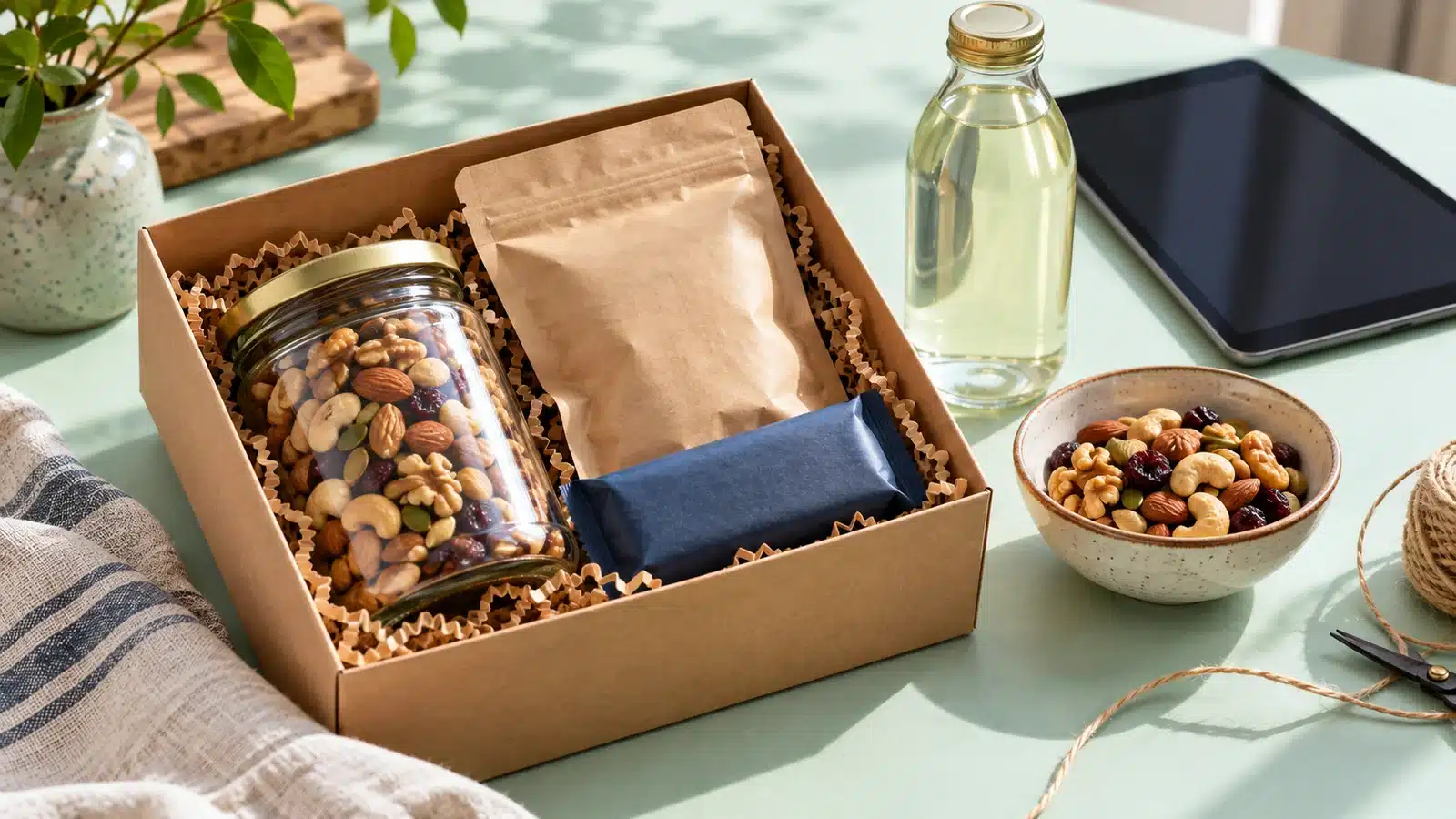
Food and drink brands win or lose on repeat orders, gifting seasons and what the label lets the ads say. This guide shows what a food and beverage marketing agency should do across your store, Amazon and retail, how to measure it, what it costs and how to choose one.
Summarize this article with:
Quick Answer: what should a food and beverage marketing agency do for your brand?
A food and beverage marketing agency should win profitable first orders and turn them into repeat buyers. For a packaged food, snack, drink or gift brand, that means a clean Shopping feed, tightly controlled search and Meta ads, compliant product claims, seasonal planning and reports on new customers, repeat rate and margin, not clicks.
Key Observations
- Your product feed drives Shopping ads and Google’s free listings, so fix titles and attributes before raising spend.
- Ad claims follow the label rules: FDA sets claim types and the FTC requires scientific proof for health claims in ads.
- Judge the agency on new customers, 90-day repeat rate and margin, plus total revenue against total marketing spend.
- Plan gifting early: Christmas, Mother’s Day and Valentine’s Day lead US “gift basket” searches in Google Trends.
- Hustle Marketers charges US$600 to US$800 per platform a month for PPC and from US$500+ a month for SEO, month to month.
Where each brand type usually starts:
| Brand type | Main goal | First channels to fix |
|---|---|---|
| DTC snacks, coffee, sauces | First orders that reorder | Product feed, Shopping, brand search, email |
| Gift and gourmet food | Profitable peak seasons | Gift pages, Shopping, Meta, shipping cut-off dates |
| Retail-first CPG | Sales per store | Store locator, local search, sampling, retail media |
Want to know where your food brand is losing orders or margin? Get Free Audit Worth $500
In this guide
- Quick Answer
- What the agency does
- How food marketing differs
- Channels by sales model
- Shopping, feeds and free listings
- Amazon vs DTC and subscriptions
- Retail, sampling and content
- Gifting and seasonal peaks
- What food ads can claim
- Measuring results
- A real food account
- How to choose an agency
- What it costs
- Australia
- Why Hustle Marketers
- FAQs
- Next step
What is a food and beverage marketing agency, and is it the same as a CPG marketing agency?
A food and beverage marketing agency markets food, snacks and drinks to the people who buy them, online and in stores. A CPG marketing agency covers all consumer packaged goods, so for a food brand the two overlap almost completely.
Food and beverage agencies tend to fall into three groups:
- Brand and creative shops: packaging, identity, photography and campaigns.
- PR and shopper marketing firms: media coverage, displays and retailer programs.
- Performance and ecommerce agencies: Google Ads, Meta Ads, Shopping feeds, SEO and tracking tied to orders.
This guide covers the third group, which is what Hustle Marketers does. Wine and spirits brands face different rules, so read our alcohol marketing agency guide instead.
What makes food and beverage marketing different from other ecommerce?
Food and beverage marketing is different because the product is bought again and again, often at a low order value, with heavy shipping costs and strict rules on what ads can claim. An agency that chases first-order ROAS can miss the repeat buyer who makes the brand profitable.
- Repeat purchase: the second and third orders often matter more than the first.
- Low order values: shipping, cold packs and fees eat into each order, so bundles matter.
- Channel conflict: your store, Amazon and retailers may all bid on your brand name.
- Claims rules: words like “gut friendly” or “boosts energy” can trigger label law and ad reviews.
Which marketing channels should a food brand use first?
A food brand should start with the channels that match how it sells today. A DTC brand starts with its feed, Shopping and email, a retail-first brand starts with store discovery, and an Amazon-first brand protects its marketplace rank. Most brands are hybrid, so agree which channel owns which customer.
| Sales model | Main goal | First channels | Key metric |
|---|---|---|---|
| DTC store only | First orders that reorder | Shopping and Performance Max, exact match search, Meta, email | New customer cost, 90-day repeat rate |
| Gift and gourmet | Peak season profit | Shopping, gift-intent search, Meta, gift landing pages | Margin per order in peak weeks |
| Amazon-first | Rank and repeat on Amazon | Amazon listings and ads (often a marketplace specialist), brand search | Amazon sales plus total marketing efficiency |
| Retail-first CPG | Sales per store | Store locator, local search, retail media, tracked sampling | Units per store per week, locator use |
| Hybrid | Growth without channel conflict | One pricing policy, brand search, your own feed | Total revenue to total marketing spend |
How should a food brand set up Google Shopping, Merchant Center and free listings?
A food brand should treat its Merchant Center feed as its main ad asset, because the same product data powers Shopping ads, Performance Max and free listings. Google says free listings can appear on the Shopping tab, Search, Images, Lens and YouTube at no cost, in countries including the US and Australia.
The feed fixes that matter most for food products:
- Titles from real search demand: take the words from Keyword Planner, Semrush volumes and your search terms report, not from an AI rewrite. Google’s free listings guidance says to include keywords customers search for.
- Size, flavor and pack count: a buyer comparing “12 pack cold brew” needs those details in the title.
- Valid GTINs: Google’s product data specification says an incorrect GTIN gets the product disapproved.
- Subscriptions: the same specification supports a subscription cost for physical goods in US Shopping ads, with Prepared Foods and Coffee among the permitted categories.
See our product feed optimization guide, free listings guide and Google Shopping ads agency page.
Search campaigns and negative keywords for food brands
Ishant Sharma starts new search campaigns on exact match until there is conversion data. He keeps negatives at account level, where Google allows up to 1,000 negatives that apply across Search, Performance Max and Shopping. Negatives do not match close variants, so add plurals yourself.
| Theme | Starter negatives | Do not block if |
|---|---|---|
| Recipes and DIY | recipe, homemade, how to make, diy | You sell a kit or ingredient for making it |
| Jobs | jobs, careers, hiring, salary | Never; recruit through a separate campaign |
| Wholesale and trade | wholesale, bulk, distributor, private label | You sell wholesale online |
| Local intent | near me, open now | You sell in stores and want locator traffic |
Amazon vs DTC: where should a food brand sell and advertise?
Most food brands need both Amazon and their own store, with each doing a different job. Amazon catches shoppers already searching there, while your own store keeps the customer data, bundle margin and email list.
Amazon’s Subscribe & Save program needs a brand in Amazon Brand Registry. Eligible FBA products are enrolled automatically at a 0% seller-funded discount, which sellers can raise to 5% or 10%, and Amazon funds a 5% discount on Subscribe & Save orders of five or more items.
How should a food brand run subscriptions on its own store?
Store subscriptions work when the discount leaves margin after shipping and failed payments are recovered. A 2026 Shopify Community thread about a food and beverage subscription app turned to how failed card charges are retried, since a declined card can end a subscription by accident.
- Offer skip, pause and swap so customers adjust instead of canceling.
- Exclude active subscribers from prospecting ads, but keep lapsed ones in re-engagement campaigns.
How does digital marketing support retail velocity, sampling and in-store sales?
Digital marketing supports retail when it sends shoppers to the shelf. Retail velocity means units sold per store per week. An agency can lift it with a store locator, local search, retail media on grocery platforms, and sampling offers with trackable codes.
Sampling, creators and reviews
Sampling and creator programs are where food brands most often break advertising rules by accident. The FTC’s endorsement guidance says creators who get free product must disclose it, and you cannot tie a discount to a positive review. Asking only happy customers for reviews is also misleading.
Recipes and content that answer real searches
Recipe and “how to use” pages bring search traffic between purchases, such as dishes for a hot sauce or brew guides for a coffee. Our SEO agency team builds these pages around real questions, and our answer engine optimization services help them appear in AI answers.
When do food and gift sales peak, and how early should ads start?
US searches for “gift basket” peak around Christmas, then Mother’s Day, Valentine’s Day, Father’s Day and Easter. That is the order in Google Trends data from 2017 to 2022. Plan to have feed, promotions and creative live about six to eight weeks before each peak.
| Peak | US timing | Australia timing | Have ready |
|---|---|---|---|
| Christmas and year-end gifting | Thanksgiving to late December | December, in summer | Gift sets, shipping cut-off dates, corporate gift page |
| Valentine’s Day | February 14 | 14 February | Chocolate, sweets, gift boxes |
| Easter | March or April | March or April | Seasonal products, gift bundles |
| Mother’s Day | May | May | Gift boxes, delivery date promises |
| Father’s Day | June | First Sunday in September | Savory gift sets, coffee, sauces |
Sources: SALT.agency analysis of Google Trends for peak order; timeanddate for Father’s Day in Australia (6 September 2026, 5 September 2027).
What can food and beverage ads legally claim?
Food and beverage ads can make truthful product claims freely, but health claims must meet label rules and advertising proof standards. In the US, the FTC’s Health Products Compliance Guidance says the FDA leads on labeling, the FTC leads on advertising, and health claims need competent and reliable scientific evidence.
This claim ladder shows how risk rises from simple facts to disease claims:
| Claim type | Food example | What the rule requires | Ad risk |
|---|---|---|---|
| Product fact or taste | “Small batch, roasted this week” | Must be true and supported | Low |
| Nutrient content | “High protein”, “low sugar” | The term must meet FDA’s authorizing rule | Low if the label qualifies |
| Structure/function | “Fiber supports regularity” | Foods: no FDA notice; supplements: notify FDA within 30 days and add the disclaimer | Medium |
| Health claim | “May reduce the risk of heart disease” | FDA-authorized claim, or a qualified claim with its exact qualifying words | Medium to high |
| Disease or cure | “Cures acid reflux” | Only drugs can claim to treat, cure or prevent disease | Google bans unproven cures |
| Fast weight loss | “Lose 10 pounds in 2 weeks” | Proof of typical results | Google bans unrealistic time-bound weight loss |
Sources: FDA label claims and structure/function claims pages; Google Unreliable claims policy.
Testimonials showing better results than most buyers get are likely deceptive, even with a “results not typical” note, the FTC adds. This is general marketing information, not legal advice; have a food lawyer review health claims.
Google and Meta rules for food, and the supplement boundary
Google treats products near the supplement line more strictly than ordinary food, and Meta has its own health rules. Google’s Healthcare and medicines policy bans products that imply they work like prescription drugs. Merchant Center lists unapproved supplements, including slimming teas and coffees, kratom and CBD.
- Clean the feed and landing page, not only the ad, because product data and destination pages are reviewed too.
- Expect a warning first: Google’s Unreliable claims policy promises at least 7 days’ warning before an account suspension.
- Selling into the UK or Europe: Google’s HFSS policy shows Shopping ads labelled high fat, sugar and salt there only to users with a declared age of 18 or over.
- On Meta: read its Health and Wellness ad standard before running supplement or weight-related creative.
How should a food and beverage marketing agency measure results?
A food and beverage marketing agency should measure new customers, repeat rate and contribution margin, then check total revenue against total marketing spend. That last figure, MER (marketing efficiency ratio), stops channels from claiming the same sale twice.
- New customer cost: ad spend divided by first-time buyers. Google’s customer lifecycle goals can bid higher for new customers on Search, Shopping and Performance Max.
- 90-day repeat rate: the share of new buyers who order again within 90 days.
- Contribution margin per order: revenue minus product, packaging, shipping and fees, before ads.
- MER: total revenue divided by total marketing spend, across every channel.
Worked example: what ROAS does a food brand need to break even?
Take a $40 snack bundle that leaves $16 after product, packaging, shipping and fees. That is a 40% contribution margin, so break-even ROAS is 1 divided by 0.40, or 2.5, using our break-even ROAS formula. These are example numbers, not a result.
Now assume the buyer reorders once within 90 days at the same margin. Two orders leave $32, so you could spend up to $32 to win that customer, a first-order ROAS of 1.25. That is why repeat rate decides how hard to push. Our conversion tracking guide covers the setup.
What does food and beverage marketing look like in a real account?
Food and beverage marketing done well looks like a clean feed and focused search ads turning into tracked orders. For a premium cake and dessert brand with several locations in the Philippines, Hustle Marketers set up Merchant Center, optimized the feed for the cake range, built Search campaigns by category and occasion, and added WhatsApp and call buttons.
| Google Ads metric | Result in 30 days |
|---|---|
| Conversions | 163 |
| Purchases recorded in Google Ads | 29+ |
| ROAS | 5.41x |
| Ad spend to conversion value | PHP 13.8K to PHP 74,476+ |
| Cost per conversion | PHP 84.44 |
Source: Hustle Marketers cake brand case study, figures as published, in Philippine pesos. One account’s result, not a forecast. WhatsApp and phone orders were not counted as purchases.
For a wine and spirits retailer, our CANA Wine Company case study shows a 17.35 account-level ROAS over 120 days, per Google Ads. Other food and drink work is covered by signed NDAs, so we do not name those clients.
Want the same review of your feed, tracking and search terms? Get Free Audit Worth $500
How do you choose a food and beverage marketing agency?
Choose a food and beverage marketing agency that shows dated results from food or ecommerce accounts, explains how it will track new and repeat customers, knows the claim rules, names who runs your account and leaves every account in your name.
- Relevant proof: case studies with dates, spend and results, not only logos.
- Feed skills: they can explain your Merchant Center errors and title choices.
- Claim awareness: they flag risky wording before Google or Meta does.
- Measurement plan: new customer, repeat rate and MER reporting from day one.
- Account ownership: ad accounts, Merchant Center, analytics and data stay yours.
- Clear terms: a fixed fee, no long lock-in and a plain exit.
Red flags when hiring a food marketing company
- Big results in a video title or case study with no dates, spend or baseline.
- Broad match and Performance Max on day one, before tracking is checked.
- Ad copy promising health benefits nobody has checked.
Questions to ask before you sign
- How will you split budget between new and returning customers?
- How will paid ads affect our email list and community?
- Can you show growth that did not come only from more ad spend?
For a scorecard you can use with any shortlist, see how to choose a digital marketing agency.
How much does a food and beverage marketing agency cost?
A food and beverage marketing agency usually costs from a few hundred dollars a month for one channel to $25,000 or more a month for full service, plus ad spend. Hustle Marketers charges US$600 to US$800 per platform a month for PPC management and from US$500+ a month for SEO, month to month, plus ad spend.
Published market figures from other food and CPG agencies show the wider range:
| Engagement type | Market figure (USD) | Source |
|---|---|---|
| Digital retainer, mid-size food brand | $5,000 to $25,000 a month | Food agency roundup |
| Suggested minimum budget, fees plus media | $10,000 a month | Food agency roundup |
| Full-service CPG retainer | $25,000 to $75,000 a month | CPG agency FAQ |
These are market figures published by other agencies, not Hustle Marketers prices. Check whether each one includes ad spend.
Size your ad budget with our Google Ads budget calculator, and see what the fee covers on our ecommerce PPC management page.
Food and beverage marketing agency in Australia: what changes?
Food and drink marketing in Australia uses the same channels, but the rules, words and calendar change. Shoppers search for hampers rather than gift baskets, send an enquiry rather than an inquiry, and buy Christmas food in summer. Father’s Day falls on the first Sunday in September, so gift ranges should be live by late July.
Claim rules sit in the Food Standards Code. FSANZ says a self-substantiated food-health relationship must be notified to FSANZ before it is used for a general level health claim, and health claims must not be therapeutic. The AANA Food & Beverages Advertising Code, in force since 1 November 2021, says ads for occasional foods must not target children under 15.
Hustle Marketers has worked with Australian brands, including an Australian pet ecommerce SEO case and Google Ads for a Western Australian jewellery brand. Our delivery team is based in Zirakpur, India, and works with Australian clients remotely. We have no Australian office or entity.
For Australian clients, PPC management is about A$860 to A$1,146 per platform a month and SEO starts from about A$716+ a month. These are converted from our USD prices at 1.4327 AUD per USD, the Pound Sterling Live close on 19 October 2026, so the AUD figure will move with the exchange rate.
Why choose Hustle Marketers or Ishant Sharma for food and beverage marketing?
Hustle Marketers suits food and drink brands that sell online and want a hands-on specialist and published prices. Founder Ishant Sharma has worked in Google Ads, Microsoft Ads and SEO since 2013 and founded Hustle Marketers in 2020.
- Partner status: Google Partner, Meta Business Partner and Microsoft Advertising Partner.
- Reviews: 591+ reviews across Google, Trustpilot, Clutch, G2, DesignRush, Upwork and other platforms, plus Clutch Award wins in 2023, 2024 and 2026.
- Feed depth: Merchant Center and feed work, as in our cake brand case study, plus Microsoft Ads management.
- Fair terms: month to month, with every ad account in your name.
- Direct access: see client video reviews of Ishant or read about him as a Google Ads specialist.
Food and beverage marketing agency FAQs
How long does it take to see results from a food and beverage marketing agency?
Shopping and search ads can bring orders within weeks once the feed and tracking are clean. SEO and recipe content usually take several months. Allow about 90 days of clean data before judging repeat rate.
How do I know if my food brand is ready for an agency?
You are ready when the product sells without ads, your site converts, and you can fund ads for at least three months. If you have no sales yet, fix the offer, photos and reviews first.
Should I hire an agency that specializes in my food category?
Category experience helps, but channel skill matters more online. Ask for proof in feeds, claims and repeat purchase reporting, not your exact product type.
Can I advertise dietary supplements on Google?
Often yes, if the product is not on Google’s unapproved list and the ads, feed and site make no unsupported health claims. A Shopify Community reply says supplement products can be approved in Merchant Center once the claims are removed.
How do you market a new drink product?
Start with a small, tracked launch: sampling with a code, exact match search on your brand and category, and creator content that discloses free product. Scale the channel that brings repeat buyers, not the cheapest first click.
Should a food brand use Performance Max?
Performance Max can work once the feed is clean and purchase tracking is accurate. Keep account-level negatives in place and check whether it mostly reaches people who already know your brand.
Do food brands that sell mostly in stores need SEO?
Yes. Shoppers search your brand, ingredients and “where to buy” before they visit a store. A store locator and product pages with full ingredient and allergen text help them find you.
Can a food brand show up in ChatGPT and Google AI answers?
Yes, when your pages state clear facts AI tools can quote, such as ingredients, sizes, prices and where to buy. Our AEO services focus on that.
What is the next step?
Write down how many new customers you need each month, what you can pay for one, and your repeat rate. Ask any agency, including us, how it would win and keep them. Our free audit looks at your feed, tracking, search terms and claims.