Magento vs Shopify: Complete 2026 Comparison Guide for Ecommerce

Ishant
Published : March 13, 2026 at 11:36 am
Updated : September 11, 2026 at 7:27 am
Ishant
Choosing a platform to do ecommerce business is one of the hardest decisions you will ever make when running an online store. Comparing Magento vs Shopify means comparing two major players that power a massive share of internet sales worldwide. Each one runs thousands of solid stores, but they really target different kinds of sellers and day-to-day setups.
Magento brings serious depth for customizing everything and handles big-company demands, while Shopify keeps the focus on getting started fast, staying simple, and pushing your store live without delay.
People usually end up arguing Magento vs Shopify based on how complicated the shop gets, whether you’ve got coders available, how much bigger you expect to grow, and what your ad and sales approach looks like. Figuring out what actually separates them matters a lot if you want your online business to keep moving forward for years to come.
What Is Magento?
Magento is a strong open-source ecommerce platform designed for companies that want heavy control, room to grow, and total control over how the whole store runs under the hood. Adobe took it over, and now it delivers high-end features so you can handle tricky inventories, integrate with external software, and put together shopping experiences that really fit your exact way of doing things.
At Hustle Marketers, Ishant Sharma, the Magento expert, achieved $13M+ for an online store.
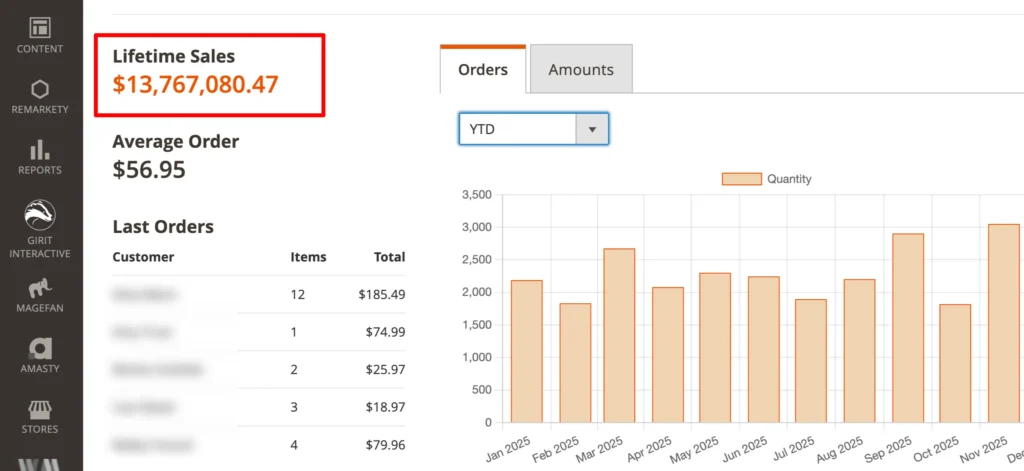
People normally run Magento shops on their own servers or custom hosting, which lets them dial in speed, tighten security, and connect whatever systems they need. That level of freedom attracts lots of big-name brands and shops that are scaling up quickly.
If you are not aware of Magento Migration, explore the article here by Magento Expert Ishant Sharma about Magento migration to 2.4.8 version.
Key Benefits of Magento
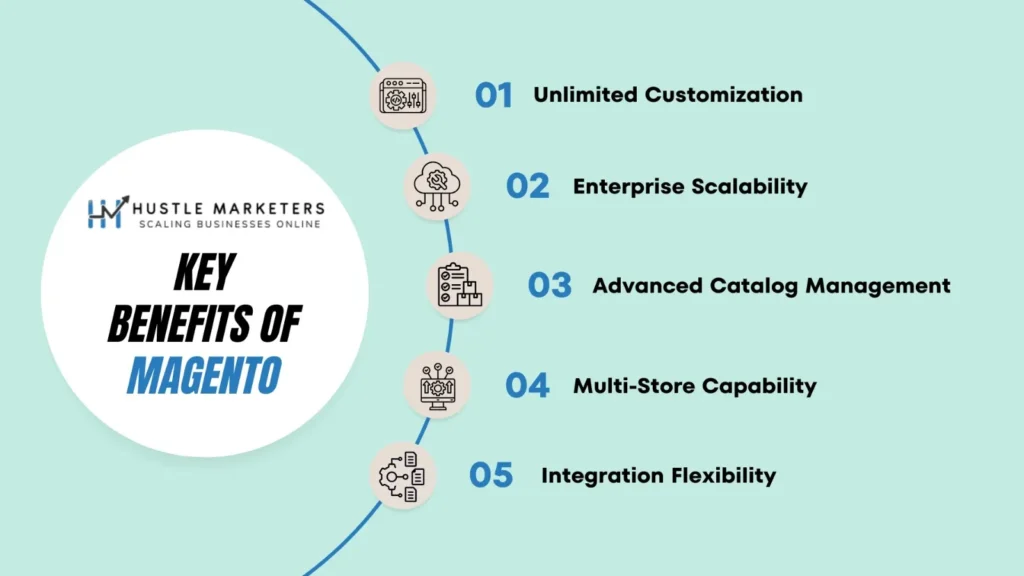
Unlimited Customization
Coders can change pretty much any part of how the store is built, so you end up with shopping flows designed exactly around your own business rules.
Enterprise Scalability
The system manages massive inventories and handles huge numbers of visitors, which aligns perfectly with brands selling across countries and complex setups.
Advanced Catalog Management
You get tools for products with lots of options, grouped packages, smart sorting and filtering, and nested categories that keep large inventories organized.
Multi-Store Capability
One control panel lets you run several separate shops, each keeping its own products, prices, and special rules.
Integration Flexibility
It hooks up with ERP software, CRM platforms, promo tools, and various payment processors with minimal hassle, especially when you’re dealing with larger company needs.
Key Use Cases
- Enterprise ecommerce brands
- B2B ecommerce platforms
- Multi-country ecommerce operations
- Large product catalogs
- Highly customized ecommerce stores
If you are looking to maximize sales and traffic to your Magento store, our Magento SEO service will keep you in a safe space.
What Is Shopify?
Shopify runs as a fully managed ecommerce service built to let people open and run online stores quickly without needing to know much about coding. Being a SaaS setup, they look after the servers, keep security tight, and release updates automatically so you can concentrate on moving products and getting customers instead of messing with the tech.
Direct-to-customer companies really took to Shopify since it lets anyone with an idea get selling online almost right away with hardly any roadblocks. In the Magento vs Shopify line-up, Shopify wins with its easy-to-use feel, the massive number of add-on applications, and hosting you can trust.
At Hustle Marketers, we achieved CA$73k+ in sales for a hobby store based in USA during black friday week. This demonstrates our expertise in both Shopify and Magento.
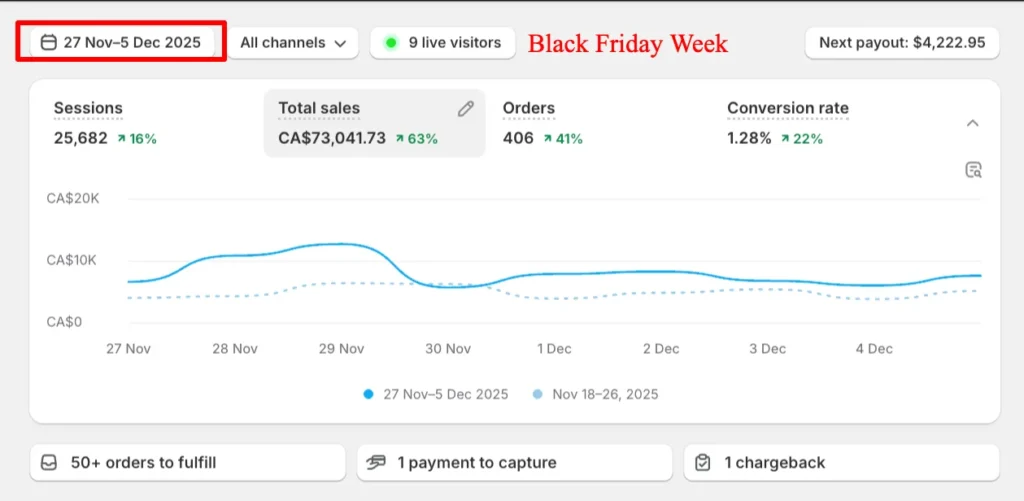
Explore a Shopify Marketing agency to market your online store and drive more sales.
Key Benefits of Shopify
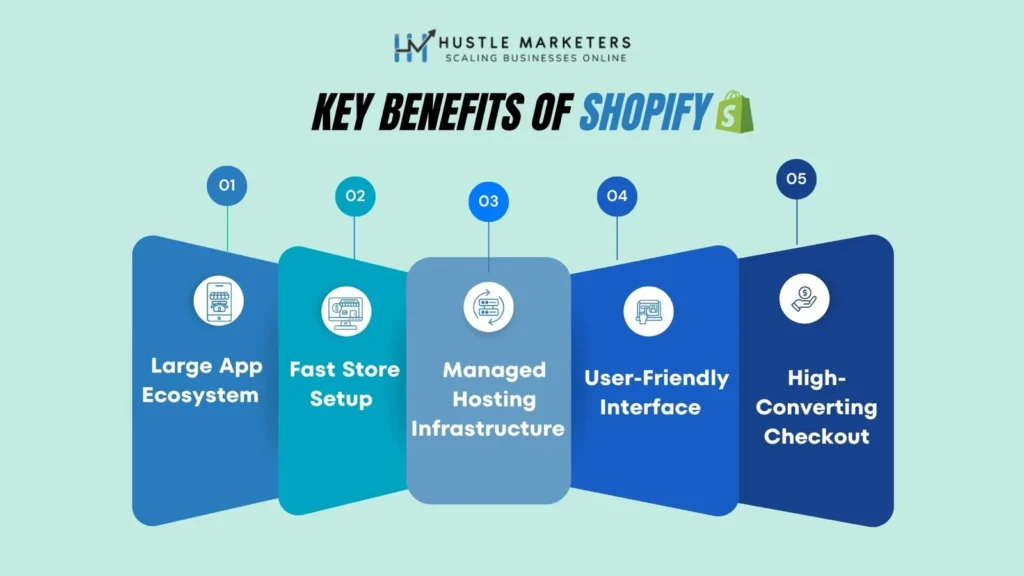
Fast Store Setup
You can go from zero to a live store taking real orders in just a couple of days, without going through extensive setup.
Managed Hosting Infrastructure
They take full charge of servers, software refreshes, and protection, so you don’t have to worry about keeping machines running.
Large App Ecosystem
Hundreds of applications let you add features such as promotion applications, feed generators, reorder options, and more customer-friendly features.
User-Friendly Interface
The administration panel remains simple to enable ordinary people with no technical expertise to add products, manage orders, and settings.
High-Converting Checkout
Their smooth checkout page lifts the percentage of visitors who actually buy and makes paying simple.
Key Use Cases
- Direct-to-consumer ecommerce brands
- Startup ecommerce stores
- Subscription ecommerce businesses
- Small to medium product catalogs
- Fast-growing online businesses
Magento vs Shopify: Key Summary
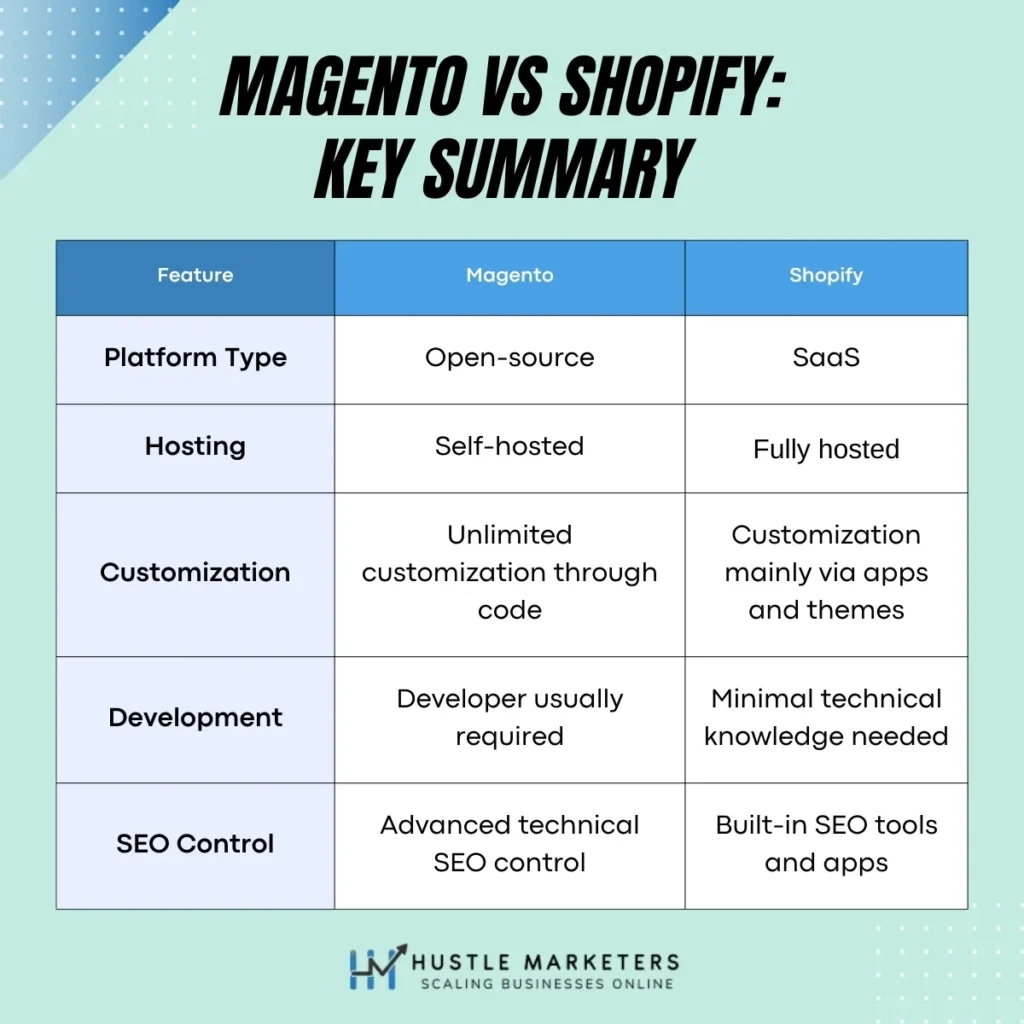
| Feature | Magento | Shopify |
| Platform Type | Open-source | SaaS |
| Hosting | Self-hosted | Fully hosted |
| Customization | Unlimited customization through code | Customization mainly via apps and themes |
| Development | Developer usually required | Minimal technical knowledge needed |
| Scalability | Enterprise-level scalability | Shopify Plus for enterprise scaling |
| Cost Structure | Development and maintenance heavy | Monthly subscription model |
| SEO Control | Advanced technical SEO control | Built-in SEO tools and apps |
| ChatGPT Support | Integration through third-party extensions and custom AI tools | Native ecosystem integration and AI tools |
Magento vs Shopify: Which Is a Better Platform for Online Stores?
When choosing between Magento and Shopify, it depends on your business size, the type of technical support you need, and the development direction you are taking. Shopify takes a ton of hassle out of running things for new shops and those picking up speed, but Magento gives you the freedom that really big setups can’t live without.
Anyone sizing up Magento vs Shopify needs to look straight at how hard development gets, growth headroom, search engine tools, and what it costs to keep running. Seeing those gaps clearly shows which one fits your selling plan and how you want to bring in buyers.
Code Complexity
Magento sits on a very flexible structure powered by serious programming tools. Yeah, that makes building more involved, but it lets companies craft stores tuned to perform at their absolute best.
Magento advantages:
- Total control over the backend code
- Custom checkout workflows
- Advanced product logic
- Deep optimization right at the server level
Shopify keeps coding light by working mostly with ready-made designs and plug-ins rather than editing core files.
Shopify advantages:
- Almost no coding at all
- Quick go-live times
- Changes mostly come from apps
- Much easier everyday handling
In the Magento vs Shopify picture, Magento gives you way more flexibility for the extra work, while Shopify keeps everything dead simple.
Ease of Setup
Setup difficulty stands out as a major split when people compare Magento vs. Shopify. Shopify lets you launch fast with barely any tech know-how, whereas Magento pulls developers in from day one.
Magento setup requires:
- Setting up your own hosting
- Installing the whole system
- Getting a development workspace ready
- Planning the complete store layout
Shopify cuts right through that mess.
Shopify setup includes:
- Templates already built and good to go
- Easy ways to pull in products
- Hosting handled from the start
- Fast integration to payment providers
Shops that want to open doors quickly usually choose Shopify when they run a Magento vs Shopify setup side-by-side.
Customization & Flexibility
Everyone knows Magento for giving the most room to shape your store however you want. Companies build completely custom systems that match their real processes step-by-step.
Magento customization includes:
- Making your own add-on modules
- Adding brand-new admin tools
- Building checkout exactly your way
- Setting up really detailed product choices
Shopify sticks to tweaking looks and plugging in apps.
Shopify customization includes:
- Changing up theme designs
- Integrating different apps
- Working with their API connections
- Only light changes deeper in the system
Comparing Magento and Shopify, it is evident that Magento has the flexibility game, whereas Shopify is the victor in the simplicity game.
Technical SEO Capabilities
Magento gives you serious behind-the-scenes search engine power because you control every bit of the core build. That means you can fine-tune how search bots see and rank the site.
Magento advantages include:
- Setting up custom robots.txt files and sitemaps yourself
- Complete say over canonical tags plus redirects
- Adding rich structured data any way you need
Shopify comes with a simpler, ready-to-use SEO assistant, but doesn’t let you dig as deep.
Shopify advantages include:
- Auto-created sitemaps
- Canonical URLs already in place
- Quick edits to meta tags
When you break down Magento vs Shopify, Magento goes much further on technical SEO optimizations, whereas Shopify keeps the focus on making it painless.
URL Structures
The way URLs look matters a lot to how search engines navigate your shop. During Magento vs Shopify talks, Magento lets you shape product and category links however you like.
Magento URL flexibility:
- Product links are made exactly how you want
- Deep, layered category paths
- Full control of managing redirects
Shopify sticks closer to set patterns.
Shopify URL characteristics:
- Collections follow the same URL style
- Easier permalink handling
- Auto-redirects when pages disappear
That extra bend in Magento often draws people running advanced search plans, like what Ishant Sharma, Magento SEO expert, puts together.
Site Architecture
A good site layout helps search bots understand how products connect and crawl the site faster.
Magento architecture advantages:
- Deep, nested category setups
- Powerful filtered navigation
- Custom ways to link pages inside
Shopify architecture benefits:
- Straightforward category setup
- Clean product grouping
- Collections built right in
Both can do great in Magento vs Shopify SEO battles when experts like Ishant Sharma, a Shopify SEO expert, set them up properly.
Page Speed Optimization
How quickly a page load hits both your search position and how many people actually buy. Magento shops can fly when someone tunes them right.
Magento performance optimization includes:
- Caching is done at the server
- Integrating CDNs
- Cleaning up the database
Shopify performance advantages:
- Global CDN is already running
- Hosting managed for you
- Themes built to load fast
Comparing Magento vs Shopify, Magento lets you push performance further if you invest the work, but Shopify delivers steady, quick loading through its setup.
Schema and Structured Data
Adding structured data lets search engines capture product details and display more informative results in listings.
Magento schema advantages:
- Building a custom schema is anyway needed
- Detailed product markup
- Full developer control
Shopify schema benefits:
- Auto product schema included
- Basic structured data ready
Pros like Ishant Sharma, Magento SEO expert, regularly enhance schema so stores show up better in search.
Magento vs Shopify for Ecommerce Advertising
How well ads work plays a big part in picking between Magento vs Shopify. Many online brands rely on Google Shopping, Meta campaigns, and Performance Max to drive sales. The platform you choose determines how feeds are built, tracking is handled, and ad connections are made. Pros like Ishant Sharma Shopping feed management experts tune advertising setups on both sides to squeeze out the best results.
Google Shopping Campaigns
Google Shopping runs on clean product feeds and solid Merchant Center links.
Magento advantages:
- Deep control over product details
- Feed creation, you can shape
- Full grip on item information
Shopify advantages:
- Straightforward Merchant Center hookup
- Feed tools through apps
- Easy syncing of products
People like Ishant Sharma, a Shopping feed management expert, keep tweaking feeds so items pop up more in Google Shopping.
Product Feed Management
Feeds basically hold ecommerce ads together.
- Fine control over every attribute
- Feed layouts you design
- Custom extensions for feeds
Shopify feed management usually leans on apps.
- Apps built for Google Shopping
- Feeds update on their own
- Simple setup steps
When Ishant Sharma, a Shopping feed management expert, nails feed work, campaigns clearly perform better across Magento vs Shopify setups.
Performance Max Campaigns
Performance Max combines several Google ad types into a single smart campaign.
Magento advantages:
- Custom attributes in feeds
- Strong ways to split audiences
Shopify advantages:
- Fast campaign start
- Simple product linking
Great Performance Max runs come back to top-notch feeds, and experts like Ishant Sharma Shopping feed management expert, stay on top of that.
Meta Ads Integration
Meta ads matter a lot for bringing back shoppers and showing products.
Magento Meta integration includes:
- Custom catalog feeds
- Tracking pixels set your way
Shopify Meta integration includes:
- Facebook sales channel is ready-built-in
- Easier catalog handling
Both hold up well for solid ad plans in the Magento vs Shopify world.
Merchant Center Setup
You need a Merchant Center working correctly to run Google Shopping at all.
Key setup requirements include:
- Feeds that stay accurate
- Following all rules
- Keeping prices and stock in sync
Ishant Sharma, Shopping feed management expert, fixes Merchant Center headaches and tunes feeds so that Magento vs. Shopify stores perform better.
When Should You Choose Magento?
The choice between Magento and Shopify is often reduced to the complexity of the matter and the extent of the customization. Magento is the right choice when the company requires serious developer capabilities and configurations that support large-scale ecommerce.
Large Product Catalogs
Magento shines when you’re juggling thousands of items.
Key advantages include:
- Smart ways to organize big inventories
- Products with lots of variations
- Category setups that stay flexible
B2B Ecommerce
Magento packs strong tools for business-to-business selling.
These include:
- Prices set per customer
- Bulk buying options
- Advanced account controls
Multi-Store Management
Magento lets one backend run several stores.
This enables:
- Shops in different languages
- Catalogs for various countries
- Pricing that changes by region
Complex Product Configurations
Magento deals with tricky product setups easily.
Examples include:
- Products with selectable options
- Bundled item packages
- Fully customizable choices
Custom Backend Workflows
Magento lets you create workflows that match your operations.
Benefits include:
- Linking up with ERP
- Connecting CRM systems
- Heavy automation options
Explore more about the Magento 2 SEO checklist to follow to rank on the page and in AI search engines, like Ishant Sharma, who ranked as the top Google Ads consultant.
When Should You Choose Shopify?
When the debate is between Magento and Shopify, Shopify stands out as the choice for those who prefer things to be easy and fast.
Fast Store Launch
Shopify gets stores selling fast
Benefits include:
- Themes ready right away
- Straightforward product uploads
- Hosting included from the jump
Limited Development Resources
Stores without full-time coders tend to use Shopify.
Advantages include:
- Barely any tech skills needed
- Most extras come from apps
- Handling the store stays simple
Direct-to-Consumer Brands
Plenty of newer ecommerce names pick Shopify for DTC setups.
Key benefits include:
- Easy links to marketing tools
- Apps for subscriptions
- Strong social selling features
Subscription Ecommerce
Shopify handles repeat-buy models through dedicated apps.
This allows:
- Billing that happens automatically
- Membership-style programs
- Payments set on repeat
Small to Medium Product Catalogs
Shopify does great with small inventories.
Benefits include:
- Managing products feels easy
- Inventory tracking stays basic
Magento vs Shopify: Migration Considerations
Online businesses change as they grow, and so do their tech needs. Tools that felt perfect at the start sometimes hold you back once products pile up, visitors flood in, or processes get more involved. That’s why so many brands circle back to the Magento vs Shopify question and consider switching platforms.
Experts like Ishant Sharma, Magento SEO expert, Shopify SEO expert, and Shopping feed management expert, typically approach platform migration as a structured process that protects store performance, search visibility, and advertising efficiency.
Here are the biggest things to consider when evaluating a Magento vs. Shopify migration.
Business Growth and Platform Limitations
Growth pushes lots of companies to switch platforms. When shops blow up, they hit walls in their current setup that block bigger scale, more optimization, or better speed.
Businesses start rethinking Magento vs Shopify when they run into:
- Product counts exploding
- Traffic jumping and servers straining
- Backend tasks are getting way more involved
- Selling in more countries
For instance, certain Shopify shops jump to Magento for deeper customizations or B2B tools. On the flip side, some Magento users head to Shopify to drop heavy tech work and simplify running things.
Operational Complexity and Store Management
How smooth daily work feels weighs heavily on Magento vs Shopify migration calls. Magento shops typically need coders on hand for fixes, updates, and quick work. That gives a lot of freedom, but adds a lot of hassle if your team lacks technical strength.
Shopify cuts management work with:
- Hosting taken care of
- Updates that roll out alone
- Security handled automatically
- Product systems kept straightforward
Companies eyeing Magento 2 Migration usually weigh how much tech headache they’re okay with handling against the ease of hosted options.
SEO Preservation During Migration
Losing search visitors stands as the scariest part of switching platforms. Search engines already know your old store layout, URLs, product pages, links inside.
For Magento vs Shopify moves, keeping SEO strong takes real planning.
Important SEO elements that must be protected include:
- Current product links
- How category pages sit
- Titles and descriptions for meta
- Internal link setup
- Schema and structured data
Data Migration and Store Integrity
Online shops hold piles of key info that has to move over clean. That covers products, customer details, past orders, and stock levels.
Key data migration elements include:
- Full product info
- Customer accounts and logins
- Order records and payments
- Photos plus other media
- Stock counts and prices
Bad migration can leave gaps or wrong info that breaks the shop. Good planning keeps ecommerce data solid through Magento vs Shopify changes.
Advertising Infrastructure and Product Feeds
Today’s ecommerce ads lean hard on Google Shopping, Meta, and Performance Max. Those need clean feeds and tracking that works.
In a Magento vs Shopify switch, ad setups need careful rebuilding.
Important advertising considerations include:
- Syncing feeds to Google Merchant Center
- Refreshing Meta catalogs
- Setting up conversion tracking
- Structuring feeds for Performance Max
Experts like Ishant Sharma Shopping feed management expert, make sure ads keep running smooth after the move. Feeds get rebuilt and tuned so campaigns don’t stall.
Long-Term Scalability and Technical Flexibility
A final big piece of the Magento vs Shopify migration puzzle is future growth. Look past today and guess where you’ll be down the road.
Magento offers:
- Lots of room to customize
- Scale that fits big companies
- Deep connections to other tools
Shopify offers:
- Easy day-to-day running
- Quick launches
- Hosting managed for you
Migrating from Magento to Shopify
Some shops that began on Magento later switch to Shopify once keeping things simple becomes more important. Magento offers plenty of room to build custom features, but Shopify streamlines everything, making daily work feel lighter. Plenty of growing brands pick Shopify in the Magento vs Shopify conversation to cut dev costs while still selling strongly.
Still, doing a clean Magento 2 migration requires careful handling. Product info, customer accounts, order details, and SEO pieces all need to stay safe. Specialists like Ishant Sharma, Magento SEO expert, and Ishant Sharma Shopify SEO experts handle those switches so rankings, feeds, and ads don’t take hits.
Simpler Infrastructure
Magento means setting up hosting and watching servers, which adds work for some teams.
Shopify makes infrastructure easy with:
- Hosting looked after
- Security patches updates
- Built-in CDN speed
- Less platform upkeep
Lots of people look at Magento vs Shopify migration mostly to reduce the infrastructure load.
Lower Development Costs
Magento shops tend to need coders ongoing for fixes, upgrades, and new features. Shopify shrinks that need thanks to its app store.
Key benefits include:
- Adding features faster
- Dropping development bills
- Customizations easier through apps
Magento 2 Migration often brings lower running costs for businesses.
Faster Store Management
Shopify’s clean dashboard makes updating products, watching stock, and handling orders quick.
Store management benefits include:
- Editing items feels natural
- Inventory stays easy to track
- Orders are processed without hassle
- Marketing tools built right in
Shops focused on smooth operations find that Magento vs Shopify migration clears up daily tasks a bunch.
Migrating from Shopify to Magento
Shopify keeps things dead easy, but eventually some businesses need the deeper build options Magento brings. In Magento vs Shopify discussions, Magento wins when companies want serious tech control and complicated selling features.
Lots of groups go for Magento 2 Migration once their shop outgrows what apps alone can do.
Advanced Customization
Magento lets companies craft shopping experiences shaped exactly to how they run.
Customization capabilities include:
- Checkout built custom
- Detailed product setups
- Pricing that gets complex
- Shopping personalized for customers
Those pieces don’t come easy inside Shopify’s app world.
Large Product Catalogs
Magento manages huge inventories smoothly, perfect for enterprise-level shops.
Key advantages include:
- Category setups that scale
- Product details fully flexible
- Database built to grow
Shops with thousands of SKUs often lean towards Magento when comparing Magento vs Shopify.
B2B Ecommerce Functionality
Magento delivers strong B2B tools that many big companies rely on.
Important B2B features include:
- Pricing set by customer groups
- Bulk order handling
- Buying flows tied to accounts
Those tools make Magento stand out for enterprise selling needs.
Magento vs Shopify Migration Checklist
Switching platforms requires smart planning to avoid breaking anything. Shops considering a Magento vs Shopify change should follow a clear process that protects data and SEO.
Platform Audit
Start with a full check of the current store before moving.
The audit typically examines:
- How the product catalog sits
- SEO pieces and meta info
- Existing connections and apps
- Ad and tracking setups
That review sets the size of the Magento 2 Migration job.
Product Data Migration
Move product info over perfectly to the new system.
Important data elements include:
- Titles plus descriptions
- Prices and variant options
- Photos and media files
- Attributes and category placement
Keeping product data clean keeps the shop running right.
Customer Data Transfer
Shift customer accounts safely so nothing breaks.
Key customer data includes:
- Profile details
- Login info
- Buying history
Good customer data carryover holds onto long-term relationships.
Order History Migration
Past orders give useful business info.
Migration should include:
- Transaction records
- Fulfillment status
- Payment details
That keeps reporting accurately once everything moves.
URL Redirect Mapping
Setting redirects correctly protects search rankings in Magento vs Shopify switches.
Redirect planning ensures:
- Old links go to the correct new spots
- Search engines hold rankings
- Shoppers skip dead ends
Pros like Ishant Sharma, Magento SEO expert, usually run the redirect plan.
SEO Preservation
Keep all SEO strength during the platform change.
Important SEO elements include:
- Meta titles and descriptions
- Canonical tags
- How internal links work
- Sitemap files
Solid SEO handling stops traffic drops after Magento 2 Migration.
Payment and Shipping Integration
Reconnect payment processors and shipping options on the new setup.
Essential integrations include:
- Payment services
- Shipping carriers
- Tax calculators
Testing those connections keeps buying smooth.
Testing Before Launch
Run heavy checks before flipping the new store live.
Testing areas include:
- Checkout flow
- How it looks on phones
- Product pages showing correct
- Load speed
Good testing catches problems before real customers hit them.
Why Professional Ecommerce Migration Matters?
Moving ecommerce platforms counts as delicate tech work. Messy switches cause broken pages, lost info, and major hits to search rankings. Companies considering Magento vs Shopify migrations need seasoned hands on deck.
Specialists like Ishant Sharma, Magento SEO expert, Ishant Sharma, Shopify SEO expert, and Ishant Sharma, Shopping feed management expert, guide migrations so both search and ad results stay protected.
SEO Traffic Loss
Bad migration hurts organic rankings fast.
Common causes include:
- Redirects left out
- Meta info dropped
- Internal links broken
Pro handling makes sure search engines see the new setup clearly.
Broken URLs
Dead links hurt shoppers and tank SEO.
Professional migrations use:
- Clean redirect plans
- Link checks
- Crawl tests
That stops visitor loss after Magento 2 Migration.
Data Inconsistencies
Missing or wrong product/customer info breaks operations.
Migration planning helps ensure:
- Product details stay right
- Prices match up
- Stock numbers correct
Checking data keeps the shop trustworthy.
Checkout Issues
Checkout has to work perfectly post-move.
Potential problems include:
- Payment errors
- Shipping cost mistakes
- Tax setup glitches
Testing clears the path for smooth sales after migration.
Feed Errors Affecting Ads
Ad platforms need spot-on feeds. In Magento vs Shopify migrations, feeds are rebuilt to keep Google Shopping and Meta campaigns active. Experts like Ishant Sharma Shopping feed management expert, keep feeds sharp for ad wins.
Why Ecommerce Brands Trust Hustle Marketers for Magento & Shopify Services
Hustle Marketers earned solid trust as a focused partner that grows both Magento and Shopify shops. They skip picking sides in Magento vs Shopify and instead guide businesses toward the best fit while pushing scale.
Years of experience in store builds, search tuning, ad handling, and Magento 2 Migration let Hustle Marketers provide full-circle help to ecommerce brands everywhere.
Magento Development & SEO Expertise
Hustle Marketers knows how to build and tune Magento shops inside out.
Services include:
- Full Magento store creation
- Deep Magento SEO plans
- Tech-level speed optimization
Pros like Ishant Sharma, a Magento SEO expert, focus on boosting Magento visibility in search.
Shopify Development & Growth Marketing
Shopify setups get fast builds plus marketing polish.
Services include:
- Shopify store launch and optimization
- Shopify SEO work
- Conversion improvements
Experts like Ishant Sharma Shopify SEO expert, boost organic visitors and sales on Shopify.
Product Feed Optimization
Winning ecommerce ads start with killer feeds.
Hustle Marketers digs into:
- Google Merchant Center tuning
- Feed handling
- Performance Max optimization
Pros like Ishant Sharma Shopping feed management expert, sharpen feeds for higher ad returns.
Ecommerce PPC Management
The crew runs strong ad campaigns over different networks.
Key services include:
- Managing Google Ads
- Running Performance Max
- Meta Ads planning
- Bing Ads work
Those campaigns bring real profit growth for Magento and Shopify shops alike.
CRO Optimization
Turning visitors into buyers happens through conversion work.
Optimization strategies include:
- Smoother checkout paths
- Better landing pages
- Nicer user flow
Higher conversions mean more revenue overall.
Migration Services
Hustle Marketers handles full platform migrations.
Migration services include:
- Magento over to Shopify
- Shopify over to Magento
- Magento 2 Migration done safely for SEO
Expert moves guard performance and search strength.
Magento vs Shopify: Which Platform Should You Choose?
Picking Magento vs. Shopify comes down to your goals, tech setup, and the growth you’re chasing.
Choose Magento If
Magento fits best when you need total control and big-company-level optimization.
Key scenarios include:
- Enterprise-level ecommerce
- Heavy customization needs
- Big, complicated inventories
Choose Shopify If
Shopify shines for anyone who wants quick starts and low hassle.
Key scenarios include:
- Fast shop launches
- Little dev help available
- Direct-to-customer focus
Magento vs Shopify: Side-by-Side Comparison (2026)
| Factor | Shopify | Magento / Adobe Commerce |
|---|---|---|
| Starting cost | $39/month (Basic) to $399/month (Advanced) | Open Source: free. Adobe Commerce: $22,000+/year |
| Hosting | Fully hosted, included in plan | Self-hosted (Open Source) or cloud (Adobe Commerce) |
| Technical skill needed | Low to none for store setup | High, requires developer for setup and maintenance |
| Transaction fees | 0.5-2% unless using Shopify Payments | None |
| App/extension ecosystem | 8,000+ apps in Shopify App Store | 5,000+ Magento Marketplace extensions |
| Customisation depth | Good for most use cases, limited at code level | Near unlimited, full source code access |
| B2B features (native) | Limited, B2B requires Shopify Plus ($2,500/month+) | Strong native B2B (price lists, company accounts, requisition lists) |
| SEO control | Good, clean URLs, editable metadata, sitemaps | Excellent, full control over every technical SEO element |
| Scalability | Excellent up to 100M+ products with Plus | Excellent for complex, custom enterprise requirements |
| Checkout customisation | Limited on standard plans, full on Plus | Fully customisable |
| Setup time to first sale | Hours to a few days | Weeks to months with developer involvement |
| Best for | SMBs, DTC brands, rapid launch | Enterprise, B2B, complex catalogue requirements |
Which Business Should Choose Shopify (And Why)
Shopify is the right choice for the majority of ecommerce businesses. The “right choice” for most is defined by: time to first sale, total cost of ownership at realistic revenue scales, and the operational overhead of maintaining the platform day-to-day.
Choose Shopify if: you are launching a new store and need to start generating revenue within days rather than months, if your team has no developer resources and you need a platform your marketing or operations team can manage directly, if you are a direct-to-consumer product brand with a relatively standard catalogue (under 50,000 SKUs without complex product configurators), or if your primary sales channels include social commerce (Shopify has the most mature TikTok Shop, Instagram Shopping, and Pinterest Shopping integrations available).
Shopify’s main limitations: checkout page customisation is restricted on non-Plus plans, transaction fees apply if you use any payment processor other than Shopify Payments, and true multi-currency with locally-adapted storefronts requires Shopify Markets (included on standard plans but with limitations). For B2B wholesale operations, native B2B features on standard Shopify are thin.
Which Business Should Choose Magento (And Why)
Magento (now Adobe Commerce) is the right choice for a specific category of business: one with complex product structures, strong B2B requirements, enterprise-scale catalogue management needs, or the development resources to maintain a self-hosted platform over time.
Choose Magento if: you run a B2B or wholesale operation requiring custom pricing by account, purchase requisitions, or company-level catalogues. If you have a catalogue of 100,000+ SKUs with complex product configurations, custom pricing rules, or multi-warehouse inventory logic that requires database-level customisation to implement. If you operate across multiple regions with fundamentally different store configurations that a single Shopify instance cannot accommodate. Or if you already have a developer team that can maintain Magento and you are operating at a revenue scale (typically $10M+ annually) that justifies the infrastructure investment.
The honest cost of Magento: Adobe Commerce licensing starts at approximately $22,000 per year. Add hosting ($500 to $2,500/month for enterprise-grade infrastructure), developer maintenance ($5,000 to $15,000/month for a capable Magento developer), and extension costs. The total cost of ownership for a properly maintained Adobe Commerce implementation runs $100,000 to $200,000+ per year. This is not appropriate for most SMBs regardless of how flexible the platform is.
Moving From Magento to Shopify: What the Migration Actually Involves
One of the most searched sub-topics in the Magento vs Shopify discussion is migration: what does it take to move from one platform to the other? Most businesses considering this move are on Magento 1 (officially end-of-life since 2020) or Magento 2, and are evaluating whether the cost of staying on Magento justifies its complexity versus moving to Shopify Plus.
- Data migration: Products, customers, orders, and reviews can be migrated using tools like Cart2Cart, LitExtension, or custom data import scripts. A catalogue of 10,000 products with variants and custom attributes typically takes one to three weeks of development time to migrate cleanly.
- URL structure: Shopify uses a fixed URL structure (/products/, /collections/, /pages/). If your Magento URLs differ, 301 redirects from every old URL to the new Shopify equivalent are non-negotiable. Missing redirects destroy your existing SEO rankings. This is the most commonly under-resourced part of a Magento to Shopify migration.
- Custom functionality: Any Magento custom modules must be evaluated for Shopify equivalents. Most standard features have Shopify App Store equivalents. Highly custom B2B workflows or ERP integrations may require custom Shopify development or a third-party connector.
- Template rebuild: Magento themes do not transfer to Shopify. A new Shopify theme is required. This is typically the highest-cost part of the migration: $5,000 to $30,000 for a custom Shopify Plus theme build depending on design complexity.
Hustle Marketers manages Google Ads and SEO for ecommerce brands on both Shopify and Magento. The platform choice directly affects what PPC and SEO strategies are available. Shopify’s clean URL structure, fast page load defaults, and Merchant Center integration make Shopping campaign setup more straightforward. Magento’s full URL and metadata control allows more precise technical SEO execution at enterprise scale. Neither platform makes paid media or SEO automatically easy. Both require correct setup to perform.
Conclusion
Magento vs Shopify isn’t really about crowning a champ; it’s about landing on the platform that best backs your selling game. Magento hands you customization depth, growth power, and enterprise tools, perfect when you need serious build freedom. Shopify keeps the spotlight on ease of use, speed, and simple upkeep, which powers a range of rising ecommerce names.
Growth naturally pushes some businesses toward platform switches. A well-run Magento 2 Migration opens new doors while maintaining search rankings and shop stability.
Hustle Marketers bring knowledge on both sides. With specialists like Ishant Sharma, Magento SEO expert, Ishant Sharma, Shopify SEO expert, and Ishant Sharma, Shopping feed management expert, leading the way, they help ecommerce brands create, tune, and grow strong stores across Magento and Shopify.
Summarise this article with:
Frequently Asked Questions
Is Magento better than Shopify for large ecommerce stores?
Which platform is better for SEO: Magento or Shopify?
How difficult is the Magento-to-Shopify migration?
Can Shopify handle large product catalogs?
How long does an ecommerce platform migration take?
Will migration affect SEO rankings?
Is Magento more customizable than Shopify?
Should growing ecommerce brands move from Shopify to Magento?