





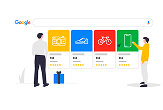
Product Feed Management Services for Google Shopping and Performance Max
Product feed management is the ongoing work of keeping your product data in Google Merchant Center and Microsoft Merchant Center complete, accurate and matched to how people search. Hustle Marketers manages your feed and the Shopping and Performance Max campaigns it powers as one job, with titles built from real search demand and custom labels set by margin.


Product Feed Management From the Agency Behind $780M+ in Client Sales
Hustle Marketers manages product feeds for Google Merchant Center and Microsoft Merchant Center, and runs the Shopping and Performance Max campaigns that use them. We pick title keywords from real search data before we scale spend. Founded by Ishant Sharma, we are a Google Partner, Meta Business Partner and Microsoft Advertising Partner with six 2026 Clutch awards, including Retail PPC.

What Does a Product Feed Management Agency Do?
A product feed management agency keeps the data behind your Shopping ads healthy. That means fixing Merchant Center errors and disapprovals, filling missing attributes such as GTIN, brand, color and size, writing titles that match real searches, and adding custom labels so campaigns can bid by margin.
At Hustle Marketers, the same team that edits your feed also runs your Google Ads and Microsoft Ads as part of our ecommerce PPC management, so every feed change and its effect on spend are reviewed together.

Why Does Your Product Feed Decide Shopping Ad Results?
Google Shopping has no keywords to bid on. Google reads your product title, description, category and attributes to decide which searches a product can show for, and your price, stock and shipping data decide whether it can show at all. A weak feed limits Shopping and Performance Max before bidding even starts.
Common feed problems are easy to miss from inside the store: titles copied from the website that leave out the words shoppers type, variants sent as one product, missing GTINs, and no custom labels, so every product gets the same budget whatever it earns.
We fix the data first, then shape campaigns around it. Product groups follow your margins, best sellers get room to spend, and products that never convert are separated out so they stop taking budget from the ones that do. Feed quality and bidding are planned together, not handed between two vendors.


How Do Better Product Titles Reach Shoppers Ready to Buy?
We choose title and description words from real search demand: Google Keyword Planner, Semrush volume and the search terms report in your own Google Ads account. We do not let AI rewrite your titles without that data, because a title that reads well but misses the words people search for will not win the auction.
The most important details go first, since Google says shoppers usually see only about the first 70 characters. Brand, product type and the attribute that decides the purchase, such as size, material or model number, lead the title, and the rest of the 150 characters carries detail.
For high-consideration products such as furniture, jewelry or equipment, we also complete the specification attributes and set up product ratings where the store has reviews, so a careful buyer can compare before they click.
What Do Our Product Feed Management Services Include?

Feed and Merchant Center Audit
We review the whole catalog in Merchant Center: errors, warnings, missing attributes, price and stock mismatches, policy issues and which products actually get impressions. You get a written fix list in priority order before anything changes.

Disapproval and Suspension Fixes
Disapproved products earn nothing. We trace each issue to its source, whether that is the store, the feed app or Merchant Center settings, fix it there, and check that the items return to approved.

Titles From Real Search Demand
Titles and descriptions are built from Keyword Planner, Semrush volume and your search terms report, with brand, product type and key attributes first. No AI rewrites without demand data behind them.

Attributes, GTINs and Categories
We fill the attributes Google uses to match products: GTIN or MPN, brand, color, size, material, item group ID for variants, Google product category and product type, so each variant can show for its own search.

Custom Labels for Profit Bidding
Custom labels tag products by margin, price band, best sellers or season. Shopping and Performance Max can then give budget to the products that earn and hold back the ones that only spend.

Supplemental Feeds and Feed Rules
Many fixes ship through Merchant Center feed rules or a supplemental feed in Google Sheets, so your store data stays untouched and changes can be tested and rolled back without a developer.

Shopping and Performance Max Management
We run the campaigns the feed powers: Standard Shopping, Performance Max and Search, with product groups built from your labels, negative keywords set before launch and results judged against break-even ROAS.

Microsoft Shopping and Meta Catalogs
One clean Google feed can be imported into Microsoft Merchant Center for Microsoft Shopping and aligned with your Meta catalog, so every channel shows the same prices, stock and images.

Monitoring and Change Log
We check feed health and product status on a schedule agreed at onboarding, watch for drops in approved products after store updates, and log every feed change with a date so results trace back to what changed.

How Does Our Product Feed Management Process Work?

Audit Feed and Tracking
We check the feed, Merchant Center diagnostics and purchase tracking against real orders, because feed changes cannot be judged on broken conversion data.

Research Real Search Demand
We pull search terms, Keyword Planner and Semrush data to find the words buyers actually use.

Fix and Enrich Product Data
Errors, missing attributes and variant problems are fixed at the source or through feed rules.

Rewrite Titles and Add Labels
Titles, descriptions and custom labels go live in batches you agree first.

Structure Campaigns Around the Feed
Shopping and Performance Max product groups follow the new labels, so budget moves to products that earn.

Monitor, Log and Report
Every change is logged with a date and reported against approved products, sales and return on ad spend.


Why Choose Hustle Marketers as Your Feed Management Agency?
Hustle Marketers is a Google Partner, Meta Business Partner and Microsoft Advertising Partner that manages product feeds and the ad campaigns they power under one team. We judge feed work by what it does to sales and return on ad spend, not by how many titles were changed.
Feed work in real accounts:
- SolBiome: Merchant Center feed optimization, free listings and product ratings came first; the store shows a Top Quality Store badge and 5 stars from 188 product ratings, with 6.49 conversion value per cost from July 17 to November 10, 2026
- MiKi Jewellery: feed built to Google's jewelry attribute rules on a brand new account, 7.81 conversion value per cost in 47 days
From our own data: Across 14 ecommerce accounts we managed from October 2025 to September 2026, Standard Shopping returned a median 5.62x ROAS and Performance Max 4.95x, yet inside the same account each came out ahead in four of nine accounts. Both run on the same feed, so we test both rather than assume one wins. See our Google Ads benchmarks by campaign type.
How we work: Title and description keywords come from Keyword Planner, Semrush and your search terms, not AI guesswork. Every change is agreed before it goes live and logged with a date. Your Merchant Center and ad accounts stay in your name, and we never promise a ROAS figure up front.
Free tools: Google Shopping Feed Validator, GTIN Check Digit Calculator and ROAS Calculator.


Built Around Profit, Not Clicks
Custom labels by margin, product groups by performance and regular search term reviews mean budget follows the products that make you money, not the ones with the most clicks.

Google Partner, Meta Business Partner and Microsoft Advertising Partner
Hustle Marketers is a Google Partner, Meta Business Partner and Microsoft Advertising Partner, so feeds and campaigns are built with direct platform knowledge across Shopping, Performance Max and Microsoft Shopping.

PPC Experience Since 2013
Led by Ishant Sharma, who has worked in Google Ads, Microsoft Ads and SEO since 2013, our team knows how product data, bidding and tracking affect each other in ecommerce accounts.

Clients in the US, UK, Australia and India
We manage feeds and campaigns for ecommerce brands in the US, UK, Australia and India from our delivery team in Zirakpur, India, with every change logged in your own accounts.

Search Demand, Not AI Guesswork
Feed title and description keywords come from Keyword Planner, Semrush volume and your search terms. We do not let AI rewrite titles without that demand data behind them.

Rated 5.0 on Clutch
Hustle Marketers holds a 5.0 rating on Clutch, Clutch Award wins in 2023, 2024 and 2026, and a 4.9 out of 5 average from 591+ reviews across platforms.
Which Channels Do We Manage Product Feeds For?
Most stores do not need a feed on every channel. They need one accurate source feed, adapted for the channels where their buyers actually purchase. We start with Google Merchant Center, then extend the same data to Microsoft and Meta where it pays.
Google Merchant Center
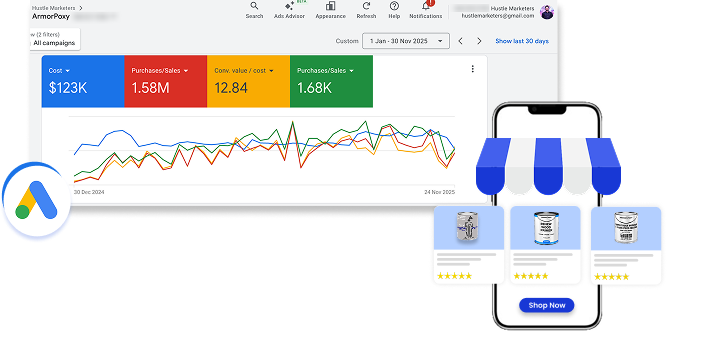
Google Shopping feed management starts here. Merchant Center powers Shopping ads, Performance Max, free listings and product ratings, so we fix diagnostics, complete attributes and set custom labels that make products eligible, matched and grouped for profit.

Microsoft Merchant Center
Microsoft Merchant Center can import your Google feed, so Microsoft Shopping campaigns run on the same cleaned product data with little extra work.

Meta Catalog
Meta catalog ads show products to people who browsed your store or look like your buyers. We align the Meta catalog with your Google feed so prices, stock and images stay consistent, and catalog ads do not promote sold-out items.

Which Industries Need Specialist Feed Rules?
Feed rules change by category. Apparel needs variants grouped correctly, supplements must keep health claims out of titles, and spare parts live or die on part numbers. We build feed rules for each product type, using the attributes Google asks for in that category and the words buyers in that niche actually search.

Fashion and Apparel
Every size and color sent as its own item with a shared item group ID, plus color, size, age group and gender, so each variant shows for its own search.

Electronics and Gadgets
Correct GTINs, plus brand and model numbers in titles, so searches that name an exact model can find the right product.

Beauty and Skincare
Titles built around product type, skin concern and size, kept clear of claims Google treats as medical, with sets and bundles labeled correctly.
Health and Supplements
Titles and descriptions written to match searches while staying inside Google's health claim rules, as in our SolBiome Merchant Center work.

Home and Furniture
High-consideration products get dimensions, material, color, accurate shipping costs and price-band labels for careful buyers.

Automotive and Spare Parts
Part numbers, MPNs and fitment details placed where Google reads them, so exact part searches find the right product.
Jewelry and Luxury Products
Metal, stone color and material set the way Google asks for jewelry, as we did for MiKi Jewellery.

B2B and Wholesale Ecommerce
Large catalogs with MPNs, clear product types and labels that separate lines worth advertising from low-margin ones.

Multi-Category Ecommerce Stores
Google product category and product type mapped across every department, with labels that give each category its own budget.
What Results Can Better Product Data Support?
Feed work shows up in approved products, impressions and sales, so we report all three next to return on ad spend. Results vary by store and we never promise a figure. For the do-it-yourself side, read our product feed optimization guide, or compare feed management software costs before you buy a tool.

Written Fix List
Every audit ends with a prioritized fix list.

Dated Change Log
Each feed change logged with a date.



5-star Rated

Verified Reviews
Top Rated Plus On Upwork


Our Client Testimonials
Hear directly from ecommerce brands and agency partners who work with Hustle Marketers on Google Shopping, Performance Max and Merchant Center. Each video is the client’s own account of how we worked together and what changed in their accounts.
Ishant has been an amazing Expert and Best Media Buyer to work with on Google Ads. He always goes out of his way to help, learn more and assist better to get better results.



Ready to Fix Your Product Feed and Shopping Ads Together?
Send us your store URL and we will audit your Merchant Center feed, Shopping and Performance Max campaigns and purchase tracking together. You get a written list of what is holding back your sales, in priority order, whether or not you hire us.
Product Feed Management FAQs
What is product feed management?
Product feed management is the ongoing work of keeping the product data you send to Google Merchant Center and other channels complete, accurate and matched to how people search. It covers error fixes, attributes, titles, categories, custom labels and monitoring, so Shopping and Performance Max ads show the right products.
What does your product feed management service include?
A feed and Merchant Center audit, disapproval fixes, attribute and GTIN completion, category mapping, titles and descriptions built from search demand, custom labels, supplemental feeds and feed rules, Microsoft and Meta catalog alignment, monitoring and a dated change log, plus the Shopping and Performance Max campaigns the feed powers.
Is feed management the same as feed optimization?
Feed optimization is one part of it: improving titles, descriptions and attributes. Feed management also covers keeping the feed approved, synced and monitored over time. Our product feed optimization guide explains the optimization side in detail.
Do I need feed management software or an agency?
Software moves and transforms data; it does not decide what your titles should say or which products deserve budget. Small catalogs often manage with Merchant Center feed rules and a supplemental feed. Larger or multi-channel catalogs may need a tool. Compare prices in our feed management software guide.
Why should the same team manage the feed and the ads?
Because every feed change moves ad spend. When one team edits titles and labels and also reads the search terms and product results, it can see which change helped and undo one that did not. With two separate vendors, that link is easy to lose. If you are comparing providers, see how to choose a Google Shopping ads agency.
If you want us to run the campaigns as well as the feed, see our Google Shopping agency service.Why are my products disapproved in Google Merchant Center?
Common causes are a price or availability that does not match the landing page, missing or invalid GTINs, missing shipping settings, policy issues, and broken links or images. Merchant Center diagnostics show the reason for each item. Our Google Merchant Center requirements guide lists the rules we check.
How do you choose keywords for product titles?
From real search demand: Google Keyword Planner, Semrush volume and the search terms report in your Google Ads account. Words with no search volume are left out. Brand, product type and the deciding attribute go first, since Google says shoppers usually see only about the first 70 characters.
Do you use AI to write product titles?
Not without search demand data behind it. Google also requires any title created with generative AI to be sent in the structured title attribute marked as AI-generated, not in the plain title attribute. Our AI product titles guide explains the rule.
Which ecommerce platforms do you work with?
Shopify, WooCommerce, Magento and Adobe Commerce, BigCommerce and custom stores. The fixes differ by platform, so see our guides to the WooCommerce product feed, Magento product feed and BigCommerce product feed.
Do you manage Microsoft Shopping and Meta catalog feeds?
Yes. We import your cleaned Google feed into Microsoft Merchant Center for Microsoft Shopping and align your Meta catalog for catalog ads, so prices, stock and images match on every channel. Our Microsoft Shopping feed guide covers the setup.
Can you fix feed and conversion tracking problems together?
Yes, and we check both in the same audit. A feed change cannot be judged if purchases are not tracked against real orders, so we confirm conversion tracking and order values first, then change the feed and campaigns.
How much does product feed management cost?
When we manage your Shopping and Performance Max campaigns, feed management is part of our fee of $600 to $800 per platform a month, separate from your ad spend. It is month to month with no lock-in. Feed-only work is quoted after the free audit, based on catalog size and channels.
Who owns the Merchant Center and ad accounts?
You do. Your Merchant Center, Google Ads and Microsoft Ads accounts stay in your name, you pay ad spend directly to the platforms, and we work through user access that you can remove at any time.
Where is your team based?
Our delivery team is in Zirakpur, India, and we work with ecommerce brands worldwide, including the US, UK and Australia. Meetings run online, and every feed and campaign change is logged with a date in your own accounts.