How to Advertise on Facebook: A Complete 2026 Guide

Ishant
Published : September 30, 2026 at 5:46 am
Updated : October 22, 2026 at 6:13 am
Ishant
By Ishant Sharma Category: Meta Ads and Paid Social Published: September 30, 2026 Reading time: 29 min
Quick Discussion
To advertise on Facebook, pick a campaign objective in Ads Manager, then add your audience, budget, and creative. Meta’s auction ranks ads on bid, estimated action rate, and ad quality, then shows each ad to people likely to act.
Running Facebook Ads well in 2026 means pairing that automation with solid tracking, strong creative, and a clear offer.
Facebook Ads remain one of the most powerful paid advertising channels for ecommerce, lead generation, SaaS, local businesses, and B2B companies in 2026.
But Meta’s ads have changed a lot. Campaign automation is now much more advanced. Advantage+ tools can automate key parts of targeting, placements, creative combinations, and budget allocation.
At the same time, solid conversion tracking, compelling creative, strong offers, and a website that converts remain critical to campaign results.
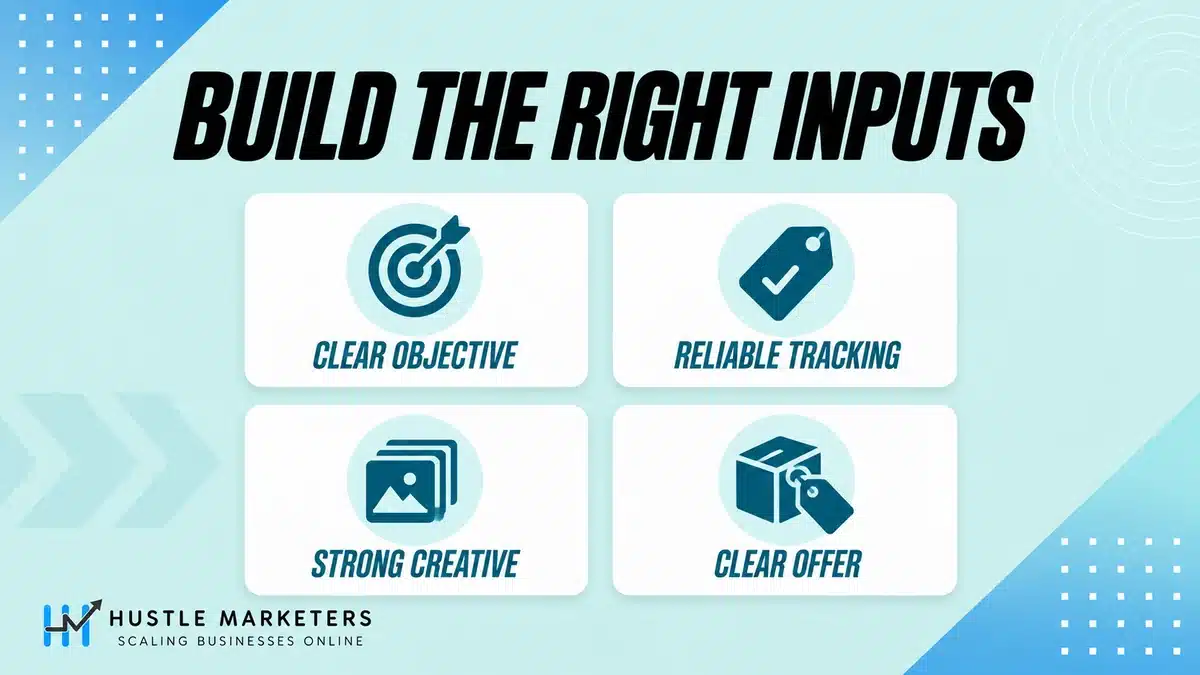
The role of the advertiser has shifted. You no longer try to control every audience and placement by hand. Instead, a good Facebook Ads strategy focuses on giving Meta the right inputs:
- A clear business objective
- Reliable conversion signals
- Strong creative and a compelling offer
- Sufficient conversion data
- A website or funnel that converts
- Accurate measurement of revenue and customer quality
This guide explains how Facebook Ads work in 2026, how to structure campaigns, and how Meta Pixel and Conversions API work together.
You will learn when to use broad or guided targeting, how Advantage+ sales campaigns fit into ecommerce advertising, and how to create better ads. Finally, it covers how to manage budgets and measure results for both ecommerce and lead generation.
Advertising on Facebook and running ads on Facebook mean the same thing in this guide, whether you are placing your first ad or your five-hundredth. Learning how to use Facebook advertising well starts with a clear objective, not a big budget.
How Facebook Ads Work in 2026
How does Facebook Ads work, from the moment you hit publish to the moment someone sees it? Facebook Ads operate through an ad auction. When an ad opportunity becomes available, Meta checks eligible ads on three factors:
- The advertiser’s bid
- Estimated action rate
- Ad quality
The advertiser with the highest bid does not always win every impression. Meta’s bidding documentation says it combines your bid with the probability of getting your optimization result to work out an effective bid, so an ad with a lower bid that is more likely to get the result can still win.
A useful way to understand the system:
Business objective → Conversion signal → Creative → Audience automation → Auction → Conversion → Learning
Your job is to make each part of that system as strong as possible. Meta’s Advantage+ products increasingly automate:
- Audience and placement
- Budget and other campaign decisions
This makes the quality of your creative and conversion data especially key.
The three foundations of a strong Meta Ads account are:
- A clear objective: what business outcome do you want?
- Reliable conversion signals: can Meta accurately understand what users do after seeing your ads?
- Strong creative and offer: does your ad give people a reason to stop, engage, and act?
Facebook Ads Account Structure
| Level | Main Controls | Core Decision |
|---|---|---|
| Campaign | Objective and campaign-level settings | What outcome are we optimizing for? |
| Ad Set | Audience, placements, schedule, tuning and bidding | Who, where, and how are we delivering? |
| Ad | Creative, copy, headline, CTA and destination | What does the user see? |
Avoid Unnecessary ComplexityA common mistake is creating many ad sets around small audience differences. This fragments budget and conversion data, making the account harder to tune rather than easier.
Facebook Ads vs Boosted Posts: What Is the Real Difference?
What are Facebook ads, really, compared to the blue “Boost Post” button under your posts? They are not the same tool, and beginners often mix them up.
What is Facebook ads in the full sense? It means building a campaign inside Ads Manager, with a chosen objective, detailed targeting, and full reporting.
What is Facebook advertising at its simplest? Paying Meta to show your content to people who did not already follow you.
Ads Manager
- Every campaign objective available
- Detailed audience and placement control
- Full budget and bid strategy options
- Complete performance reporting
Boosting a Post
- Limited objectives, mostly engagement or traffic
- Simplified targeting only
- Fast to launch, harder to optimize
- Basic reporting only
How do you advertise on Facebook the right way for a real campaign? Skip the Boost button and build the campaign in Ads Manager instead.
People phrase this differently. Some search how to Facebook ads. Others type how to do advertisement in Facebook, how to advertise in Facebook, or how do I post an ad on Facebook. They all lead to the same place: Ads Manager, not the Boost button.
Choosing the Right Campaign Objective
Meta now groups campaigns around business outcomes: Awareness, Traffic, Engagement, Leads, App Promotion, and Sales.
For most performance advertisers, two matter most:
- Sales: Use when your goal is to generate purchases or other sales-related outcomes. For ecommerce, this means optimizing toward a real purchase event when enough purchase data is available.
- Leads: Use when your goal is to generate form submissions, qualified prospects, appointment requests, calls, B2B inquiries, or other lead actions.
The Objective Mismatch ProblemIf your real goal is purchases, selecting a traffic-focused campaign because it produces cheaper clicks is misleading. Meta optimizes toward whatever action you select. If you want buyers, tell it to find buyers. Running Traffic campaigns to get conversions, or Engagement campaigns to get leads, means the algorithm optimizes for the wrong behavior from the start.
Facebook Ads Tracking: Meta Pixel and Conversions API
Tracking is one of the biggest parts of a Meta Ads account. Without solid conversion data, Meta has less information with which to tune campaigns and measure outcomes accurately.
What Is the Meta Pixel?
The Meta Pixel is browser-side tracking code that sends website events to Meta. Common ecommerce events include:
- PageView and ViewContent
- AddToCart and InitiateCheckout
- Purchase
These events feed four things:
- Conversion measurement and audience creation
- Retargeting and campaign tuning
What Is the Meta Conversions API (CAPI)?
Conversions API, commonly called CAPI, sends conversion and client data from a server, website, CRM, or other source directly to Meta. This creates a solid link between your data and Meta’s systems, and it cuts reliance on browser-only tracking.
A common setup: Browser Pixel + Server CAPI → Same conversion event → Deduplication → Meta.
The browser and server both send the same conversion with matching deduplication parameters so the event is not counted twice. For a detailed setup guide, see our Google Enhanced Conversions and Meta CAPI setup guide.
CAPI Is Not a Magic ROAS ButtonA technically correct CAPI setup improves the quality and reliability of your data, but campaign performance still depends on the offer, creative, landing page, audience, economics, and overall strategy. Fix tracking first. Then optimize everything else.
Facebook Ads Audiences: How Targeting Works in 2026
Meta targeting has changed a lot in recent years. Manual interest targeting still has uses. But many advertisers now favor broad audiences and Meta’s automated tuning.
Core Audiences
Core targeting can use demographics, location, interests, and other options. Detailed targeting can still be useful when:
- Your product serves a genuinely specialized audience
- You have limited conversion data
- Your market is very narrow
- You are testing a specific audience hypothesis
But adding more interests does not automatically make an audience better.
Custom Audiences
Custom Audiences are built from first-party or Meta engagement data. All of these are useful for retargeting:
- Website visitors and product viewers
- Add-to-cart users and checkout users
- Purchasers and customer lists
- Video viewers (50% and 75% watch time)
- Instagram engagers and Facebook page engagers
Lookalike Audiences
Lookalike Audiences allow Meta to find users who resemble a source audience. A purchaser-based lookalike can be useful when you have enough high-quality client data. But do not assume lookalikes always outperform broad or Advantage+ audience strategies. Test both.
Broad Targeting
Broad targeting gives Meta a larger audience pool with fewer manual restrictions, often just geography and age. It relies on conversion signals and Meta’s tuning system to find buyers.
Broad targeting works best when conversion tracking is solid, you have enough conversion data, and the offer has broad market appeal.
The 2026 Starting HypothesisFor accounts with strong Pixel data: broad or Advantage+ audience + strong creative + solid conversion signals. Then validate that hypothesis against actual account performance. Do not apply this blindly to new accounts with no purchase history.
The Full-Funnel Facebook Ads Strategy
Prospecting
Awareness
Broad audiences
Advantage+
Lookalikes
Hook-led creative
Education
Consideration
Interest
Video viewers
Page engagers
Website visitors
Social proof
Demos
Conversion
Purchase
Add to cart
Checkout users
Offers
Urgency
Objection removal
Retention
LTV
Past buyers
Cross-sell
Upsell
New arrivals
Loyalty
Modern Meta campaigns can consolidate more of the funnel, especially when automated campaign products are used. The goal is to understand: who is seeing the ad, what do they already know, and what message should they receive at this stage?
Facebook Ad Formats: Which One Should You Use?
| Format | Best Use | Key Notes |
|---|---|---|
| Single Image | Offers, product benefits, direct response | Fast to produce and test. Bold visual + clear benefit statement works well. |
| Video | Demonstrations, UGC, education, storytelling | Hook in first 3 seconds is critical. 15 to 30 seconds performs well in feed. |
| Carousel | Multiple products, benefits, features or steps | Each card can have its own image, headline, and destination URL. |
| Collection | Ecommerce product discovery on mobile | Opens full-screen experience. Requires product catalog. |
| Reels / Stories | Mobile-first vertical creative | Design for 9:16 ratio. Strong hook required within 2 seconds. |
| Instant Form | Low-friction lead generation | More volume, often lower intent. Compare lead quality vs website form. |
No single format works best. Test the message and format together. A product demonstration may work better as video, while a price-led promotion may work better as a static image.
Facebook Ad Specs and Sizes for Every Placement (2026)
Facebook ads specs change slightly by placement, and getting them wrong means Meta crops or letterboxes your creative. Check this table before you export final assets.
| Placement | Facebook Ads Image Size | Facebook Ads Video Size | Safe Zone Note |
|---|---|---|---|
| Feed | 1080 x 1080px (1:1) or 1080 x 1350px (4:5) | Same ratio, under 60 seconds recommended | Keep text out of the bottom 14% |
| Stories / Reels | 1080 x 1920px (9:16) | 1080 x 1920px, under 15 seconds ideal | Facebook ads safe zone: avoid top and bottom 250px |
| Right Column | 1080 x 1080px (1:1) | Not supported | Small size, keep text minimal |
| Carousel | 1080 x 1080px per card | Same ratio per card | Consistent framing across cards |
Facebook ads dimensions 2026 have not changed dramatically from prior years, but Reels now gets more delivery than Stories. Build vertical-first if you only have budget for one orientation.
The Facebook ads safe zone matters most for Reels and Stories. Meta’s own logo, captions, and the call-to-action button sit inside the top and bottom edges of the frame.
How to Write Facebook Ad Copy That Converts
Facebook users are not always searching for your product when they see your ad. Your ad must create or strengthen intent, which makes the opening hook especially key.
Only the first one or two lines of primary text are visible before “See more,” so your opening must earn the read.
Hook-Problem-Solution-CTA
- Hook: Stop the scroll with a bold claim, question, or result that speaks directly to the audience’s situation
- Problem: Name the frustration your target customer knows well
- Solution: Explain how your product solves it
- CTA: Tell the user exactly what to do next
Before you write your own, study real hooks that are running right now in the Meta Ads Library.
Social Proof Framework
Open with a real result or story from a happy buyer. Show the before and after, then add real trust signals:
- Customer count
- Verified reviews
- Certifications
- Case study data
Close with a direct offer and CTA. Avoid vague claims like “the best” unless you can prove them. Real proof works better.
Direct Offer Framework
Lead with the offer itself: discount, free shipping, trial, bonus, or guarantee. Use urgency or scarcity only when genuine. Remove the main objection briefly. Close with a strong CTA.
How to Use Facebook Ads Library to Research Competitors
The Facebook Ads Library is a free public tool from Meta. It shows every ad currently running on Facebook and Instagram, including ads from Pages you do not follow.
How to See If a Facebook Page Is Running Ads
Checking fb page ads takes under a minute once you know where to look.
- Go to the Meta Ads Library and search by brand name or keyword.
- Filter by country and ad category to narrow results to your market.
- Open each active ad to see how long it has run. Ads running for months are usually working.
- Note the offer, hook, and CTA each competitor is testing right now.
Many advertisers searching how do I do Facebook ads for the first time skip this research step entirely and miss easy wins.
Study the Ads Library regularly, not just once. Competitors update creative constantly, and last month’s winning hook may already be fatigued.
Facebook Ads Creative Strategy in 2026
Creative is one of the biggest variables in Meta Ads results, but it does not operate alone. Results also depend on:
- Product-market fit, offer, and landing page
- Audience, tracking, and auction conditions
- Budget and customer economics
The goal is to build a creative testing system, not search for one perfect ad.
Creative Formats Worth Testing
- UGC-style videos: Creator or customer-filmed content that feels native to the feed and shows genuine product use
- Product demonstrations: Show the product solving a real problem with natural commentary
- Founder or expert videos: Particularly useful for expertise-driven or trust-sensitive businesses
- Customer testimonials: Use authentic customer experiences and specific outcomes, not scripted-sounding praise
- Problem/solution videos: Start with the customer’s problem and show the resolution
- Static direct-response ads: Clear visual, strong benefit statement, compelling offer, still among the fastest to test
Advantage+ Sales Campaigns: What You Need to Know
2026 Terminology Update: Advantage+ Sales CampaignsAdvantage+ Shopping Campaigns are now referred to as Advantage+ sales campaigns. Meta’s documentation describes these as an automated solution for advertisers focused on sales, with AI helping tune audience, creative, placements, and budget.
When Should Ecommerce Brands Test Advantage+ Sales Campaigns?
They are worth testing when you have:
- Solid purchase tracking
- A strong product catalog
- Multiple creative assets for Meta to test
- A compelling offer and a functioning ecommerce funnel
- Real conversion data
There is no fixed conversion threshold that guarantees success. Ask whether Meta has enough solid data to make good tuning calls.
Advantage+ vs Manual Campaigns
You do not have to choose one permanently. Test both and compare:
- CPA and ROAS
- Revenue and new-customer acquisition
- Conversion rate and contribution margin
The best campaign structure is the one that produces the strongest business outcome for your account.
What Changed with Advantage+ in 2026
Meta has merged manual campaign setup and Advantage+ setup into one flow. Its developer documentation describes a streamlined process that replaces the separate workflows for manual, Advantage+ shopping and Advantage+ app campaigns. Instead of choosing a campaign type, you now turn on Advantage+ budget, audience and placement settings inside a single setup.
AI-driven budget and audience optimization is now the default on new campaigns, rather than a separate toggle you actively chose. Advertisers who built their process around opting in or out of Advantage+ need to check current campaign settings directly.
CBO vs ABO Still MattersCBO, now called Advantage+ campaign budget, sets your budget at the campaign level and shifts spend toward whatever converts cheapest. ABO sets a fixed budget at each ad set instead. CBO works best with 3 to 5 ad sets, since spreading budget across more starves each one of data.
Some agencies report losing a degree of manual control as a result, while others see strong returns from letting the system run with less interference. Test with a portion of budget before committing fully either way.
Facebook Ads Budget and Bidding Strategy
Your budget should be based on:
- Target CPA and target ROAS
- Average order value and contribution margin
- Conversion rate and market demand
- Required conversion volume and available cash flow
Avoid arbitrary budget rules.
For example, if your target CPA is $30 and you need 100 purchases per month: 100 × $30 = $3,000 monthly acquisition budget. This is a planning model, not a results guarantee.
Breakeven ROAS
A simple gross-margin formula: Breakeven ROAS = 1 ÷ Gross Margin. A 40% gross margin gives 1 ÷ 0.40 = 2.5x.
But ecommerce businesses should calculate breakeven using contribution margin instead, since costs such as shipping, fulfillment, payment processing, returns, and discounts can all affect profit.
Your target ROAS should reflect your real business economics. For a broader ROAS tuning framework that applies across Meta and Google, see our guide on how to improve ROAS for ecommerce.
Bid Strategies
Meta’s bid strategies work much like Google’s automated bidding options. You trade manual control for automation once you have enough conversion data.
| Bid Strategy | Best Use | Notes |
|---|---|---|
| Highest Volume | Default. Spend full budget at lowest cost per result. | Best for new campaigns building learning data |
| Cost Per Result Goal | Target a specific average CPA | Needs conversion data. Overly aggressive targets restrict delivery. |
| ROAS Goal | Target a specific average ROAS for ecommerce | Set target based on real margins, not industry benchmarks |
| Bid Cap | Maximum bid per action; advanced control | Can severely restrict delivery if set too low |
Auction vs Reservation: The Two Ways to Buy Facebook Ads
Facebook ads auction vs reservation is an early setup decision most beginners never see, because Auction is the default for almost every campaign.
Auction buying is flexible and efficient. Meta competes your ad against others in real time and optimizes delivery toward your objective. Most performance advertisers use Auction exclusively.
Reservation buying, formerly called Reach and Frequency, sets a fixed price upfront for guaranteed delivery to a set audience size. It suits awareness or engagement goals where predictable reach matters more than efficiency.
Reservation has real limits: fewer eligible placements, fewer objectives, and booking a few days ahead. For nearly all direct response and ecommerce advertisers, Auction is the right default.
The Facebook Ads Learning Phase
When you launch or heavily edit a campaign, Meta enters a learning phase. During this period, the algorithm explores the audience, tests delivery, and tunes toward your conversion event. Results fluctuate and CPA can be unstable during this time.
Significant edits, such as a large budget change, an audience change, a creative swap or a new bid strategy, can send an ad set back into learning. A common working rule is to move budgets no more than about 20% at a time. Meta does not publish 20% as a threshold, so treat it as a habit rather than a limit.
The frequently cited 50 conversion events in 7 days is a useful benchmark, not a fixed rule. Your required volume depends on the tuning event, budget, campaign structure, audience, sales cycle, and conversion rate.
Ad sets stuck in “Learning Limited” indicate not enough conversion volume. Consolidate ad sets, increase budget, or switch to a higher-volume event (e.g., add to cart instead of purchase) until volume improves.
Facebook Ads for Ecommerce: Full Setup Guide
Step 1
Set Up Meta Pixel and Conversions API
Configure the Pixel and relevant standard events. For ecommerce, verify these are all passing correctly:
- ViewContent, AddToCart, InitiateCheckout, Purchase
- Revenue and Currency
- Product IDs
Configure CAPI alongside the Pixel and test event deduplication. Check your Event Match Quality score in Meta Events Manager, and aim for 6 or above for solid tuning.
Step 2
Connect Your Product Catalog
Ensure your catalog contains accurate:
- Product titles, descriptions, and prices
- Images and URLs
- Availability and product IDs
Product IDs must match the IDs sent through your conversion events for Dynamic Ads to work. For Shopify-specific catalog setup and common error fixes, see our Meta Catalog Sync for Shopify guide.
Step 3
Build Your Audiences
Create these audience segments:
- Website visitor audiences (30, 60, and 90 days)
- Add-to-cart and checkout abandoner audiences (14 and 30 days)
- Purchaser audiences (30, 90, and 180 days)
- Video viewer audiences (50% and 75%)
- Page engager audiences
From your purchaser list, create a 1% purchase lookalike. Do not create dozens of overlapping segments without a clear testing reason.
Step 4
Choose Your Campaign Structure
A practical starting structure uses two campaigns:
- A prospecting campaign with a Sales goal, using broad or Advantage+ audience targeting
- A retargeting campaign that targets warm custom audiences with conversion-focused messaging
Test an Advantage+ sales campaign alongside your manual campaigns once the account has enough purchase data and creative assets to compare results fairly.
Step 5
Create Creative Variations
For each campaign, test real differences:
- Different hooks and different offers
- Different product angles
- Video vs static
- Testimonial vs demonstration, UGC vs founder content
Five variations of the same ad are not five real tests. Each variation should test a different idea about what will move your audience to act.
Step 6
Monitor, Test, and Scale
Review results weekly using this checklist:
- Scale winning ad sets by raising budget gradually, 20 to 30% at a time, to avoid resetting the learning phase
- Duplicate winning ad sets rather than editing them where possible
- Keep adding new creative to avoid audience fatigue
- Track CPA, ROAS, revenue, frequency, and margin, not just CTR
For a broader ecommerce PPC management framework covering Meta alongside Google and Microsoft, see our ecommerce PPC guide.
One thing has moved since most catalog guides were written. In accounts with the new experience, Meta now attaches the catalog during campaign setup under Product data rather than at the ad set, and the old ad format has been folded into what Meta calls Products from your catalog. A separate guide to Meta Advantage+ catalog ads, publishing October 20, 2026, covers the current setup, the pixel events and parameters catalog matching depends on, and how to read your catalog match rate before you spend.
Facebook Ads for Lead Generation
Lead Quality Beats Lead VolumeYour actual funnel is: Ad → Lead → Qualified Lead → Opportunity → Customer → Revenue. A campaign producing inexpensive leads may still be losing money if those leads do not become customers.
Website Conversion vs Instant Form
Website forms usually provide more control and qualification because users go through more friction. Instant Forms (Lead Ads) reduce friction and generate more leads at lower cost but often with lower intent.
Test both and judge them using cost per qualified lead, downstream conversion rate, and revenue, not CPL alone.
How to Improve Lead Quality
Add qualifying questions to your Instant Forms:
- What service do you need?
- Estimated budget and location
- Company size and timeline
- What problem are you solving?
Send lead-quality data back into your CRM and use downstream conversion data to improve tuning.
If you use both Facebook and Google for lead generation, see our guide on Google Ads for lead generation. It covers how to structure search campaigns that complement Meta top-of-funnel activity.
Facebook Ads for B2B
B2B Meta campaigns need a different mindset. Track these numbers:
- Qualified lead rate and sales acceptance rate
- Opportunity rate and pipeline value
- Customer acquisition cost and revenue
- Customer lifetime value
A campaign producing 100 cheap leads is not always better than one producing 20 leads. If those 20 are more valuable and closer to buying, they win.
What Moves Meta Ads Results in 2026?
Four habits do most of the work in a Meta account. None of them is a hidden setting. Where Meta documents the behavior, the link goes to Meta’s own page.
1. Test creative before you test audiencesWith broad or Advantage+ audience delivery, the ad does much of the targeting. The people who stop, click and buy show Meta who to look for next. A new interest stack running the same ad gives the system little new to learn from, while a new hook, offer or format does. Change one of those per test so you can tell what moved the result.
2. Go broad only once tracking is cleanBroad targeting hands the audience decision to Meta, and Meta can only find buyers it can see. Before you strip out interests, open Events Manager and check that each purchase arrives once, with a value and a currency. If purchase data is thin or duplicated, keep some targeting guardrails in place and fix the signal first.
3. Give Advantage+ sales campaigns real creative choicesAn Advantage+ sales campaign can only pick from the assets you give it. Two near-identical images leave it nothing to choose between. Load distinct types instead, such as a short video, a static image, a carousel and a customer testimonial clip, then watch which ones earn spend and replace the ones that do not.
4. Run the Conversions API alongside the PixelMeta’s deduplication guide is direct: “For optimal ad performance, we recommend that advertisers implement the Conversions API alongside their Meta Pixel.” When both send the same purchase, the Pixel’s eventID must match the server’s event_id, and the event names must match, so Meta counts the sale once. Meta only deduplicates events received within 48 hours of the first one, so a server copy that arrives later is not matched to the browser event.
Worked example: will this ad set leave learning?Take the 50 events in 7 days benchmark from the learning phase section and work backward from your cost per purchase. At $40 per purchase, 50 purchases a week costs about $2,000, or roughly $286 a day for one ad set. On a $25 daily budget, the same ad set buys about 4 purchases a week and will likely sit in Learning Limited. The fixes are the ones listed earlier: combine ad sets so the budget pools, raise the budget, or optimize for a more frequent event such as add to cart while purchase volume builds.
Real Meta Ads Results From Hustle Marketers
Beauty Ecommerce
192%
Facebook Shop online sales growth after Meta Ads, creative, and catalog improvements
Fitness App
80%
Reduction in customer acquisition cost following Meta Ads strategy and creative tuning
Ecommerce (P-REX Hobby)
6 months
of Facebook Ads management for a hobby ecommerce store
These examples show a key point: Meta Ads results depend on several things working together, not any single factor in isolation.
- Campaign strategy and creative
- Tracking and audience
- Offer and landing page
- Business economics
Facebook Ads vs Google Ads
| Facebook / Meta Ads | Google Ads |
|---|---|
| Demand creation | Demand capture |
| Discovery and interruption | Search intent |
| Creative-led | Keyword and search-led |
| Strong prospecting | Strong high-intent traffic |
| Visual product discovery | Commercial search queries |
| Full-funnel retargeting | Search plus remarketing |
| Lead generation (broad) | High-intent lead generation |
For many businesses, the strongest paid acquisition strategy combines Meta plus Google plus accurate measurement. Meta creates demand. Google captures existing demand through its ad auction. Your website converts that traffic, and your CRM determines which leads and buyers are actually valuable.
How to Improve Facebook Ads ROAS
If your ROAS is poor, do not immediately change your targeting. Diagnose the funnel in sequence:
- Check tracking: Are purchases, leads, and revenue being recorded accurately?
- Check creative: Are people stopping, engaging, and clicking?
- Check the landing page: Are clicks turning into real actions?
- Check the offer: Is the value proposition compelling enough?
- Check audience strategy: Is Meta reaching people who can realistically become customers?
- Check economics: Is your ROAS target realistic given your actual margins?
- Check retention: Do customers purchase again? Improving AOV, retention, and lifetime value can have a bigger effect on profitability than reducing CPC.
Common Facebook Ads Mistakes to Avoid
What Tends to Work
- Pixel + CAPI together with deduplication
- Strong creative testing system
- Clear campaign objectives matched to goals
- Appropriate audience automation
- Consolidated campaigns with enough budget
- Strong landing pages and offers
- Accurate revenue and CRM tracking
- Continuous creative development
- Patient scaling based on stable data
What Hurts Performance
- Pixel-only tracking without CAPI
- Optimizing for clicks instead of conversions
- Traffic objective for purchase goals
- Excessive audience segmentation
- Editing campaigns during learning phase
- Weak or untested creative
- Scaling before enough data
- Measuring lead quantity instead of quality
- Ignoring contribution margin and profitability
Facebook Ads Reporting: Key Metrics to Track
| Metric | What It Tells You | What to Investigate If Poor |
|---|---|---|
| CPM | Cost to reach 1,000 users; reflects competition and ad quality | Audience size, creative quality, campaign objective |
| CTR | Creative response rate; below 1% for prospecting often means weak hook | Test new hooks, angles, and formats |
| CPC | Combination of CPM and CTR | Improve creative or broaden audience |
| Landing Page CVR | Whether clicks convert; a mismatch between ad and page kills this | Landing page relevance, speed, offer clarity |
| CPA | Cost per conversion event; the primary efficiency metric | Full funnel: creative, landing page, offer, audience |
| ROAS | Revenue per dollar spent; must exceed breakeven to be profitable | Improve AOV, reduce CPA, or both |
| Frequency | Average ad exposures per user; above 3 to 4 signals fatigue | Refresh creative or expand audience |
| Qualified Lead Rate | For lead gen: what % of leads are actually qualified | Targeting, qualifying questions, offer relevance |
| Revenue / CAC | Actual business outcome and customer acquisition economics | Full funnel including retention and LTV |
Common Facebook Ads Policy Rejections and How to Avoid Them
Facebook ads policy violations are the most common reason a new ad gets rejected before it ever runs. Most rejections trace back to a handful of repeat issues.
| Rejection Reason | One-Line Fix |
|---|---|
| Implying personal attributes (age, health, income) | Focus copy on the product, not assumptions about the viewer |
| Before/after health or body claims | Show results without exaggerated or misleading claims |
| Missing Special Ad Category declaration | Declare financial products and services (including credit), employment, housing, or social issues, elections and politics ads before publishing |
| Misleading claims or fake urgency | Only use deadlines and scarcity that are actually real |
| Landing page mismatch | Make sure the destination page matches the ad’s claim exactly |
A facebook ad rejected notice usually arrives within minutes to a day. Read the specific reason Meta gives, fix that exact issue, and resubmit rather than guessing at a full rewrite.
Facebook ads disapproved does not always mean a permanent ban. Most rejections are fixable, and a corrected ad can go through review again the same day.
Why Facebook Disables or Restricts Ad Accounts (and What to Do About It)
A Real Risk Worth Planning ForNew Meta advertisers sometimes report their facebook ads account disabled on the very first day, before any meaningful spend. This is a genuine risk, not a rare edge case, so prepare for it rather than assume it will not happen to you.
Common triggers behind a facebook ads account restricted notice include policy violations, unusual billing activity, and a brand-new account spending too aggressively too fast. Automated systems sometimes flag accounts by mistake, with no human involved at first.
Reduce your risk before it happens:
- Verify your business in Meta Business Suite before heavy spending
- Keep billing details and payment methods consistent, not constantly changing
- Warm up spend gradually instead of launching at full budget on day one
- Follow Meta’s advertising policies closely, especially around claims and targeting
- Check Account Quality in Meta Business Suite regularly, not only after a problem
If your account is restricted, start with Account Quality in Meta Business Suite for the specific reason given. You can appeal through the Meta Business Help Center, though response times vary and some appeals take several days.
Facebook Ads Launch Checklist
Before launching, confirm all of the following:
- Meta Business account and Ad account configured
- Billing verified
- Meta Pixel installed across all pages
- Conversions API configured and sending events
- Event deduplication tested
- Purchase and lead events verified in Events Manager
- Revenue values and currency passing correctly
- Product catalog connected and approved (ecommerce)
- Product IDs aligned between catalog and Pixel events
- Campaign objective matches actual business goal
- Audience strategy defined (prospecting and retargeting)
- Minimum 3 to 5 creative variations per campaign
- Landing pages tested on mobile and desktop
- UTM tracking configured for GA4 and CRM
- CRM integration configured for lead generation campaigns
- Retargeting audiences created and populated
- Budget aligned with target CPA and ROAS
- Meta advertising policies reviewed for the category
- Reporting dashboard ready
Prefer to hand this to a specialist? Our Facebook ads agency runs Meta campaigns for ecommerce and lead generation brands at $600 to $800 per platform a month, month to month, in ad accounts you own.
Frequently Asked Questions
How do Facebook Ads work?
Facebook Ads use Meta’s ad auction to deliver ads to eligible users across Meta’s ad ecosystem. Advertisers select an objective, provide creative and audience inputs, and set a budget.
Meta’s delivery system then tunes toward the selected outcome, using conversion signals from the Meta Pixel and Conversions API.
How much do Facebook Ads cost?
There is no fixed Facebook Ads cost. Prices depend on:
- Audience, industry, and competition
- Creative and goal
- Budget and auction conditions
The more key number for most firms is the cost of acquiring a profitable buyer or qualified lead, not CPC or CPM alone.
What is the Meta Pixel?
The Meta Pixel is browser-side tracking code that sends website events to Meta. It supports:
- Conversion measurement and audience creation
- Retargeting and campaign tuning
Standard ecommerce events include ViewContent, AddToCart, InitiateCheckout, and Purchase.
What is Meta Conversions API?
Conversions API (CAPI) is a server-side connection that sends supported customer and conversion events directly from your server to Meta.
When set up correctly, it improves:
- Data connectivity
- Measurement and tuning quality
- Less dependence on browser-only tracking
Should I use Pixel and CAPI together?
For many advertisers, using Pixel and CAPI together gives a stronger measurement setup. Set up events correctly and deduplicate them so conversions are not double-counted in your reports.
What replaced Advantage+ Shopping Campaign?
Meta renamed Advantage+ Shopping Campaign to Advantage+ sales campaigns. The current product uses Meta’s automation and AI to help tune sales campaigns across audience, creative, placements, and budget.
Is broad targeting better than interest targeting on Facebook?
Not automatically. Broad targeting works well when conversion signals and creative are strong. But more guided targeting can still make sense for specialized audiences, new accounts with limited Pixel data, and specific testing scenarios.
How many conversions do I need for Facebook Ads?
There is no single number that guarantees campaign success. Meta’s learning system benefits from enough conversion data, but the required volume depends on the campaign objective, tuning event, budget, audience, and sales cycle.
The commonly cited 50 conversions in 7 days is a useful benchmark, not a hard rule.
How long does it take for Facebook Ads to work?
There is no guaranteed timeline. Some campaigns generate useful data quickly, while others need more time because of lower conversion volume, longer buying cycles, or limited budgets.
Most accounts see clearer signals after 2 to 4 weeks.
What Facebook Ad format works best?
There is no single best format. Test the format and message together rather than assuming one format is always superior. All of these can work well, depending on the product, audience, and message:
- Video and UGC
- Static images and carousels
- Product demonstrations and testimonials
What is a good ROAS for Facebook Ads?
A good ROAS depends on your business economics. Calculate your breakeven ROAS using your actual contribution margin (1 divided by gross margin), then establish a target above that threshold. A business with 40% gross margin breaks even at 2.5x ROAS.
Should I use Facebook Ads for lead generation?
Yes. Meta can be effective for generating leads for service businesses, B2B companies, SaaS businesses, and local businesses. But tune for qualified leads and downstream revenue rather than simply chasing form submission volume.
How can I reduce Facebook Ads costs?
Improve creative, tracking setup, landing page conversion rate, audience strategy, and offer quality. Also measure downstream customer value instead of tuning only for cheap clicks or leads. Cutting weak ad sets and merging campaigns often cuts wasted spend by a lot.
What is the Facebook Ads Library and how do I use it?
The Facebook Ads Library is a free public tool from Meta. It shows every ad currently running on Facebook and Instagram, including ads you do not follow.
Search by brand name or keyword to see competitor creatives and how long each ad has run. It is one of the fastest ways to research what is working in your niche.
Why did Facebook disable or restrict my ad account?
Common causes include policy violations, unusual billing patterns, or a brand-new account spending too aggressively too fast. Automated systems sometimes flag accounts by mistake.
Start by checking Account Quality in Meta Business Suite for the specific reason. You can appeal through the Meta Business Help Center, though response times vary.
What is the difference between boosting a post and running a Facebook ad?
Boosting a post is a quick, simplified way to promote existing content directly from your Page, with limited targeting and objectives.
Running a full ad through Ads Manager gives you every campaign objective, detailed targeting, budget controls, and full reporting. For any serious campaign, Ads Manager is the better choice.
Why is my Facebook ad active but not spending?
This usually means your audience is too narrow, your budget is too low for the competition in your auction, or your payment method needs attention.
Check Account Quality and your payment settings first. If those are fine, try widening your audience slightly or increasing your daily budget.
Is the old 20 percent text rule for Facebook ads still enforced?
No. Meta removed the strict 20 percent text limit on image ads years ago. Ads with more text on the image can still run, though heavy text may still slightly reduce delivery in some cases.
As a best practice, keep text minimal and let the image do the work.
What is a Special Ad Category on Facebook?
Special Ad Category is a declaration required for ads about financial products and services (including credit), employment, housing, or social issues, elections and politics.
Declaring it restricts some targeting options, like age, gender or zip code targeting, to comply with anti-discrimination and election advertising laws. Skip the declaration on a relevant ad, and expect it to be rejected.
What happened to the Advantage+ toggle in 2026?
Meta merged manual campaign setup and Advantage+ setup into a single flow, replacing the separate Advantage+ shopping and app campaign workflows. AI-driven budget and audience optimization is now the default on new campaigns, not a separate toggle you choose.
Advertisers who built their process around that old toggle need to check current campaign settings directly.
What is the difference between CBO and ABO on Facebook ads?
CBO, now called Advantage+ campaign budget, sets your budget at the campaign level and lets Meta shift spend toward whatever is converting cheapest. ABO sets a fixed budget at each individual ad set.
CBO works well with 3 to 5 ad sets and enough data to optimize, while ABO gives you more manual control.
What are the correct Facebook ad image and video sizes in 2026?
For Feed placements, use a 1:1 or 4:5 ratio image at 1080 by 1080 pixels or larger. For Stories and Reels, use a 9:16 vertical ratio at 1080 by 1920 pixels.
Keep key text and logos inside the safe zone, away from the top and bottom edges. Videos generally perform best under 15 seconds for Stories and Reels.
Should I compare Facebook Ads against TikTok Ads for my budget?
It depends on your audience and creative style. Facebook and Instagram still offer broader age-range targeting and stronger performance for retargeting and catalog sales.
TikTok tends to favor younger audiences and highly native, entertaining video content. Many brands test a small budget on both and shift spend toward whichever performs better.